
Night Shift at Son Bonet: Why Pla de na Tesa Must Not Become a Party Dump
Early on Sunday morning a green area near Son Bonet had become a party site: hundreds celebrated, the municipality cleaned up — and the question remains: How can Marratxí prevent recurring macrobotellones?
Night Shift at Son Bonet: Why Pla de na Tesa Must Not Become a Party Dump
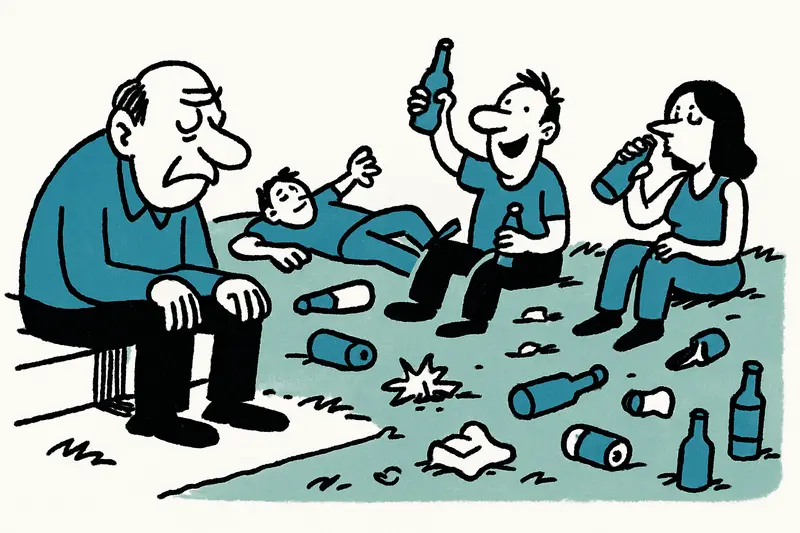
On Sunday morning Pla de na Tesa was still in the haze of the early heat and the smell of street-cleaning trucks. Between tufts of grass and the old section of the Son Bonet airfield runway lay beer cans, shards of glass and plastic bags – items that the night before had surely accompanied laughter, music and the flicker of lighters.
The scene was a classic macrobotellón: groups that already arrived around 1:30 a.m., loud music, a babble of voices and the clinking echo of bottles that lingered uncomfortably long in the usual silence of the suburb. When the city workers came to clean up, the highly emotional territorial conflicts flared: revellers blocked the cleanup, there were exchanges of words, and some residents watched in disbelief.
The key question: How does Marratxí make sure public spaces remain public?
It's not just about rubbish. The central question is: How do we protect residential neighbourhoods from becoming nighttime dumping grounds without banning young people from every outdoor encounter? The dilemma is obvious: young people look for cheap meeting points, and places like the strip next to Son Bonet offer space — but also trouble for residents and work for the municipality.
Neighbours report a mixed smell of stale beer, cigarette smoke and sunscreen; the acoustic tally: clinking cans, repeated laughter, occasional shouting and the distant throb of a delivery van that disturbs the early-morning quiet. A woman from Camí de Son Bonet summed it up: 'We're not a dumping ground.'
What is often missing in the public debate
Most discussions end up calling for 'more police' or 'harsher penalties' – that's important, but not everything. Less frequently examined is why such meeting points arise: a lack of attractive youth spaces, cheap alcohol, social rituals that happen outdoors, and the fact that public spaces are rarely designed for repeated informal use. The staffing levels of municipal workers and police also play a role: an overstretched team can neither clean up immediately nor carry out long-term prevention.
Also often missing is cooperation between the agencies involved: municipality, local police, social services and schools sometimes talk past each other. If prevention consists solely of fines, the problem remains – because fines only deter to a limited extent when social infrastructure is lacking.
Concrete opportunities instead of mere annoyance
There are pragmatic steps Marratxí can take now. First: targeted prevention in schools and youth centres to raise awareness of public order and responsibility. Second: better equipment at popular meeting spots with bins, mobile toilets and clear signage – simple conveniences reduce mess.
Third: coordinated deployment planning between municipal services and police – weekend checkpoints at known hotspots to prevent larger gatherings early. Fourth: low-threshold offers for young people on weekends: supervised meet-ups with DJs, cultural events or open-air evenings with a waste management concept, instead of uncontrolled outdoor parties.
And fifth: local sanctions that act quickly – for example immediate cleanup duties combined with small fines or community service. At the same time, municipalities should support projects where residents and young people clean up together; that builds understanding and reduces resentment.
A realistic outlook
The municipality has already announced it will step up cleanup efforts and monitor the situation. That's a start, but in the long run it only works with a package of prevention, infrastructure and clear rules. Son Bonet at a Crossroads: City Forest or Solar Park? is not an isolated case: in the summer months macrobotellones migrate – from Pla de na Tesa to the Paseo Marítimo in Palma.
If Marratxí gets serious now, the solution can even create new neighbourhoods: less rubbish, fewer Sleepless Nights in Nou Llevant: When the Street Keeps You Awake and an urban scene where children can again ride BMX bikes carefree, the cup at the café tastes good again at nine in the morning and the cry of the seagulls is not drowned out by the clinking of bottles. There is a chance to turn anger into smart policy – before the next hot summer comes.
What matters now: prevention in schools, coordinated municipal deployments, low-threshold leisure offers for young people and quickly effective sanctions. When all of this comes together, anger turns into concrete change – and Pla de na Tesa can become a place where people live rather than just party and discard.
Frequently asked questions
Why do macrobotellones happen in places like Pla de na Tesa in Mallorca?
What problems do late-night parties create for residents in Mallorca?
How can Mallorca stop public spaces from turning into party dumps?
What should you do if a noisy bottle party starts near your home in Mallorca?
Is Pla de na Tesa in Mallorca becoming a repeated hotspot for night gatherings?
What role should Marratxí play in dealing with illegal street parties?
Why do residents in Son Bonet object so strongly to night-time drinking?
What are practical ways to prevent summer bottle parties in Mallorca?
Similar News
First Day, First Consequences: What Palma's Rent Freeze Really Means
A new decree stops a planned eviction in Palma — but what really changes for tenants and landlords? A reality check with...
When Housing Becomes a Matter of Survival: Mallorca Between Rental Frenzy and Everyday Life
The case of 87-year-old Maricarmen showed that on Mallorca many people's lives are poised between affordable and uninhab...
Autumn in Mallorca: When Melancholy Gets a Window
Why autumn quietly tightens here — and how to make use of the mood: walks, culture, candles and the light from Palma to ...

Near-miss on Lanzarote: Landing Ryanair Jet and Iberia Takeoff — what really went wrong
On Lanzarote there was a dangerous incident: A Ryanair flight (FR5910) from Dublin landed on runway 03 while an Iberia E...

Eurowings introduces new Premium Business seats on Mallorca routes
From December 1, selected Eurowings flights to Palma and other destinations will feature eight particularly generous sea...
More to explore
Discover more interesting content

Can Cap de Bou

Townhouse Lleo 72
