
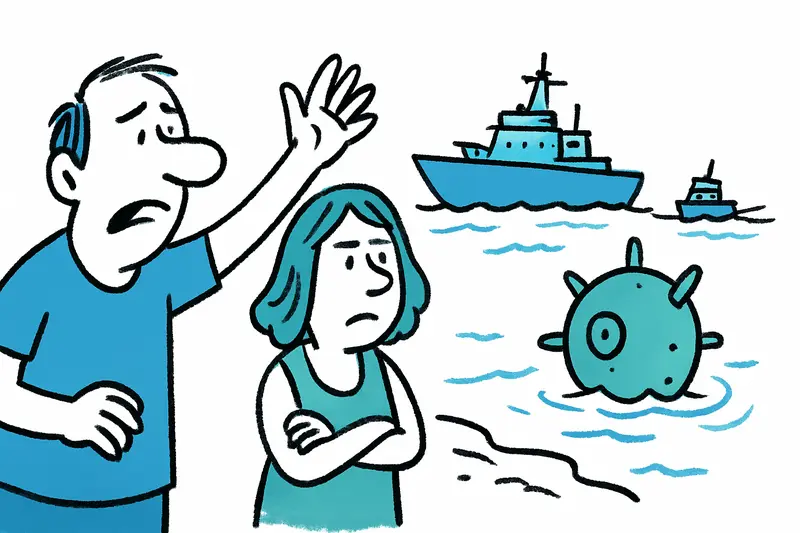
Mine-clearance exercise off Mallorca: Coastal security — and what's still missing
Mine-clearance exercise off Mallorca: Coastal security — and what's still missing
An international mine-clearance exercise is underway off Mallorca until tomorrow. What residents and visitors should know, which questions remain unanswered, and how harbour life can be organised compatibly.
Mine-clearance exercise off Mallorca: Coastal security — and what's still missing
Over 500 soldiers, eleven ships and a helicopter are exercising off the island — the port of Palma opens today for viewings
Until tomorrow a multinational force is training mine-clearance off Mallorca's coast. According to local reports, more than 500 soldiers from several NATO countries are involved, as well as eleven ships and a helicopter. For related coverage of warship visits and military planning in the region see Aircraft Carriers in the Bay: What Role Should Mallorca Play in the New Mediterranean Game? For the curious there is today the opportunity to see the flagship Relámpago and individual minehunter boats at the Portopí naval base — free of charge, provided the wind and weather cooperate.
Question to the island: Does such an exercise protect our coast — and how much does it affect everyday life here?
The answer is complex. Clearly: regular training keeps techniques and personnel ready. For an example of how security operations shape Mallorca's public image see Handcuffed Straight from Palma: Cross‑Border Manhunts, Mistakes and Mallorca's Image A functioning mine-clearance capability is not a luxury for ports like Palma, which rely heavily on international maritime traffic. At the same time, exercises intervene in marine areas, fishing and local recreation. On the Paseo Marítimo early in the morning you can feel how such an operation changes the routine: fishermen check their nets, the gulls circle louder than usual, and the pier canteen sells weatherproof sandwiches to service members instead of croissants.
Despite the security need, the perspective of those affected is often missing from public discussion. Fishermen's associations, local diving schools and operators of small excursion boats are rarely prominently consulted, even though their work and leisure areas are affected by exclusion zones and training manoeuvres. Also rarely discussed are the short-term ecological effects of sonar equipment or the possible pollution from items left behind after an exercise.
Up close, practical gaps become apparent: residents and beachgoers need clearer information about exclusion zones, access routes to and from harbour areas, and alternative options when a popular bathing spot is temporarily off-limits. For today's viewing at Portopí a staffed information stand with maps, a simple explanation of the safety rules and clear directions on who to contact with questions would be very helpful — as would more seating for older visitors who cannot stand for hours.
Concrete proposals that would ease the balance between security and everyday compatibility:
1. Transparent communication: Pre-published maps with exclusion radii, reliable timings and telephone hotlines. A short info sheet in German and Spanish at the harbour entrance would avoid many uncertainties.
2. Involvement of residents and local sectors: Early consultation with fishermen, dive centres and operators of small vessels. A single contact person to receive complaints and respond quickly.
3. Environmental monitoring: Measurements before and after the exercise to document potential impacts on the seabed, fauna and noise levels.
4. Visitor organisation: Weatherproof signs, covered waiting areas, fixed routes and time slots so sightseers and operational routines do not get in each other's way.
When you walk through Portopí you smell the salt, hear distant ship horns and see workers in high-visibility jackets making routine manoeuvres as they moor boats. Right here, at the seam between civilian port life and military presence, exercise planners and local politicians need to come together. That way the island stays protected — and daily life on Mallorca remains as undisturbed as possible.
Conclusion: The exercise strengthens maritime security, but it is not something that should be carried out without thought. More transparency, participation and consideration for local uses would increase acceptance and make harbour life less stressful. Anyone visiting Portopí today should check the weather forecast, allow extra time and follow directions respectfully when parts of the harbour are cordoned off.
Frequently asked questions
What is the weather usually like in Mallorca in spring?
Can you swim in Mallorca in spring?
What should I pack for Mallorca in spring?
Is Mallorca crowded in spring?
What is Palma like in spring?
Is Alcúdia a good place to visit in spring?
What is Sóller like in spring?
When is the best time to visit Mallorca if you want mild weather?
Similar News

Rental Car Theft in El Arenal: What This Incident Reveals About Our Gaps
A teenager steals a running rental car in El Arenal, flees on foot, climbs over walls and is caught by the Guardia Civil...

Red Rope in Palma's Library: What Helps Against Selfie Tourism — and What's Missing
Palma's city library cordoned off an area with a red rope to keep selfie tourism away from reading and working activitie...
Fort San Carlos: Museum, Harbor Dispute — and a Conflict That Demands Answers
The military museum at Fort San Carlos sits right on Palma's harbor, with unexpectedly quiet rooms filled with cannons a...

Old Town Under Pressure: When a Doorway Becomes a Sleeping and Shower Place
For months a woman has been living with a parasol, a clothes rack and personal belongings next to the social welfare off...

When Shopping Weighs Heavier: Mallorca Demands a Tax Pause on Food and Fuel
Rising prices are putting pressure on households and agriculture. The Balearic Islands are calling for temporary tax rel...
More to explore
Discover more interesting content

Can Cap de Bou

Townhouse Lleo 72
