
Mini-tsunamis in Mallorca: Harmless natural phenomenon — or an underestimated danger?
Mini-tsunamis in Mallorca: Harmless natural phenomenon — or an underestimated danger?
Two harbor towns in Mallorca recorded unusual water level fluctuations. An analysis: How rissagas form, who is at risk — and what is missing in local preparedness.
Mini-tsunamis in Mallorca: Harmless natural phenomenon — or an underestimated danger?
Two harbors affected, Menorca more strongly — AEMET provides the explanation
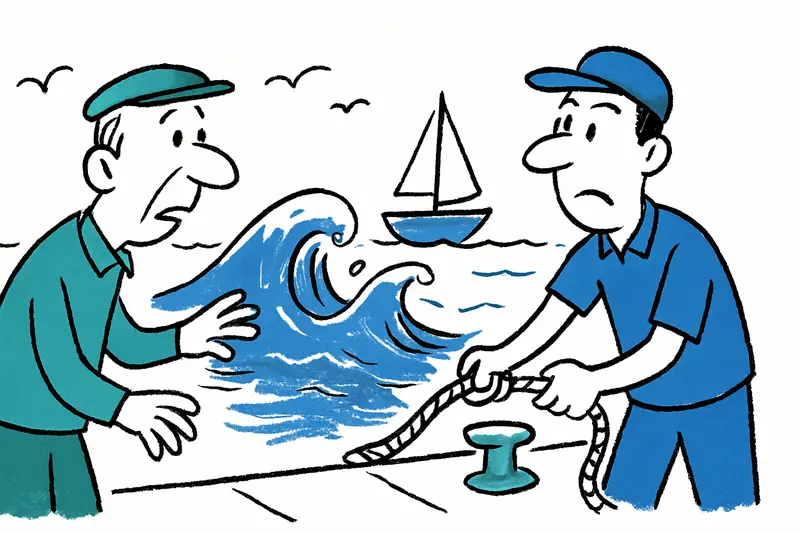
In the morning fishermen stood on the quay in Port de Sóller and calmly checked their lines. On the breakwater of Port d'Andratx one berth shifted a few centimetres after the next small rise in the water — enough to see mini-waves on the concrete, but not enough to cause panic. Between the sound of seagulls and the distant bustle of tourists something happened that at first glance seems unusual: the sea level suddenly fluctuated noticeably.
The regional service of AEMET speaks of rissagas, that is, rapid sea level fluctuations that can be explained meteorologically. While on Menorca, in the harbor of Ciutadella, values up to 86.4 centimeters were measured in the morning, the fluctuations on Mallorca remained significantly smaller. Nevertheless, Port d'Andratx and Port de Sóller were recorded — harbors that can be more vulnerable because of their location.
Key question
How well are our harbors and boat owners prepared for such sudden water level jumps — and is the current warning and information situation sufficient to avoid damage?
Critical analysis
Rissagas are not a new phenomenon; they occur when rapid changes in air pressure combine with certain harbor shapes. On Menorca, where harbor geometry amplifies such fluctuations, long measurement series are available. The risk is lower on Mallorca, but very locally variable: small bays with a west or southwest orientation react more strongly. That means: not the entire coast is equally affected, but certain "hotspots".
Current practice, however, seems somewhat rigid. Many small marinas and recreational boat owners rely on general weather forecasts or on what they perceive on site. Measurement points that are precisely oriented to the harbor basins are often missing. Clear, easy-to-understand information for tourists who take over a yacht charter or a rental boat is often lacking as well.
What is missing from the public discourse
There is a lot of talk about storm warnings and high seas, about heavy rain and beach hazards. Concrete information on short-term air-pressure-induced water level fluctuations is almost completely missing. Who thinks about air pressure while strolling along the promenade? Yet harbor operators, rental companies and recreational skippers are directly affected. Easily accessible local values are also missing: harbor sensors that show the current deviation from the normal level online, and simple behavioral recommendations in several languages.
Everyday scene from Mallorca
Imagine the street along the Passeig Marítim in Palma: an elderly man feeds pigeons, next to him a young boat rental operator tightens lines because customers are just boarding. One phone call is enough, and for ten minutes the renter has to retie lines — even though the weather is sunny. Such small, invisible measures happen daily, but they are uncoordinated and mostly remain private.
Concrete solutions
- Install harbor-adjacent gauge sensors with real-time display, ideally linked to local warning levels for marinas.
- Align AEMET messages more with harbor risks: short additional notes when pressure fields change rapidly.
- Mandatory information for rental boat companies and charter agencies: checklist for anchoring and mooring practices when a rissaga warning is issued.
- Publicly visible notices at exposed breakwater heads and slipways in multiple languages.
- Regular drills for harbor staff and rental crews to quickly take in lines and check moorings.
Punchy conclusion
Rissagas are rarely dramatic but can cause local hassle and damage. It would be wise not to confuse calm on board with carelessness: with targeted measurement, clear communication and simple rules of conduct, unpleasant surprises could be avoided. Mallorca does not need alarmism, but better information where the sea suddenly behaves differently.
Frequently asked questions
What are rissagas and why do they happen around Mallorca?
How concerned should boat owners in Mallorca be about mini-tsunamis?
Which harbors around Mallorca are most at risk from rissagas?
What public information about rissagas is currently missing for Mallorca?
What practical steps can harbor operators and skippers take to handle rissagas?
Are there specific guidelines for tourists renting boats during rissaga warnings in Mallorca?
How do rissagas differ between Menorca and Mallorca?
Where can visitors find information or alerts about rissagas in Mallorca?
Similar News
Stinging jellyfish in Cala Banyalbufar: Why everyone suddenly fled the water
In Cala Banyalbufar, Pelagia noctiluca washed up in droves. A personal account of why this is no coincidence, what is of...
New low-pressure trough brings rain — and the heat remains: What's missing in Mallorca?
A short, intense window of showers hit Mallorca, yet the air remained muggy and warm. Key question: Why does rain hardly...

Klaus-Michael Kühne has died: The entrepreneur who gave Mallorca a second home
He first arrived on the island at 60; later the holiday house became Castell Son Claret – a hotel, a music venue and an ...

Buying Instead of Moving Away? Why Every Fourth Property Owned by Balearic Residents Isn't Located Here
Almost a quarter of the apartments purchased by Balearic residents are located on the Spanish mainland. A concise analys...

Palma markets itself in the USA — but who is the city really for?
The tourism foundation is investing over €200,000 in US promotions to attract affluent visitors to Palma. Does that acco...
More to explore
Discover more interesting content

Boat Tour with BBQ along Es Trenc Beach

Private transfer from Mallorca Airport (PMI) to Pollensa
