
Between Mom-and-Pop and Rooftop Pool: How the Blanquerna Corner Is Losing Its Character
Between Mom-and-Pop and Rooftop Pool: How the Blanquerna Corner Is Losing Its Character
The corner at the start of the Blanquerna pedestrian zone is being squeezed between traditional neighborhood businesses and chic comfort living. What remains of old Palma?
Between Mom-and-Pop and Rooftop Pool: How the Blanquerna Corner Is Losing Its Character
Key question: Is the area around Blanquerna losing its identity — and who can still stop it?
On a mild morning walking along the Riera, you hear the clatter of scooters, the clinking of cutlery in new restaurants and occasionally the muffled bass from a hotel pool gym. The air smells of fried onions and chickpeas — somewhere a stew is simmering, the kind local hosts have been serving here for decades. At the same time, shop windows flash bright logos, sushi menus with avocado icons, and signs luring in English. This is the Blanquerna corner: a patchwork of original mom-and-pop shops, a retro cinema and tidy feel-good islands.
The change is not spectacular; it creeps in. Old grocery shops like the Sabater-like store, the little bar with its decades-old counter and the cinema with padded seats from the '70s still exist. Beside them, however, burger chains, sushi bars, stylish Italian eateries and a four-star hotel with a rooftop pool have moved in, as explored in Who Owns Palma? When Luxury Quietly Repaints the Working-Class Neighborhoods. Empty shop windows recall forgotten business models; on a ruin the name of a former bar still hangs. A coexistence is forming that won't stay side-by-side for long.
Viewed critically: gentrification is happening here in spots. New businesses bring money and visitors, but also rising rents and changing clientele. Those who live in this corner today may soon no longer meet the people who grew up here. It doesn't just replace shops; it changes the rhythm and sound of the neighborhood: less chatting on the sidewalk, more laptops at the café table.
What is often missing from the public discourse are concrete figures and the perspectives of residents. People talk about "chic" and "authenticity", but seldom about lease agreements, shop rents or the plans behind the new buildings. Cultural and social costs are hardly measured either: which craft businesses can still survive under the new conditions, as recent closures highlight in End of a Neighborhood Era: Can Comas on Aragón Street Closes After 29 Years? Who will be pushed out of the quarter because their grandchildren can no longer afford the inheritance?
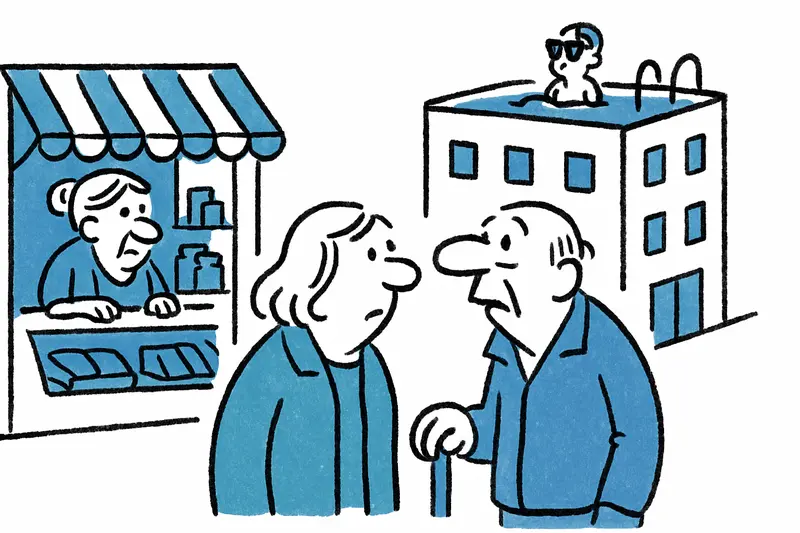
A scene from everyday life: in front of the Taj-Mahl—uh, the small Indian eatery — two seniors in boots and windbreakers stand and flip through a notice. They laugh about the prices, swap memories of the old Sagrera bar, as examined in New residential building instead of Bar Sagrera? Dispute over the corner plot in Palma, and then move on, past a fashion boutique with skirts that are too short. On the Marquès a child sits on a stair landing; a construction crane outlines itself on the horizon.
So what to do? There are concrete approaches and they need political backing: 1) commercial spaces with term protection: short lease terms for startups, longer ones for traditional craft businesses. 2) funding pools for heritage shops that receive modernization funds if they secure local jobs. 3) rent caps or graduated rents for housing in transition areas, combined with a quota for affordable apartments in new buildings. 4) municipal pre-emption rights and community land trusts so that vacancies don't automatically give way to luxury properties. 5) a protection register for culturally significant places — cinemas, bars, bakeries — with small tax reliefs for operators.
These tools must be negotiated locally: neighborhood councils, business associations, urban planners and the affected residents should have a binding say. Otherwise the investor decides alone — and the corner will be polished smooth until only the names of the old shops cling to the facades.
Conclusion: the Blanquerna area is not a myth, it is a field of work. Anyone who likes Palma for more than a postcard should listen now: to the clatter of plates, the stories of the old hosts, the flicker of the Rivoli foyer. It's not only about nostalgia, but about the question of which city we want to recognize tomorrow morning at the espresso counter.
Frequently asked questions
Is the Blanquerna area in Palma losing its local character?
Why are traditional shops in Palma's Blanquerna area disappearing?
What does gentrification look like in central Palma neighborhoods like Blanquerna?
What kind of businesses can still survive in the Blanquerna area of Palma?
Is the Blanquerna area still worth visiting if you want the real Palma?
What is the Riera area like near Blanquerna in Palma?
Are rooftop pool hotels changing neighborhoods in Palma?
What can Palma do to protect neighborhoods like Blanquerna?
Similar News

Mistaken identity with fatal consequences: Brutal assault in S'Aranjassa — what's missing in the follow-up?
At S'Aranjassa a visitor to a finca was tied up, beaten and thrown out of a van. Three men have been arrested, including...
High heel slips, car accelerates: accident on Camí de Son Hugo
A woman lost a high-heeled shoe on the forecourt of the sports facility at Camí de Son Hugo. The car accelerated, mounte...

Phone Scam: How Two Hotel Employees at Playa de Palma Lost Thousands of Euros
One morning in September, two reception employees at Playa de Palma were pressured by alleged alarm-company staff — in t...

When the Wallet Becomes a Danger: Attack in Peguera and Lessons for Mallorca
In Peguera, two women are said to have stolen the wallet from a 75-year-old German couple. When the victim intervened, t...
Plata stays Plata: Young people take over, Llonguets remain
A small bar on Carrer de l'Argenteria will continue: Tolo Serra hands the place over to young Mallorcans at the end of t...
More to explore
Discover more interesting content

Can Cap de Bou

Townhouse Lleo 72
