
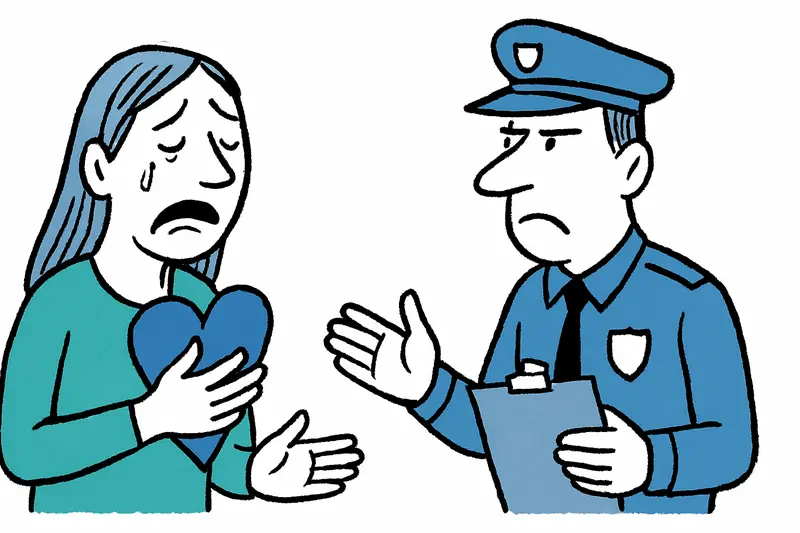
My heart burns: Twelve years without Malén — The gap in the system
Since December 2, 2013, there has been no trace of then-15-year-old Malén Ortiz. A mother continues to fight — and asks questions of investigators and society.
My heart burns: Twelve years without Malén — The gap in the system
On December 2, 2013, then-15-year-old Malén Ortiz disappeared in the municipality of Calvià, as reported in Malén Ortiz — twelve years without a trace. Twelve years later her mother, Natalia Rodríguez, still sits in Santa Ponça trying to keep the search alive out of love. The facts are sparse: date, age, place — and the open question why a case can remain unsolved for so long.
Key question
Why has the search for Malén been going on for more than a decade, even though relatives repeatedly report tips and there are concrete locations that have been checked?
Critical analysis
On Mallorca, between La Pinada and the promenade in Santa Ponça, the image of a missing girl hangs on posters and in people's minds. Yet investigative work seems sluggish: long-open cases suffer not only from time, but from staffing, prioritization and often from patchy coordination. When relatives report that only two officers are handling a case, it is a warning sign. Complex missing-person cases need more than sporadic inquiries — they need permanent evidence preservation, regular reviews of new leads and access to specialized forensic resources.
The family has repeatedly pushed for the involvement of specialized criminal investigation units. Such units bring experience that often makes the difference in cold cases. At the same time, occasional excavations or second checks show that investigators are not inactive, as described in New leads in the Malén Ortiz case: Why answers in Mallorca are taking so long — but for relatives it often remains unclear whether every action is systematically documented and traceable. And secrecy alone does not always explain the lack of transparency toward families.
What's missing in public discourse
We talk about numbers, investigations, results — but hardly about structural gaps: no binding protocols for the long-term handling of cold cases, no guaranteed minimum resources at island level, unclear communication obligations toward families. Also underexposed: psychological care for relatives, financial support for private search efforts and a central, publicly accessible database for missing persons at the regional level.
Everyday scene from Santa Ponça
On Sunday La Pinada lies quiet: the smell of pine mingles with the sea, children practice on their bikes, older people feed pigeons on the promenade. Between deckchairs and umbrellas the poster with the girl's smiling face remains fixed, the edges weathered but the image unchanged. A mother with dyed hair stops, runs her hand over the poster as if trying to hold back time — then walks on. This is what the island looks like on days when some things keep on hurting.
Concrete solutions
1. Set up a permanent cold-case unit for the Balearic Islands: clearly defined capacities, regular case reviews, access to forensic labs and a case manager for each family. 2. Obligation to minimum information for relatives: regular, comprehensible updates, no months of radio silence. 3. Standardized protocols for ground and field searches, including external oversight and clear documentation of search results. 4. Expansion of a regional missing persons registry with publicly accessible, data-protection-compliant information and a hotline for tips. 5. Financially secured psychosocial support for relatives and the possibility to consult independent experts. 6. Promotion of DNA databases for unsolved cases, coupled with legal safeguards to protect the rights of those affected.
What authorities and society can do
Authorities must provide resources deliberately and work transparently. Society can help by taking tips seriously and not treating reports as sensation stories but as potential keys to solving, as local coverage like Nueva pista en el caso Malén Ortiz: las investigaciones en Mallorca continúan shows. Schools like IES Calvià, places like La Pinada and entire neighborhoods can be networks that preserve memories while collecting new leads.
Concise conclusion
Malén is not just a file number; she represents the many unanswered questions that remain when a person disappears. Mistakes can be identified and, at least partly, fixed: more staff, better coordination, binding information obligations and real support for families. If we mean this seriously, empathy must turn into a plan. Until then a mother faces daily waiting — and we have the duty to make the gap in the system visible.
Frequently asked questions
Why is the Malén Ortiz case in Mallorca still unsolved after so many years?
What happens when a person goes missing in Mallorca and the case becomes long-term?
Why do families of missing people in Mallorca ask for specialized investigators?
How should authorities communicate with families during a missing-person investigation in Mallorca?
What is Santa Ponça in Mallorca known for in the Malén Ortiz case?
What is La Pinada in Santa Ponça connected to in Mallorca?
What can Mallorca authorities do better in old missing-person cases?
How can people in Mallorca help when a missing-person case is still open?
Similar News
When the Wallet Becomes a Danger: Attack in Peguera and Lessons for Mallorca
In Peguera, two women are said to have stolen the wallet from a 75-year-old German couple. When the victim intervened, t...
Plata stays Plata: Young people take over, Llonguets remain
A small bar on Carrer de l'Argenteria will continue: Tolo Serra hands the place over to young Mallorcans at the end of t...
Unnoticed in the Luggage Compartment: How a Boy Traveled More Than 100 Kilometers in a Team Bus
A minor traveled in the undercarriage of a team bus for more than 100 kilometers until his cries for help were heard. A ...

Cap Vermell Grand: Second Michelin Key – a Gift for the East
The Cap Vermell Grand in Capdepera has been awarded its second Michelin key. For the region this elevates the luxury off...
Eurowings lets four aircraft carry names – a friendly idea that also reaches Mallorca
Eurowings is launching a campaign: four Airbus A320s are to carry the first names of people who help others in everyday ...
More to explore
Discover more interesting content

Can Cap de Bou

Townhouse Lleo 72
