

Malén Ortiz — twelve years without a trace
Malén Ortiz — twelve years without a trace
Today marks the twelfth anniversary of the disappearance of then 15‑year‑old Malén Ortiz. A case that began in Magaluf and is kept alive by the family with vigils in Santa Ponsa. What is missing to bring light into the darkness?
Malén Ortiz — twelve years without a trace
Key question: Why does this case remain in the dark?
On 2 December 2013 a schoolgirl disappeared. (My heart burns: Twelve years without Malén — The gap in the system) Malén was 15 years old, rode her scooter through Magaluf and wanted to go to her boyfriend. According to investigations, she apparently got into a car with an acquaintance — who that was remains unclear to this day. The family regularly commemorates her with vigils, most recently this Sunday in Santa Ponsa.
The bare facts are simple and disturbing at the same time: place, date, age, the last leg on two wheels, and investigators' assumption that she got into a car. We do not know more with certainty. For the people who live here, these facts are tied to streets, names and the sound of scooters on wet pavement.
At the meeting point in Santa Ponsa on such days relatives and friends stand together, some with candles, others in heavy jackets against the December cold. A bus rumbles past, people grab coffee on the promenade, dogs pull their owners along. All of this gives the commemoration a very ordinary backdrop — it shows how close the disappearance is to everyday life and yet how it leaves a gaping hole.
Critical analysis: The case displays many of the typical characteristics of unsolved missing-person cases. Visible are information gaps pushing in six directions: investigative standards, evidence collection, public communication, witness motivation, media attention and victim support. In particular, there is often a lack of a transparent overview of what exactly has been examined and which leads remain open.
What is missing in the public discourse: There is too little discussion about what has not been found. Which tips have been checked? Which technical possibilities were exhausted? Were there forensic retests at later dates when laboratory methods had improved? Such questions often remain invisible to the public — and that frustrates relatives who need answers.
Walking along the street in Magaluf, you see the mix of tourism and daily life: hotels, small repair shops, ice cream parlors. Such places are memory sites for witnesses who may have seen something small back then but did not think it important. Witnesses who today, after years, still keep silent out of fear of being implicated would need protection measures and clear incentives to come forward.
Concrete approaches that could help here and now: First, a publicly accessible, data‑protection‑compliant case dossier update that explains which leads have been pursued and which remain open. Second, a coordinated cold‑case unit on the islands with access to modern forensic methods — DNA reanalysis, digital evidence recovery, matching with national databases (New leads in the Malén Ortiz case: Why answers in Mallorca are taking so long). Third, a witness program with protection options and anonymous reporting channels, both by phone and digitally.
Fourth: systematic review of traffic cameras, private parking lots and garage footage from the night in question, supplemented by new calls for the review of old video material. Fifth: a low‑threshold support center for families that provides legal, psychological and organizational help so that memorial gatherings do not become the only form of applying pressure. Sixth: a reward fund, publicly established and transparently managed, can make lost tips attractive again.
Many of these measures can be implemented without years of political debate: authorities can pool their cold‑case resources, courts and data protection agencies can agree on standardized procedures for releasing old footage, and local administrations can provide spaces and logistical support for searches and memorial events.
This is not about convicting suspects, but about the principle: every family has a right to know. Twelve years is a long time — for relatives an ongoing uncertainty. Those who live on Mallorca know the places where life goes on; and precisely for that reason the pressure to find answers remains palpable here.
Conclusion: The case of Malén Ortiz is an open chapter that needs more transparency, technical sharpening and low‑threshold reporting channels. If authorities and society pull together, there is a real chance to shed new light on old leads (Nueva pista en el caso Malén Ortiz: las investigaciones en Mallorca continúan). Until then Santa Ponsa remains a place of remembrance — with the quiet sound of scooters that recalls an evening when everything changed.
Frequently asked questions
What is the Malén Ortiz case in Mallorca?
Where did Malén Ortiz disappear in Mallorca?
Why does the Malén Ortiz case remain unsolved after so many years?
What happened on 2 December 2013 in the Malén Ortiz case?
Why is Santa Ponsa linked to Malén Ortiz?
Could old CCTV or traffic footage still help the Malén Ortiz case in Mallorca?
What kind of support do families need in long missing-person cases in Mallorca?
What could help witnesses come forward in the Malén Ortiz case?
Similar News

Turquoise in the City: How dangerous is the color play of the Sa Riera?
The Sa Riera in Palma suddenly turned turquoise — a pretty motif, but behind the effect lies a discharge of saline waste...

Jeckliner at Sunnesching: Cologne spirit sets sail from Palma
In September 2027 the Mein Schiff 2 briefly becomes a floating carnival stage: four days with Cologne bands, comedy and ...
Finally Home: Mike and Leyla Heiter Buy Villa with Sea View in Mallorca
The reality TV couple Mike and Leyla Heiter have bought a house in Mallorca with a roof terrace and sea view. An Instagr...

Arrest after series in Palma: Who protects apartments from repeat offenders?
The National Police arrested a man in Palma who investigators say may have broken into several apartments. In one incide...
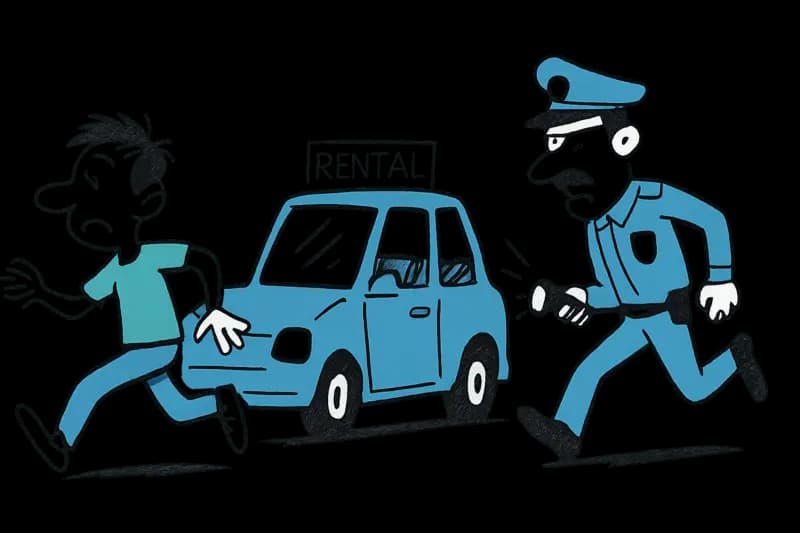
How a Teenager Without a Driver's License Stole a Rental Car — and What It Means for El Arenal
In El Arenal a minor took advantage of an unattended rental car with its engine running. Flight, climbing over walls and...
More to explore
Discover more interesting content

Can Cap de Bou

Townhouse Lleo 72
