
Network in Mallorca: How Around 50 South American Women Were Driven into Fear and Exploitation
The Guardia Civil dismantled an alleged human trafficking network in Alcúdia: twelve freed victims, five arrests. How could it remain undetected for so long and what is needed now?
Network in Mallorca: How Around 50 South American Women Were Driven into Fear and Exploitation
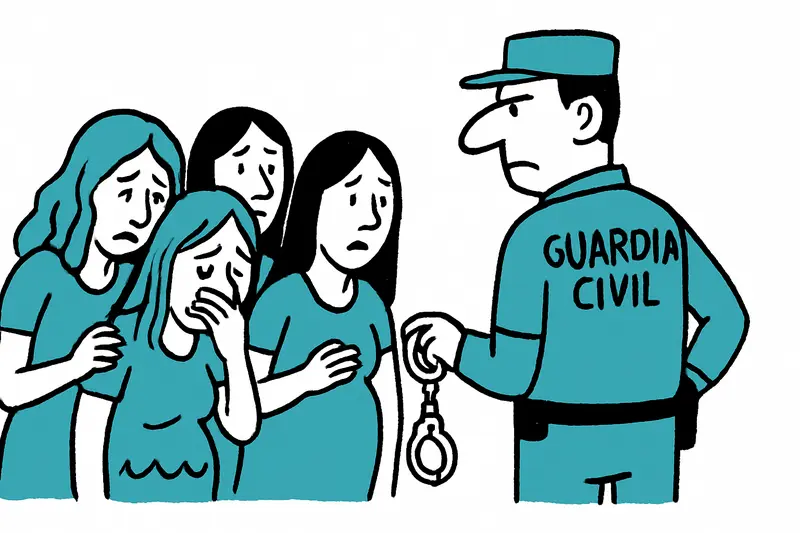
The Guardia Civil on Mallorca raided a group that, according to investigations, lured women from South America to Spain and exploited them here. The operation in Alcúdia resulted in several arrests, later reported in Ten Suspects from Raid Against Forced Prostitution in Court: A Reality Check for Palma, and the freeing of twelve women from their coercive situation. Investigators found cash, cans containing narcotics and firearms. According to information, up to fifty women could be affected; many had traveled because of alleged job offers in the hospitality sector and ended up in a system that forced them into prostitution.
Key question
How could a network on such a visible island as Mallorca control women in this way for an extended period without the situation being resolved earlier?
Critical assessment
The facts are alarming, but not surprising: victims with insecure residency status are particularly vulnerable. They often have no safe point of contact, do not speak the language well enough, fear deportation and therefore avoid authorities. Such circumstances allow criminal structures to exert pressure: phone control, debts, threats — and in this case apparently also involvement in drug use and transport, so that the women would continue the 'business'. The arrests in Alcúdia and the seizures show that the organization likely involved not only human trafficking but also other crimes such as drug and weapons trafficking.
What is missing in the public discourse
Two points are often overlooked in the debate: first, the local demand market — those who book the services — is too rarely part of the discussion and state strategy. Second, there is a lack of clear presentation of the access barriers for affected people with irregular status: health and social services are often not accessible, counselling offerings are insufficiently known or available only in Spanish, and these challenges interact with how prostitution has been shifting online, as documented in Invisible and Dangerous: How Prostitution on Mallorca Moves Online. Both factors contribute to cases remaining hidden for a long time.
An everyday scene in Mallorca
Morning in Alcúdia: fishermen are netting boats at the harbor, a delivery van is parked in front of the bakery, in the café at the plaza people discuss the weekly market. But among tourists and locals the white vans of the Guardia Civil also arrive, now regularly visible in the area. Such images remind us that the island not only has postcard motifs but also dark sides — hidden in apartments, in courtyards, in properties that at first glance appear to be ordinary living spaces.
Concrete solutions
1) Better contact points: Independent, multilingual counseling centers that also accept and inform people without regular residency status without immediately reporting them to authorities. 2) Legal bridges: Temporary residence permits for identified victims so they can receive support and testify without fear. 3) Prevention in origin countries: Cooperation with consulates and local NGOs to raise awareness about common schemes such as false job offers. 4) Combat demand: Sanctions and enforcement mechanisms against clients and operators; awareness campaigns in tourist centers. 5) Controls and financial monitoring: Stronger tracking of money flows, more thorough checks in industries that serve as cover (for example alleged hospitality businesses such as Hidden Offers in Mallorca's Massage Salons: Between Legality and Coercion). 6) Training: Staff in hotels, taxi companies, rental agencies and health centers should be trained to recognize signs of human trafficking and know reporting channels. 7) Interdisciplinary teams: Police, social services, healthcare and specialized lawyers must enable rapid, coordinated responses and consistently apply protection protocols.
What is important now
Activating the victim protection protocol and housing the freed people in safe facilities are the right first steps. What will be decisive is whether authorities and social institutions maintain coordination in the long term, whether long-term support is offered to those affected, and whether investigations uncover the structures behind the perpetrators — including financial flows and possible intermediaries in the countries of origin.
Pointed conclusion
The raid in Alcúdia dismantled a gang and freed individual victims. At the same time, the case reveals how vulnerable people without papers are and how many cogs must work together for such networks to survive. Those who live or work in Mallorca see daily life at the harbor and in the streets — and should not look away when someone silently suffers. Authorities, civil society and businesses must act now: quickly, loudly and in a coordinated manner.
Frequently asked questions
How can human trafficking cases go unnoticed in Mallorca for so long?
What should I know if someone in Mallorca is being forced into prostitution?
Why are migrant women especially vulnerable to exploitation in Mallorca?
What signs can point to a trafficking network in Mallorca?
What happened in the Alcúdia police operation in Mallorca?
Why do false job offers in Mallorca put people at risk?
Where can victims of exploitation in Mallorca get help without papers?
What can hotels, taxis and rental agencies in Mallorca do to spot trafficking?
Similar News

New trick at Palma Airport: suitcase stolen from the belt — a reality check
On September 28 a 36-year-old allegedly stole a suitcase from the baggage belt of a 51-year-old German passenger at Palm...
Urgent Clearing of Palma's Torrents: Flood Prevention or Symptom of Short-Sighted Planning?
The city of Palma is responding to storm forecasts and has cleared several torrents. We ask: Is the short-term clearing ...
Evaneos and Mexico: A Reality Check for Sustainable Travel
Travel advertising often reads like a promise: local, sustainable, unique. But how deep do these promises really go? A c...

From Megapark to the Altar: Party Singer Now Offers Weddings in Mallorca
A well-known party artist combines partying and marriage: instead of a traditional church there are ceremonies at the Me...

The Maricarmen Case: Why an Eviction Is Forcing Spain's Housing Debate
Images of an 87-year-old woman on a stretcher have sparked a debate in Spain that also runs deep in Mallorca. Who protec...
More to explore
Discover more interesting content

Can Cap de Bou

Townhouse Lleo 72
