
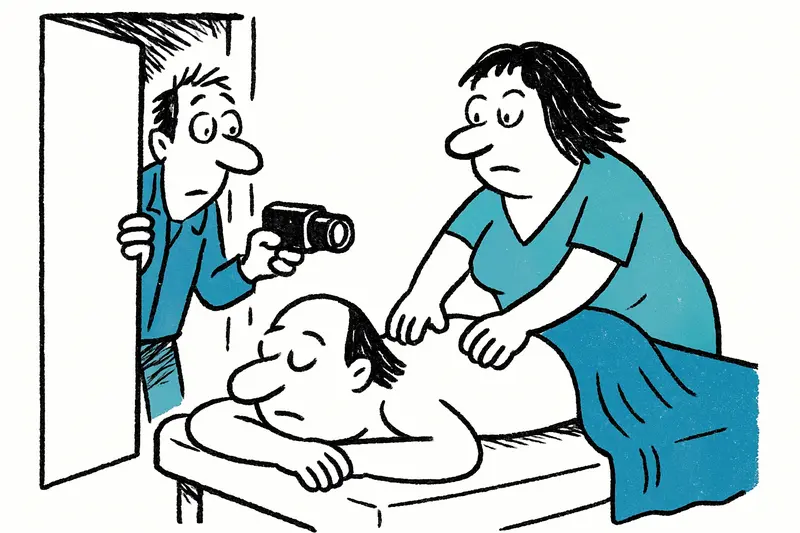
Hidden Offers in Mallorca's Massage Salons: Between Legality and Coercion
A hidden camera revealed what residents had long suspected: some massage salons in Mallorca apparently offer sexual services for money — often under pressure. Why investigations stall and what steps are now needed.
Behind the Shopfront Decor: The Question We Must Ask
Last week a documentary filmed with hidden cameras ran across screens — as shown in hidden-camera report on alleged sexual services in Mallorca massage salons — and in the narrow alleys of Son Armadans and El Terreno the conversations could still be heard the next morning, like a scooter that stopped too late. What many here already suspected finally got a face: in some inconspicuous massage salons there appear to be offers that go beyond wellness. The central question now is: how can Mallorca distinguish between lawful self-determination and protecting those who are under coercion?
Why Investigations So Often Stall
The legal situation is a patchwork. In Spain prostitution as such is not automatically a criminal offence, but as soon as third parties profit or pressure is applied, criminal law against human trafficking and forced prostitution comes into play. That makes investigations complicated: witnesses are often frightened, evidentiary situations are unclear, and statements rarely translate easily into court. In districts like Playa de Palma or parts of Magaluf, premises change operators quickly, phone numbers are swapped, and reports disappear into an ocean of cash transactions.
Added to that is fear: strange voices, lack of language skills, threats — you hear it in the early evening when the promenade lights come on and voices fall silent. Many affected people have no reliable points of contact, do not trust the police, or fear reprisals from their own networks.
Aspects That Are Too Rarely Discussed
Public debates often focus on raids and headlines. Less visible, however, are:
1) The role of landlords and property chains. Spaces are sublet at short notice, commercial addresses rotate. This can overlap with problems such as illegal occupied properties in Mallorca. A landlord who does not scrutinize revenues can unwittingly become complicit.
2) Digital shadow plays. Ads no longer disappear only in shop windows but on platforms and messengers, as documented in Invisible and Dangerous: How Prostitution on Mallorca Moves Online. That makes controls even more difficult.
3) Economic pressure and seasonal work. Mallorca is shaped by the tourism cycle: seasonal jobs, precarious housing and the pressure to earn every euro create entry points.
4) The psychological burden on those affected. Physical violence is the most visible form — yet isolation, depression and fear often remain invisible and are hard to document.
Concrete Measures That Could Make a Difference
Short raids alone are not enough. What is missing on the ground is a sustainable bundle of prevention, protection and legal follow-up. Practical proposals would include:
Multilingual contact points and street outreach: Trusted workers who are active at night, available in Spanish, English, Romanian, Russian and Chinese — people who speak on equal terms, not just hand out brochures.
Anonymous reporting portals and safe ways to file complaints: Encrypted, easily accessible channels that allow initial tips without direct confrontation and forward them to social services.
Coordinated task force instead of isolated raids: Police, prosecutors, social services, health authorities and NGOs should act together regularly — with clear procedures for victims who need protection, medical care and accommodation.
Checks on property and business licenses: Quick inquiries into operator changes, regular inspections of commercial premises and sanctions against landlords who systematically ignore suspicious cases.
Digital cooperation: Platforms must cooperate, remove ads faster and provide data to authorities in cases of concrete suspicion — of course under rule-of-law safeguards.
Long-term integration and training programs: Labor market programs that build alternative income opportunities, language courses and legal advice — so people have options without existential fear.
Keeping the Balance — and Acting Anyway
It is a narrow path: no one wants to criminalize people who voluntarily and autonomously earn their livelihood. At the same time the island must not become a stage for exploitation. The weather here is often friendly, the scent of sea and orange trees lays over the town — that must not distract from the fact that behind some doors people are in distress.
What matters now is less symbolic politics and more concrete, locally anchored work: more street workers, trust-building measures, legal reforms and closer networking between authorities and aid organizations. And not least: a neighborhood that listens instead of looks away. Because Mallorca is more than beach bars and postcard idyll — it is also a community that bears responsibility.
The challenge is great; the island is small enough to tackle it together.
Frequently asked questions
How can you tell if a massage salon in Mallorca is legitimate or hiding something else?
Is prostitution illegal in Mallorca and Spain?
Why are investigations into suspected exploitation in Mallorca so difficult?
What should someone do if they suspect coercion in a massage salon in Mallorca?
Why are Playa de Palma and Magaluf often mentioned in discussions about hidden sex work?
How can landlords in Mallorca become involved without realising it?
What help is available in Mallorca for people trapped in exploitation?
Why do experts say Mallorca needs more than police raids to address this issue?
Similar News
Autumn approaches on the island: Still sun, but a rain band will soon bring relief
The last warm days on Mallorca are still here – around 30°C by day, just under 20°C at night. According to AEMET, a rain...
TV documentary on the Mediterranean: How threatened is Mallorca really?
A new television documentary follows marine research off Mallorca and shows: sea temperatures are rising, and farmers ar...
After Ceuta: Intelligence Activities in Mallorca – A Reality Check
The CNI, National Police and Guardia Civil have intensified their surveillance in Mallorca. What does this mean for isla...
An evening that resonates: Hans Theessink in the Claustre of Llucmajor
With a guitar, dry humour and a voice that carries stories: Hans Theessink turned the Claustre de Sant Bonaventura in Ll...

Reality Check: Will Mallorca Become the Weather Laboratory of the Mediterranean?
A new TV documentary has the Mediterranean off Mallorca in its sights. What research shows — and what we on the coast st...
More to explore
Discover more interesting content

Boat Tour with BBQ along Es Trenc Beach

Private transfer from Mallorca Airport (PMI) to Pollensa
