
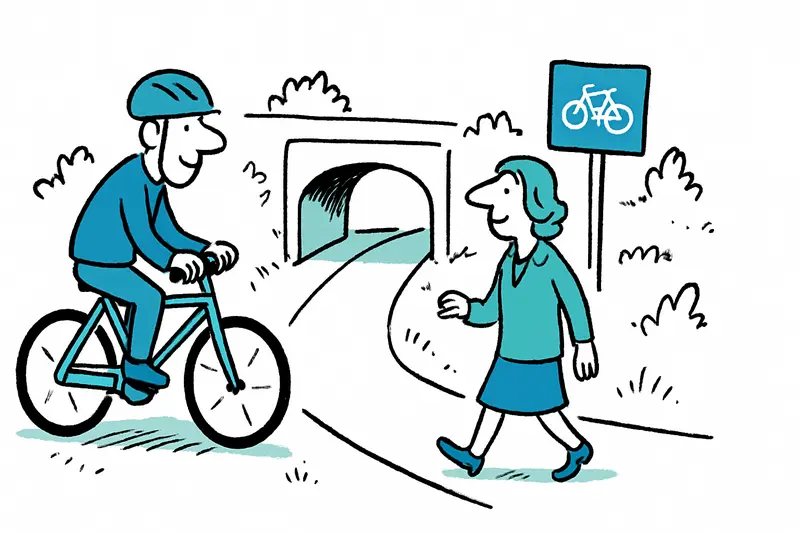
New bike and pedestrian path in Canyamel: More space for cyclists and walkers
New bike and pedestrian path in Canyamel: More space for cyclists and walkers
Canyamel has a new connection for cyclists and pedestrians: €1.5 million from the Next Generation program funds a protected route including an underpass to the Torre de Canyamel.
New bike and pedestrian path in Canyamel opened
€1.5 million from Next Generation funding links beach, village and the Torre
At the end of May 2026 a new piece of everyday life was inaugurated in Canyamel: a combined bike and pedestrian path along the road down to the coastal village. You immediately notice that this was not just gravel and asphalt being laid, but space being redistributed — for those who walk and for those who cycle. Birds are singing, the engines of the few cars sound muffled, and the heat of the day meets the shade of newly planted mulberry and olive trees.
The project cost €1.5 million and was financed with funds from the European Next Generation program, and the municipality's broader investments are detailed in Canyamel: Million-euro plan for 2026. The route runs parallel to the coastal road and aims above all to provide one thing: more safety. For parents with prams, older people, commuters on e-bikes and also for visitors who want to reach the Torre de Canyamel without a car. An underpass connects the path directly with the area around the old defensive tower from the 13th century, so no one has to cross the heavily trafficked road anymore.
On site there are small but noticeable changes: wide paved strips at junctions, clear markings for cyclists and pedestrians, new seating where people can catch their breath, and subtle lighting for early mornings or the return after sunset, similar to the New pedestrian and cycle path completed at Playa de Palma. The municipality speaks of a step toward more sustainable mobility — an honest goal that here has been translated into concrete infrastructure.
I took a lap on the route on a Wednesday morning. A school group cycled by in pairs, an elderly couple walked their dog at a relaxed pace, and at the little kiosk at the junction the owner was already preparing the first cafés con leche for the early tradespeople. Scenes like these show that the path is not only meant for sport or tourism, but for the everyday life of people here.
The connection to the Torre de Canyamel is more than a tourist perk. The tower is part of the local identity, and the new underpass lowers the barrier to reach it on foot or by bike. This should help distribute visitor numbers more evenly and relieve peak times on the narrow coastal road. The police and local emergency services will also appreciate the improved access — especially on days with large crowds at the beach.
Why is this important for Mallorca? On an island where the road often serves as the main lifeline, safe alternatives are needed. More space for non-motorized traffic eases pressure on car traffic, reduces short car trips and creates space that would otherwise be swallowed by vehicles. If a path like this in Canyamel is copied elsewhere — with thoughtful lighting, good signage and regular maintenance — smaller towns outside the big tourist centers will benefit too, as part of Mallorca's plan for 60 km of safe routes.
A look ahead: the investment is now in place; daily use will show whether the route has the intended effect. Maintenance remains important — a bike path that becomes overgrown or full of potholes helps no one. Therefore a simple, reliable maintenance plan would be desirable: regular cleaning, checking markings and occasional inspections of the lighting. In addition, the municipality could explore partnerships with local bike rental companies, install small repair stations or publish a map of safe routes.
In the end it is an invitation: try the route, take time for a walk to the Torre at sunset or cycle calmly to the beach. This new connection is not a monumental structure, but a practical gain for everyday life in Canyamel — a place where you can see how infrastructure makes life a little more pleasant.
What remains: A safer route for pedestrians and cyclists, a direct connection to the historic tower, and an investment in quieter, less car-dependent mobility — funded by European funds and now open to everyone who likes to experience the island a little more slowly.
Frequently asked questions
What is the weather usually like in Mallorca in spring?
Can you swim in Mallorca outside the main summer season?
What should I pack for Mallorca if the weather is changeable?
Is Mallorca a good destination for outdoor activities in the shoulder season?
What is the weather like in Palma de Mallorca compared with the rest of the island?
Is Sóller a good place to visit when the weather in Mallorca is warm?
Is Pollença better for Mallorca holidays in cooler months?
When is the best time to visit Mallorca for comfortable sightseeing?
Similar News

Who Benefits from the Half‑Hourly Flight on the Edge? Aena, Investments and the Island's Interests
Almost one billion euros is flowing into Son Sant Joan. The figures show the scale of investment and expected beneficiar...
Are the Balearic Islands the Southern Border of Europe? A Reality Check on Immigration
The Balearic Islands are again calling for EU aid after a sharp rise in arrivals by sea. Conflicting priorities between ...

"Expensive chaos" and many open questions: What clients can do when a lawyer suddenly stops responding
Several clients complain that a well-known German lawyer in Mallorca has been unreachable for months. Key question: What...
TV tip: 'The Last Problem' — Mallorca as the setting of a classic crime
A classic whodunit on Mallorca: A new miniseries set in spring 1959 brings storm, an isolated hotel and a dense web of s...
Nipping Sea Creatures: Why Bathers in Cala Major and Elsewhere Should Be Cautious
In Cala Major, bathers have reported being nipped by small fish. What is behind it, how can problems be avoided — and wh...
More to explore
Discover more interesting content

Can Cap de Bou

Townhouse Lleo 72
