
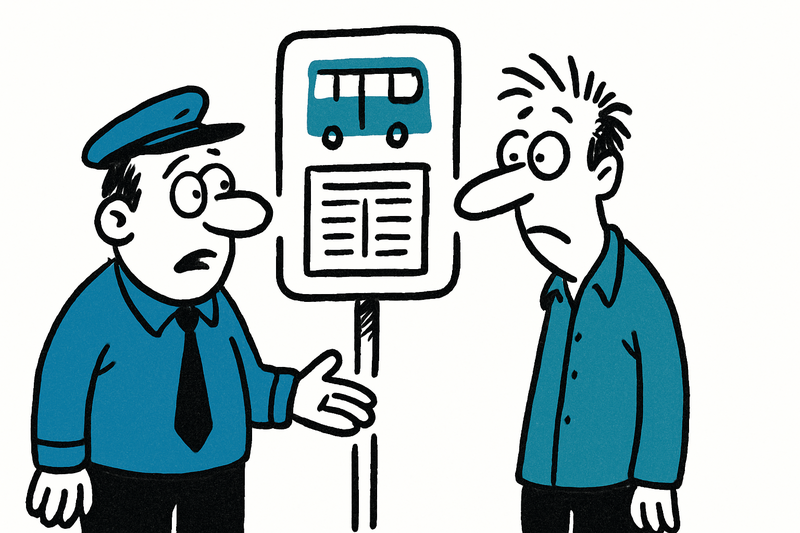
New EMT Timetable in Palma: Opportunities, Questions and a Metro Experiment
EMT has revised the timetables of several lines — the most notable change: Line 19 is discontinued in favor of a new metro line to Parc Bit. What does this mean for commuters and urban traffic?
New EMT Timetable in Palma: Between Relief and Uncertainty
The sound of squeaking doors at Plaça d'Espanya is part of a Palma morning like the smell of freshly brewed coffee. Since this week, however, some stops sound different: the city bus timetables of EMT have been revised, as reported in Nuevo horario de la EMT en Palma: oportunidades, preguntas y un experimento de metro. Lines 5, 8, 12, 19, 20, 24, 29, 39 and 40 are affected. The city administration cites seasonal differences, lower passenger numbers in high summer and the desire for more efficient scheduling as reasons — but the change raises questions that go beyond mere timetables; local coverage also highlights trade-offs such as reduced daytime frequencies and who bears the cost of those reductions in Cambio de horarios de la EMT en Palma: más tranquilidad en la parada — ¿pero a qué precio?.
Main question: Does the change really improve public transport — or does it just shift problems?
The most striking innovation is the end of line 19. Instead, a new metro line is planned to connect the technology and business park Parc Bit. At first glance this sounds like progress: faster connections, less congestion and a direct rail link to the business district. But for many regular users of the former bus routes it means transfers, new walks to stops and uncertainty whether the transfer to the metro will offer the same flexibility as a bus.
What often gets overlooked
When timetables change, public discussion usually focuses on departure times. Several aspects remain underexposed: What do the connections between bus and metro look like? Are stops accessible, and are there enough bicycle parking spaces? How are employees at Parc Bit informed — many work in shifts that do not always align well with practical metro frequencies? And not least: are the notices at the stops up to date and easy to understand, also for tourists or occasional riders?
On a hot August morning you hear buses less often along the Paseo Marítimo; café seats are often emptier. Right now weaknesses in communication are particularly evident: a colleague stood last week at the Avenida Argentina stop and wondered why his usual vehicle didn't arrive. He hadn't checked the app — a small oversight with big consequences.
Concrete opportunities — and how to make better use of them
The change offers real advantages: the metro to Parc Bit can concentrate commuter flows, shorten travel times and promote lower-emission connections. But to ensure the gains are not eaten up by organizational shortcomings, concrete measures are needed:
1. Transitional shuttles and coordinated connections: In the first weeks, shuttle buses or increased bus frequencies at key nodes should be used until reliable transfer times are established.
2. Better, localized information: Dynamic displays at affected stops, leaflets in companies at Parc Bit and clear notices in the languages used locally (Spanish, Catalan, English) would significantly reduce confusion.
3. Accessibility and bike parking: People with strollers or wheelchairs need short and safe routes between bus and metro. Secure bike parking makes the last mile easier.
4. Feedback loop: A clear, easily accessible way to submit complaints and suggestions — with quick analysis — can help identify real weak points promptly and make adjustments.
How it feels — a local perspective
Anyone walking down the Gran Vía in the morning senses the small changes immediately: more passengers with laptop bags, fewer tourists with suitcases, a bus driver explaining the new route. The metro to Parc Bit will be a blessing for some and a change that requires extra transfers for others. It is up to EMT and the city to make this transition as smooth as possible.
Conclusion: Bold restructuring — but with care
The reorganization shows that Palma wants to adapt public transport dynamically. The central question remains whether this will make travel faster, more climate-friendly and more reliable — or whether the announcements will end in uncertainty without concrete accompanying measures. Anyone standing at the stop in the morning wants one thing above all: clear information and punctual connections. If EMT and the city improve on this, the timetable change can become a real gain for Palma. Otherwise, short time savings risk being quickly overshadowed by frustration over missing connections.
Frequently asked questions
What has changed in the EMT bus timetable in Palma?
Why did EMT in Palma change the bus schedules in summer?
Will the new metro connection to Parc Bit replace bus line 19 in Palma?
Is the new Parc Bit metro in Palma likely to be easier for commuters?
How can I avoid confusion when using EMT in Palma after the timetable changes?
Are EMT bus stops in Palma clearly marked after the schedule change?
What should employees at Parc Bit in Mallorca expect from the new transport changes?
Is the new EMT and metro setup in Palma better for tourists or local residents?
Similar News

When coercive fines aren't enough: Could holiday rental owners soon face prosecution?
The island administration is stepping up action against unauthorized holiday rentals: high daily coercive fines up to €5...

Palma Airport on an Expansion Course — Who Decides How Much Growth the Island Needs?
Aena and Madrid are planning multi-million euro investments for Son Sant Joan and project higher capacities. Concern is ...
Who Gets Left Out? Why Overbookings Will Hit Many Mallorca Travelers This Summer
On hot check-in days at Son Sant Joan, frustrated travelers pile up. New figures from Reclamador.es show that a large sh...
When the Handyman Came: How an Engagement Ring Disappeared in Mallorca and What It Says About Trust
During a repair in Andratx a highly personal engagement ring went missing — a case that calls not only for punishment bu...
How Burglars Test Fincas in Mallorca — and What You Can Do About It
The Spanish National Police warn of a simple but effective trick: small markings on doors reveal whether a finca is occu...
More to explore
Discover more interesting content

Can Cap de Bou

Townhouse Lleo 72
