
New Tragedy on the Route to Mallorca: Sea Rescue Draws Lessons from Night Operations
New Tragedy on the Route to Mallorca: Sea Rescue Draws Lessons from Night Operations
Several emergencies off the Balearic Islands have affected dozens of people in a short time. What do rescue services know, what fades from the view of island residents — and what needs to change?
New Tragedy on the Route to Mallorca: Sea Rescue Draws Lessons from Night Operations
Multiple boats, many questions: Why do crossings off our coasts repeatedly end in death?
Key question: How can Mallorca, its authorities and European sea rescue prevent regular boat accidents from becoming normal and people from dying on our coasts?
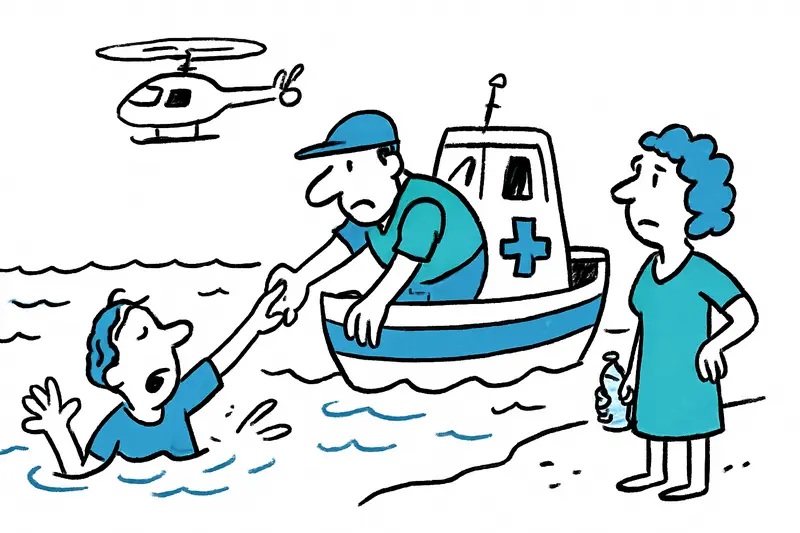
In the afternoon I sat on the Paseo Marítimo, the air heavy with heat and diesel, and far out a helicopter was buzzing as it circled the bay. In recent hours the sea rescue service launched several operations: first, about eight nautical miles southeast of the island of Cabrera two people were pulled alive from the water and flown to the large Son Espases hospital. This echoes recent reporting on incidents south of Cabrera, where 18 people missing off Mallorca. Shortly afterwards the Guardia Civil recovered further people and two dead from the sea in the same area. Other survivors arrived at the Son Espases and Son Llàtzer clinics with severe burns, exhaustion and dehydration.
Only hours earlier rescuers southwest of Mallorca had pulled two completely exhausted men from a drifting boat. The two reported they had been travelling with 19 people; according to them 17 people had died during a roughly two‑week drift. Such reports point to a pattern that accompanies the island daily: boats that remain at sea far longer than planned, people in poor condition and the search for further missing persons.
According to aid organizations there are further indications of missing crossings: in recent weeks several boats are said to have tried to reach the Balearics from the Algerian coast — civil society sources mention about five boats with around 76 missing, according to Six boats, 75 people: When the nights on the coasts grow denser. Independently, boats have also been intercepted in other parts of the Balearics, for example about 30 nautical miles southwest of Ibiza with 15 people on board. And in the past days the authorities recorded several landings with dozens more migrants, and in one episode 337 people were brought ashore in 24 hours.
The facts are shocking, the processes familiar: alarm, helicopter noise, the sound of inflatable boats, the muted bustle in the hospitals. But what the public often does not see is more complicated: search and rescue are personnel- and equipment-intensive, require international coordination, and the boats are often in nautically delicate sea zones where every minute costs.
Critical analysis: The accumulation of these incidents is not pure coincidence. Autumn and summer do bring more boat movements, but the causes run deeper: closed legal routes, smuggler networks, crisis-like living conditions in regions of origin and gaps in cross-border coordination. At sea every delay is decisive, and often early reports are missing — so boats drift for a long time before they are noticed.
What is missing from the public debate: discussions about sea rescue often degenerate into blame. Public conversations revolve around capacities on land or returns, less often around preventive measures, safe access routes or the medical and forensic first care of those rescued. Also rarely asked: How can coastal fishermen, port authorities and island communities be integrated into procedures faster, more safely and more humanely?
An everyday scene from Mallorca: in the evening at the small quay of Colònia de Sant Jordi fishermen with sunburned faces stood, their hands shiny with resin and fish oil; they looked at the blood-red evening sun and the white wakes of patrol boats. A woman from the neighboring café brought water bottles and listened to the bad news on the radio. Many Mallorcans are so close to the operations — they see the boats, hear the engine howl, smell the sea and know these are human lives, not headlines.
Concrete approaches, not just declarations of intent:
1) Strengthen early-warning and reporting chains: Better interfaces between fishermen, port authorities and sea rescue through a simple, standardized reporting app or hotlines could enable faster operations.
2) Expand regional coordination: More joint training hours and clearer rules of responsibility between the Spanish sea rescue service, the Guardia Civil and European partners reduce delays in rescue.
3) Mobile medical teams at strategic points: Rapidly deployable emergency teams in ports like Palma or Colònia de Sant Jordi could stabilise survivors more quickly and ensure medical first care.
4) Forensic and psychosocial capacities: When dead bodies are recovered, the island needs fast identification, bereavement support and humane procedures; this also protects the families left behind.
5) Preventive, legal access routes and bilateral agreements: As long as people see no safe alternatives, the dangerous crossings remain attractive. Integrated, human-rights‑based solutions are needed — including talks with countries of origin and transit.
These proposals cost money and political backbone. They require that authorities and civil society not only react but plan and invest. For Mallorca this means: better emergency plans in municipalities, networking with aid organizations and a more open debate about responsibility.
Punchy conclusion: The boats off Cabrera and the drifting wrecks are not natural events but the result of political decisions and gaps in cooperation. The recent shipwreck at Cala Millor underlines this. If we do not begin to act early instead of rescuing late, the scenario will repeat — with the same bitter outcome. In the end it is everyday experience on our shores that reminds us: people are dying here, and we can do more to prevent it.
Frequently asked questions
Why do crossings toward Mallorca sometimes end in tragedy, and what could improve the situation?
What does a sea rescue operation look like off Cabrera and Mallorca's southern coast?
How do seasonal changes affect sea movements and rescue operations around Mallorca?
What roles do Colònia de Sant Jordi and Palma play in Mallorca's maritime rescue?
What practical steps can residents take to help improve Mallorca's sea rescue capabilities?
How are missing crossings and the families affected handled on Mallorca?
What can visitors do to stay safe near Mallorca's shores or on boat trips?
What changes are proposed to improve Mallorca's sea rescue system?
Similar News
More water than last year: Mallorca's reservoirs breathe easier
September rain refilled the Tramuntana's reserves: overall fill around 35 percent, Cúber at 40.42 percent, Gorg Blau at ...
Three Luxury Hotels in Banyalbufar: Lots of Money, Many Questions
A Danish investor plans three exclusive accommodations in Banyalbufar — including the historic Son Valentí. The announce...
2.1 tonnes of cocaine on sailing yacht off Spain's coast – a reality check for the coastguard
A 14-metre yacht was seized with 2.1 tonnes of cocaine. Who monitors the ports, how does the international hunt succeed ...
Heat Bonus in Mallorca: 100 Euros Extra for Outdoor Staff at MarSenses
MarSenses pays employees who worked outdoors in August an extra €100 as recognition. Lighter uniforms, reduced hours for...
Renovating in Mallorca: What You Really Can Do Without Neighbour Consent
Many think they can do whatever they want in their apartment. That's partly true — but only as long as structural elemen...
More to explore
Discover more interesting content

Can Cap de Bou

Townhouse Lleo 72
