
Nighttime Lightning Flood: Why Mallorca's Night Wasn't Dark This Time
Bright, flickering lightning turned the night into a trembling twilight. The storms brought not only light shows but also wet streets, flight delays and a simple question: Are the island and its infrastructure prepared for such extreme events?
Nighttime lightning flood on Mallorca: When sea light becomes street lighting
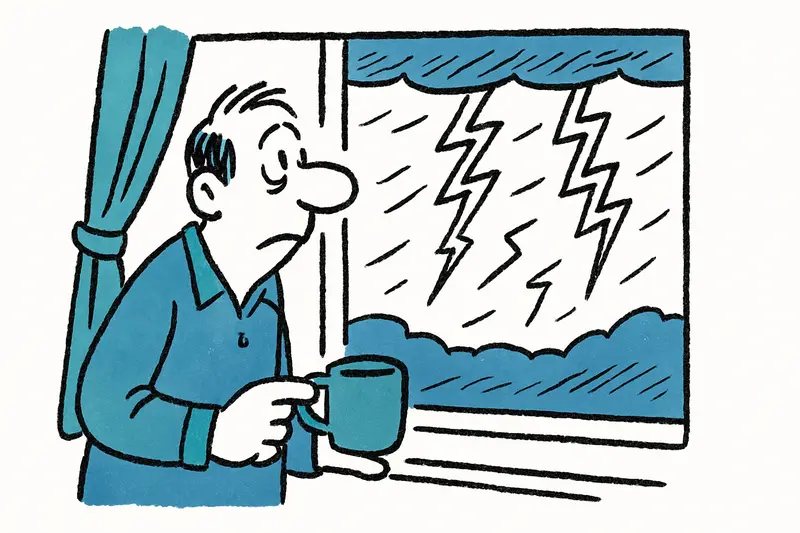
At two in the morning many people on the island stood at their windows — not because of a party, but because the darkness never came. In places like Pina, Andratx and parts of Palma the sky flashed every second. It was not a single spectacular bolt of lightning, but a continuous, nervous flickering that bathed house facades, olive trees and the surface of the sea in silvery light for minutes. Children woke, dogs barked, and in a bar on the plaza the espresso stayed cold — the server counted lightning strikes rather than filling cups. For many observers it felt like a “continuous brightness” — for further accounts see 10,000 Lightning Strikes over Mallorca: What the Summer Storm Reveals.
What is behind it meteorologically
The thunderstorm cells were pushed in from the southwest, accompanied by a very high density of lightning. Instead of individual discharges, there was a series of intense cells that passed over the island in quick succession. On the radar it looked like a chain of short, bright episodes — for many observers it felt like a “continuous brightness.” Such constellations are not everyday occurrences, but they are meteorologically explainable: moist air masses, strong updrafts and a ridge of instability produced numerous discharges in a relatively short time.
The consequences: More than just a spectacle
For the south coast and the southwest, the storm also brought the first notable precipitation in weeks. Wet roads, individual puddles and slippery bends followed — especially in hollows where the drainage systems increasingly reach their limits. Local coverage documented broader disruption to public spaces and services, including closed parks and inundated streets (Thunderstorms over Mallorca: Streets Flooded, Parks Closed — Are We Prepared?). The airport experienced isolated delays; passengers reported temporary visibility problems and changes to ground operations — official updates are available at Palma de Mallorca Airport flight information. Police and road maintenance services warned to be cautious: lightning is not only about light — it also strains infrastructure, traffic and people.
The uncomfortable question: Are we prepared?
The nighttime lightning flood raises a simple but urgent question: How resilient is Mallorca to such sudden extreme events? Many municipalities have invested in retention basins, repair of drain grates and warning systems in recent years. Yet eyewitness reports show that drainage does not work smoothly in some places and that temporary measures are not always sufficient. Similar post-storm impacts, including flooded streets and mudslides inland, have been reported elsewhere on the island (After the Thunderstorm: Flooded Streets, Mudslides and the Big Question About Mallorca's Preparedness). Short-term delays at the airport and the additional burden on emergency services also suggest that targeted improvements are needed.
Underexposed aspects
Two points often receive too little attention in public perception: first, the strain on small businesses and service providers — from taxi drivers to cafés — which lose hours during such nighttime disruptions. Second, the impact on nature and coastal fisheries: sudden influxes of freshwater and wave action temporarily alter beach profiles and prevent fishermen from making normal outings. These indirect consequences are less spectacular than the lightning images, but they are noticeable for the local economy.
Concrete opportunities and solutions
So what can be done? In the short term, pragmatic measures help: clear local warnings, temporary closures at known flood points and targeted information for tourists and commuters. In the medium term, however, systematic adjustments are required: better sewer networks at critical points, regular maintenance of retention basins, adapted road planning in hollows and a coordinated alert and information system that reaches both tourists and residents. Weather warning systems that are sensitive to lightning density (not just rainfall amounts) would also be beneficial for airports and port operators; see official guidance from AEMET weather warnings.
What the island can learn from this
Nature woke us with a bright, loud reminder: weather events come in forms other than just rain. For Mallorca, this means aligning infrastructure, service chains and communication more closely. An old neighbor put it bluntly: “It was like daytime flying at night.” A vivid image — but it should do more than amaze us; it should spur efforts to make the island more resilient.
In the evening I will go to the window again, probably with a cup of tea. This time not only to see whether the night stays dark, but to check whether we have learned from the glaring alarm.
Frequently asked questions
Why was Mallorca bright at night during the storm?
Is it normal to have so much lightning in Mallorca?
Did the storm cause flooding or travel problems in Mallorca?
What should I do if there is a thunderstorm in Mallorca at night?
Which parts of Mallorca were most affected by the lightning storm?
Why can storms in Mallorca affect the airport?
How prepared is Mallorca for sudden heavy storms?
What can residents and visitors learn from Mallorca’s nighttime lightning storm?
Similar News
Near-miss on Lanzarote: Landing Ryanair Jet and Iberia Takeoff — what really went wrong
On Lanzarote there was a dangerous incident: A Ryanair flight (FR5910) from Dublin landed on runway 03 while an Iberia E...
Eurowings introduces new Premium Business seats on Mallorca routes
From December 1, selected Eurowings flights to Palma and other destinations will feature eight particularly generous sea...
Car on MA-13 near Inca in flames – a safety check for the island
A vehicle caught fire on the MA-13 towards Alcúdia on Tuesday afternoon. The driver was uninjured, the car was destroyed...

Real Estate in Mallorca: Fewer Buyers, Higher Prices — What's Behind It?
Sales on Mallorca are falling, yet prices continue to climb. Why fewer transactions do not equal relief — and what shoul...
Just Bought — Already Trouble: Water Damage in the Heiters' Villa and What Owners in Mallorca Should Know Now
A newly purchased sea-view property — and within days a water damage. What risks lurk in new properties in Mallorca, and...
More to explore
Discover more interesting content

Can Cap de Bou

Townhouse Lleo 72
