
Nighttime Sedation and Villa Robbery in Nova Santa Ponsa: Who Protects the Residents?
Nighttime Sedation and Villa Robbery in Nova Santa Ponsa: Who Protects the Residents?
A German resident and her mother report they were sedated in their sleep and robbed in their villa in Nova Santa Ponsa. Evidence points to a professional gang operating systematically. What we know — and what must not be missing now.
Nighttime Sedation and Villa Robbery in Nova Santa Ponsa: Who Protects the Residents?
Key question: How were perpetrators able to enter a villa at night, apparently sedate the occupants and leave unchallenged with jewelry and valuables?
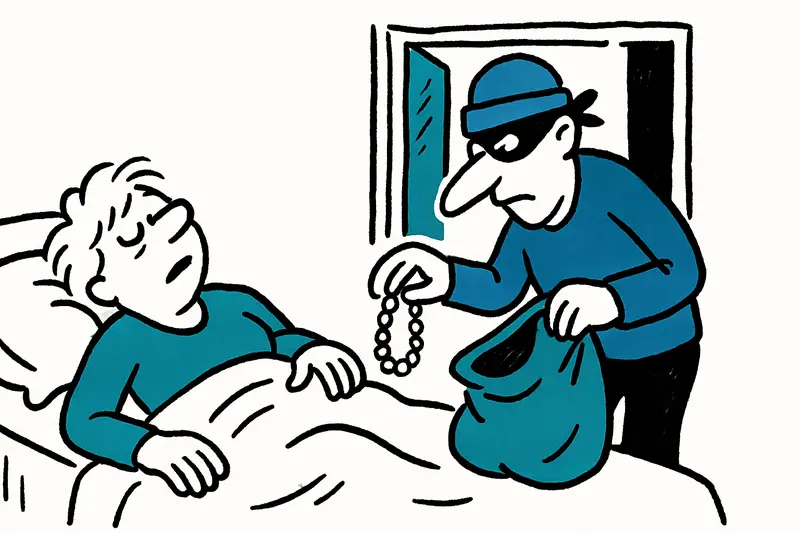
On the night from Tuesday to Wednesday, in an upscale residential development in the southwest of Mallorca, two women – a German businesswoman and her mother – became victims of a burglary. They woke up in the morning feeling groggy, with a strange taste in their mouths; shortly afterwards they noticed that jewelry, glasses and personal items were missing. A forced-open sliding window, rifled jewelry boxes in the garden and a recovered wallet without cash indicate this was not accidental. The victims filed a report; according to them several people at the station had very similar accounts. The total loss is estimated at around €25,000.
In short: the facts as available: time of offense: night, location: Nova Santa Ponsa, victims: two women, alleged method: sedation during sleep, entry through a forced sliding window, signs of ransacking, surveillance footage, possible connection to further cases like nighttime burglaries in Puig de Ros, estimated stolen value about €25,000.
Critical analysis: The combination of a physical entry, targeted selection of jewelry and personal items and traces of possible sedation points to a well-organized operation. Such offender groups often follow a pattern: reconnaissance, targeted arrival and departure times, minimal force at entry but rapid, efficient removal of valuable items. Decisive for the analysis would be forensic evaluation of video recordings, traces in the house (fingerprints, fibers), toxicological tests of the victims and a cross-check with other reports in the region, such as the burglary spree in Puig de Ros. So far, however, reliable results from these areas are missing – and that is problematic.
What is often missing in public discussion: concrete information on how sedation can be proven and what health consequences it can have; NHS guidance on suspected drugging offers information on recognition and testing that victims and investigators may need; how common comparable methods actually are; the role of landlords, property managers and insurers; and how quickly forensic analysis and police pattern recognition are deployed. Instead of general alarm messages, residents and owners need reliable information: Which substances were used? Are there traces on bed linen or surfaces? Were similar vehicles seen in the area? Without these details, warnings remain vague and only partially useful for prevention.
A daily-life scene: early in the morning in Nova Santa Ponsa you see gardeners with blowers on the avenues, occasional joggers, the scent of sea and pines in the air. The houses are usually quiet, with high hedges, pines and driveways with entrance gates giving a sense of seclusion. It is precisely this quiet that makes the places vulnerable – in the evenings shutters are lowered, windows sometimes left ajar because the April air is still cool. After such a robbery the neighborhood walks anxiously through the lanes, people exchange impressions in the small supermarket, wondering whether the gardener, a delivery service or an unknown person could have been responsible; similar alarm followed a recent robbery in southwest Mallorca where a couple was attacked in front of their garage. This mistrust is an unpleasant new side effect for residents who previously relied on the tranquillity of these developments.
Concrete solutions for residents and authorities (concise and practical): 1) Immediate measures for those affected: medical examination for possible substances, complete the police report, compile an inventory list with serial numbers, inform the insurer; 2) Technical measures: upgrade window locks and additional latches, alarm system with interior and window contacts, outdoor motion detectors, cameras with night vision and cloud backup, safe in the bedroom; 3) Community measures: organize local neighborhood groups (including digital), maintain visible alternating presence, conduct joint security checks of the development; 4) Police/administration: better coordination of evidence collection and video analysis, increased patrols during night hours, central recording of modus operandi data, information sheets for owners to recognize sedation symptoms; 5) Insurance and legal side: review policies (burglary, overseas coverage), document valuables and, if necessary, store them off-site.
Important: Many of these measures can be implemented immediately, others require coordinated efforts. Police work must become faster and more transparent when several similar cases appear – that means not only taking reports but actively matching patterns and informing neighborhoods without jeopardizing details.
What must not happen: that fear turns into panic or unfounded accusations against harmless workers. Lack of information is dangerous because it quickly fills with rumours. It is far more useful to report concrete observations (vehicle descriptions, times, unusual people) collectively to investigators.
Punchy conclusion: The issue has two dimensions – the immediate, personal violation by a burglary in which people were apparently sedated, and the structural weakness in dealing with such cases: too little clear information, too little visible prevention and sometimes too slow forensic analysis. Those living in Nova Santa Ponsa or similar neighborhoods should now check their security and organize the neighborhood. Authorities and property managers are called upon to close the gap between recording reports and effectively combating patterns before more residents suffer the same shock.
Frequently asked questions
How can a villa burglary in Mallorca happen at night without waking the residents?
What should you do if you wake up in Mallorca feeling groggy after a suspected burglary?
How common are villa burglaries in southwest Mallorca?
What security measures help protect a villa in Mallorca at night?
How can police investigate a suspected drug-facilitated burglary in Mallorca?
Why are quiet residential areas in Nova Santa Ponsa attractive to burglars?
Should Mallorca residents report suspicious vehicles after a villa robbery?
What should Mallorca homeowners check after a burglary to help with insurance claims?
Similar News

Ancient Piece Brought to Light: Guardia Civil Recovers Roman Anchor Fragment off North Coast of Mallorca
Divers from the Guardia Civil recovered a massive iron piece from Roman times off Mallorca's north coast. The roughly 35...

Who Benefits from the Half‑Hourly Flight on the Edge? Aena, Investments and the Island's Interests
Almost one billion euros is flowing into Son Sant Joan. The figures show the scale of investment and expected beneficiar...

Are the Balearic Islands the Southern Border of Europe? A Reality Check on Immigration
The Balearic Islands are again calling for EU aid after a sharp rise in arrivals by sea. Conflicting priorities between ...

"Expensive chaos" and many open questions: What clients can do when a lawyer suddenly stops responding
Several clients complain that a well-known German lawyer in Mallorca has been unreachable for months. Key question: What...
TV tip: 'The Last Problem' — Mallorca as the setting of a classic crime
A classic whodunit on Mallorca: A new miniseries set in spring 1959 brings storm, an isolated hotel and a dense web of s...
More to explore
Discover more interesting content

Can Cap de Bou

Townhouse Lleo 72
