
Tragedy near Valldemossa: German hiker falls on the Camí de s'Arxiduc
Tragedy near Valldemossa: German hiker falls on the Camí de s'Arxiduc
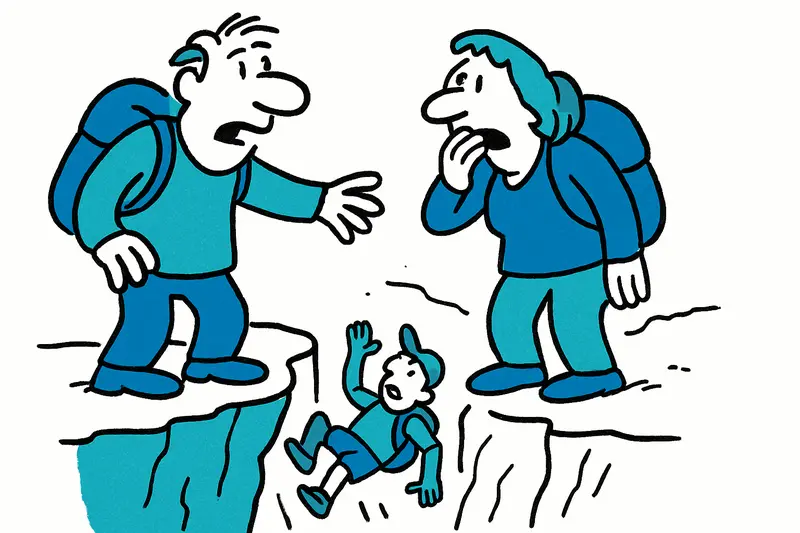
A hiker from Germany fell 15–30 meters into a ravine on the Camí de s'Arxiduc near Valldemossa. Rescue teams could only confirm his death. A guiding question: could the accident have been prevented?
Tragedy near Valldemossa: German hiker falls on the Camí de s'Arxiduc
On Thursday morning, around 11 a.m., a family hike near Valldemossa ended in tragedy: a German man fell into a deep ravine near the Camí de s'Arxiduc and lost his life. According to on-site reports, the descent was between 15 and 30 meters. Relatives of the deceased witnessed the incident; rescue units from Sóller, the Guardia Civil and a helicopter team reached the hard-to-access location, similar to other coordinated operations such as the rescues at Puig de Galatzó and Torrent de Pareis.
Guiding question
Could this fall have been prevented—through better route safety, clearer guidance for visitors or technical aids such as emergency waypoint codes along the trails?
Critical analysis
The Camí de s'Arxiduc is one of those paths that attract locals and guests alike: steep terraces, tight switchbacks, and magnificent views of the Tramuntana. Such places have two faces. On the one hand, beauty; on the other, the vulnerability of hikers, especially where steep edges and loose scree meet. The incident shows how quickly an innocent walk can become life-threatening. It is true that rescue teams arrived quickly and helicopters were deployed, but prevention begins much earlier—at signage, route information and the practice of trail maintenance.
What is missing from the public debate
In conversations on the square of Valldemossa, where coffee cups clatter and passersby stroll down the steep street from the Serra, I often hear the same sentence: "We didn't know how demanding the path is." This is not an isolated case; a recent car overturned near Valldemossa prompted calls for concrete measures. People today often underestimate their personal fitness or the difficulty of a section because online maps do not show the slope or because tourist reviews report more on beautiful views than on difficult passages. There is also a lack of systematic marking of danger spots with clear emergency points that would make it easier for rescuers to find them.
Everyday scene from Mallorca
On an April morning in Valldemossa the air smells of freshly baked coca de patata, a dog barks in the plaza and locals discuss the weather—a light Tramuntana blows over the roofs. At the same time smartphones supply photos of the path, and families plan tours without always being informed about markers or rockfall. This mix of calm and carelessness is typical here; often a sunny morning is enough to underestimate risks.
Concrete solutions
1) Better signage and difficulty ratings: Trail sections should be labeled with clear, standardized symbols (steepness, footing difficulty, fall risk). Visitors must be able to quickly assess whether the route matches their fitness.
2) Emergency waypoint codes along routes: Each route should have numbered points (like national long-distance trails). In an emergency the position can be communicated to rescue teams—gaining time can save lives.
3) Local maintenance and inspections: The municipalities around the Serra should coordinate regular patrols, remove loose stones and temporarily close or secure dangerous sections.
4) Information campaigns: Hoteliers, taxi drivers and tour operators in Palma and Valldemossa should provide compulsory brief infos: estimated walking time, footing difficulty, water needs, mobile reception. This is not fearmongering, but service.
5) Support for mountain rescue and volunteers: Additional resources for transport, training and modern equipment for rescuers reduce risks during operations in hard-to-reach terrain.
Why these measures are realistic
Many proposals cost little money but require organization. A map with emergency points and uniform signage could be developed in cooperation with municipalities, the island council and volunteer guides. Practical training for local businesses costs less than expected and immediately improves safety.
Punchy conclusion
The fatal fall near Valldemossa is a painful wake-up call. Anyone in these mountains needs not only good shoes and water, but reliable information and visible safety nets. The rescue was exemplary, but rescue cannot be the end of prevention. It is not enough to mourn the accident—we must design paths so that tourists and locals are no longer so vulnerable.
My impression after talks with residents and walkers: clear, practical rules are missing. When we see tourists again walking through the plaza next week, not only should the scent of baked goods be remembered, but also the knowledge that we have learned from this accident.
Frequently asked questions
Is the Camí de s'Arxiduc in Mallorca a difficult hiking route?
What should I know before hiking in the Serra de Tramuntana in Mallorca?
Can weather in Mallorca make a mountain hike more dangerous?
What kind of hiking gear do you need for Mallorca mountain trails?
Why do hikers get into trouble near Valldemossa in Mallorca?
Are emergency waypoint markers used on hiking trails in Mallorca?
What should hotels and tour operators tell guests about hiking in Mallorca?
What can improve mountain safety for hikers in Mallorca?
Similar News
Ancient Piece Brought to Light: Guardia Civil Recovers Roman Anchor Fragment off North Coast of Mallorca
Divers from the Guardia Civil recovered a massive iron piece from Roman times off Mallorca's north coast. The roughly 35...
Who Benefits from the Half‑Hourly Flight on the Edge? Aena, Investments and the Island's Interests
Almost one billion euros is flowing into Son Sant Joan. The figures show the scale of investment and expected beneficiar...
Are the Balearic Islands the Southern Border of Europe? A Reality Check on Immigration
The Balearic Islands are again calling for EU aid after a sharp rise in arrivals by sea. Conflicting priorities between ...

"Expensive chaos" and many open questions: What clients can do when a lawyer suddenly stops responding
Several clients complain that a well-known German lawyer in Mallorca has been unreachable for months. Key question: What...
TV tip: 'The Last Problem' — Mallorca as the setting of a classic crime
A classic whodunit on Mallorca: A new miniseries set in spring 1959 brings storm, an isolated hotel and a dense web of s...
More to explore
Discover more interesting content

Can Cap de Bou

Townhouse Lleo 72
