
When Quiet Was No Longer Enough: Man Tried to Set Bar Terrace in Son Oliva on Fire
When Quiet Was No Longer Enough: Man Tried to Set Bar Terrace in Son Oliva on Fire
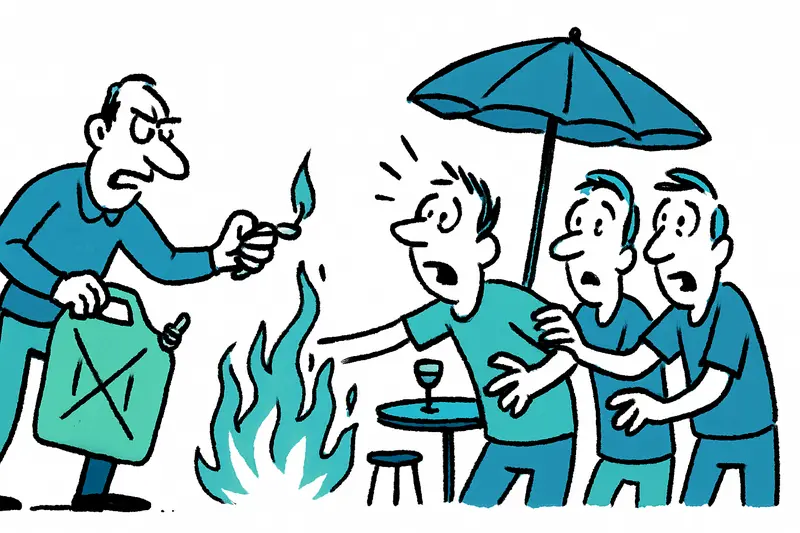
A neighborhood dispute in Son Oliva escalated: a resident came down carrying a petrol can and a lighter and attempted to set a bar's terrace on fire. Guests restrained him and the local police intervened. A reality check on causes, systemic gaps and solutions.
When Quiet Was No Longer Enough: Man Tried to Set Bar Terrace in Son Oliva on Fire
Guests overpowered the perpetrator, the local police arrested him – but how could it come to this?
It was a warm late-summer evening in Son Oliva; outside on the street the clinking of glasses, the murmur of voices and occasional scooters mixed with the soft rustle of bougainvillea. Around 11 p.m. a conflict between a resident and the guests of a bar in the same building escalated: the man came downstairs carrying a petrol can and a lighter and apparently intended to set the seating terrace on fire. Several guests intervened, holding him until the local police arrived. The situation ended without a fire; the man was handed over to the national police. Similar violent escalations have occurred elsewhere on the island, including an Es Molinar attempt to set a housemate on fire.
Key question: Why do noise disputes in Mallorca sometimes not end as loud arguments but turn into dangers to people and property?
Analysis
At first glance the story sounds like an extreme isolated case: annoyance about nighttime noise, a moment of desperation, a dangerous act. But there are several interwoven problems beneath this. First: communication deficits between residents, business owners and the administration. Those who feel disturbed often resort to repeated complaints that rarely lead to visible short-term measures. Second: lack of access to mediating bodies. There is no simple, widely used mediation service for neighborhood conflicts that can step in early and decisively. Third: security gaps when escalation happens immediately – a person with incendiary materials can trigger a catastrophe in seconds if no one intervenes quickly (see for example the Fire near Porto Pi: What the blaze reveals about safety in Palma).
What is missing in the public debate
The debate often runs in black and white: tourism and nightlife versus residents' rights. Rarely is everyday handling discussed: What channels for de-escalating complaints exist? How are recurring noise offenders dealt with by the municipality and enforcement authorities? How well are landlords, property managers and business owners informed about their duties regarding fire safety and neighborhood relations? And not least: how accessible are municipal mediation offers in neighborhoods like Son Oliva when resentment has been building for months? Similar resident complaints have been raised in other areas, such as When the Benches Become a Bar: Residents Sound the Alarm on the Paseo Marítimo and Nighttime Noise and Speeding in Nou Llevant: German Residents Demand Quiet.
Everyday scene
Picture the street where the bar is located: tabletops where olive pits crack; the waitress rushing between tables; and above, in one of the upper floors, doors behind which people try to sleep. The hum of an air conditioner mixes with exasperated whispers and the ticking of clocks – small signals that do not lead to binding regulations. Such micro-conflicts add up. When frustration accumulates, anger can quickly turn into an action with serious consequences.
Concrete solutions
1) Low-threshold mediation: Municipalities should promote easily accessible mediation services, available in the evenings by phone or digitally, to mediate early between residents and businesses. 2) Information duties for businesses and landlords: In case of noise complaints, concepts must be presented (soundproofing, complaint handling, contact person). 3) Faster, clearer sanctions: Repeated noise disturbances should trigger graduated, transparent measures so affected people see that something is being done. 4) Fire safety training for bars: Staff must know how to react in seconds (fire extinguishers, evacuation, emergency call procedure) — a need underlined by incidents such as the Short Circuit in Santa Ponça: Why a Lighted Sign Almost Caused a Disaster. 5) More presence, less escalation: In addition to police presence, municipal enforcement services with a mediation mandate are useful. 6) Promotion of neighborhood platforms: Digital noticeboards or neighborhood apps can make complaints, suggested solutions and measures visible.
What the police and residents can learn from the case
The arrest prevented worse outcomes. Nevertheless, the incident should prompt a review of procedures: How quickly do emergency calls reach the responsible authorities? Are there protocols to calm people in psychological crisis situations before they commit a dangerous act? And: are residents who repeatedly report problems taken seriously and actively supported?
Pointed conclusion
The scene in Son Oliva was not just an outburst but a warning signal: when neighborhood problems smolder for months, they can escalate into acute danger. More mediation presence, clear rules on noise emissions and practical fire-safety precautions would be simple, effective steps. Otherwise, another loud evening risks putting nerves — and lives and buildings — in danger.
Mallorca is often loud — that is part of the island. But being loud is no free pass for endangering others. Quiet needs rules, and rules need enforcement and dialogue. Only then will the street in front of the bar at the end of the evening be a place to sit together rather than a place where people have to hold each other together when something goes wrong.
Frequently asked questions
Why can noise disputes in Mallorca turn into safety risks?
What practical steps can bars and residents in Mallorca take to prevent conflicts?
What fire safety measures should bars in Mallorca consider?
How can Mallorca communities improve access to mediation for neighborhood disputes?
What is Mallorca's climate like in late summer, and what should I pack for evenings out?
What should you do if you’re disturbed by noise in Mallorca?
What does the Son Oliva incident reveal about neighborhood safety in Mallorca?
What changes could Mallorca authorities consider to reduce repeat noise disturbances?
Similar News
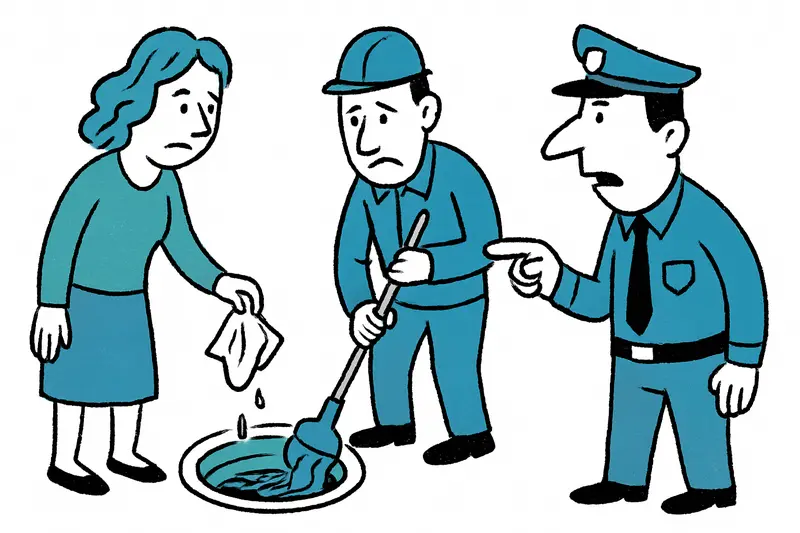
Up to €9,000 Fine in Inca: Why Wet Wipes Can Blow Up the Sewers — and What We Should Really Do
The municipality of Inca warns of blockages caused by wet wipes — fines of €300 to €9,000 are possible. A reality check:...

World Cup Trophy in Palma: Two Days Up Close
The World Cup trophy is coming to Palma at the end of October: two days on display at City Hall, and on 31 October photo...

End of October: Can you still swim in the sea in Mallorca?
The late-autumn sun still warms the air and the sea has retained its summer heat—many people don't pack away their swimw...
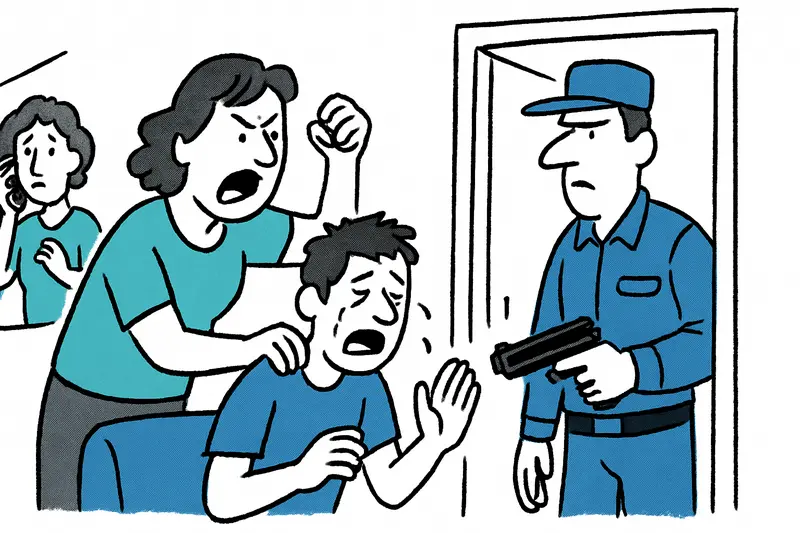
Years of abuse in Costa de la Calma – Neighbor calls Guardia Civil
In a villa in Costa de la Calma a neighbor alerted the Guardia Civil: a 19-year-old woman reported years of violence by ...

Schauinsland Takes Over Management of the Morito in Cala Millor – a Reality Check
From March 2027 the German tour operator Schauinsland will manage the Morito hotel in Cala Millor. The Batle Erikson fam...
More to explore
Discover more interesting content

Can Cap de Bou

Townhouse Lleo 72
