
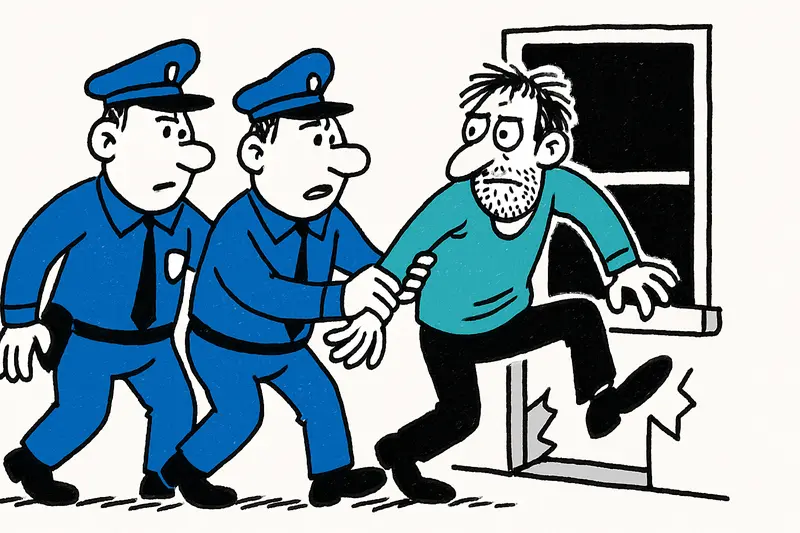
Eight Break-ins in One Week: Arrest in Palma — and What's Still Missing
A series of nighttime break-ins in Palma ends with an arrest. There's relief — but local business owners and residents ask: is that enough?
Eight Break-ins in One Week: Arrest in Palma — and What's Still Missing
The nights in Palma were less quiet this week: alarm systems wailed, shop owners groped through the morning mist for splintered glass, and two schools had to check doors and lockers on the same day. Police report the arrest of a man accused of eight break-ins within seven days — the targets were mainly businesses around Calle Aragón and the Plaza de las Columnas, a pattern also described in Nighttime Break-ins in Palma: Arrest Stops the Spree — But How Safe Is the Old Town Really?.
How investigators caught the suspect
According to reports, the perpetrator usually struck at night, between roughly 11 p.m. and 4 a.m. Forced doors, bent locks, torn security grilles: the traces read like a grim diary. Tips from neighbors, CCTV footage and forensic work finally led to identification and arrest. A judge ordered pretrial detention.
The arrest brings relief — but it is only one item on a longer to‑do list, as discussed in After nine burglaries in Palma: Arrest brings relief — but questions remain. For many shopkeepers the immediate question is not only: who was it? but: how do I prevent this from happening again?
What the break-ins mean for small businesses and schools
"The alarm ripped me out of my sleep," says a café owner on Calle Aragón, who stood early in the morning among overturned chairs and scattered napkins. A sports center reports missing equipment and damaged gates; in two schools mostly small items were stolen — yet the worst consequence is the loss of the sense of security. The sound of sirens, the faint trembling of street lamps and people checking with flashlights at dawn: such scenes linger.
For many businesses a break-in has financial consequences: repairs, lost income, higher insurance premiums. For a neighborhood, something subtler changes — the usually familiar nighttime quiet suddenly seems more fragile.
Why these targets?
Small cafés, supermarkets, sports facilities and schools offer the alleged offender several advantages: they are often poorly lit at night, have simple, repetitive routines and usually less staff on duty overnight. Cash, small easily transportable items and insufficiently secured access points make them attractive targets. In addition, serial burglars show a pattern: short, quick operations, little noise and targeted locations with a low risk of being discovered.
Looking closer, a structural problem becomes apparent: prevention costs — time, money and sometimes bureaucratic effort. Many small entrepreneurs invest in their business, not in expensive security technology. Schools are also dependent on public support.
City, politicians and neighborhood: reactions and gaps
Council members promise an increased police presence, echoing calls after a separate daytime spree in which seven people were arrested Palma on edge: Seven arrests after daytime burglary spree – what now?. Business owners demand short-term night patrols and better lighting. Residents install extra bolts, form neighborhood groups or start WhatsApp chains. All of that makes sense — but it is piecemeal.
What is missing is a coordinated strategy: a clear prioritization of vulnerable streets, financial support for protective measures for small shops and a faster reporting and intervention system for nighttime alarms. Also needed: targeted prevention work in schools so teachers and parents know how to minimize risks.
Concrete: measures that would help now
Some practical steps could ease the situation in the short and medium term:
1. Increase visibility: Better street lighting at critical points, regular police patrols during night hours and targeted presence at known hotspots.
2. Financial support: Grants or low-interest loans for small businesses to install good locks, shutters or alarm systems — many cannot afford the investment themselves.
3. Neighborhood organization: Official neighborhood watches, coordinated reporting channels and training for quickly sharing information about suspicious observations.
4. Prevention in schools: Checklists, simple security measures and mandatory agreements with local police so facilities are better protected.
5. Use technology sensibly: Cameras and motion detectors help, but they must be used in a data-protection-compliant and targeted way to balance security and privacy.
A conclusion and an outlook
The arrest is a success for the investigation — but it must not hide the fact that prevention is a community project. In Palma you can currently hear more footsteps on the cobbles of Calle Aragón, more shutters being raised in the morning, and more conversations on the Plaza de las Columnas. Urban repair must go beyond temporarily plugging gaps: better planning, financial relief for small businesses and a visible, reliable presence of law enforcement.
The coming weeks will show whether the city learns from the incident. The neighborhood is vigilant — and that is good. Still, it would be nicer if the only sound at night were once again the distant hum of the city and the occasional lone dog barking, instead of alarms and unrest.
Frequently asked questions
Is Palma safe at night for small businesses and residents?
What time do burglaries usually happen in Palma?
What should small shops in Mallorca do to prevent break-ins?
Why are cafés, schools and sports facilities often targeted in Palma?
What should you do if you hear an alarm or see signs of a break-in in Mallorca?
Which streets in Palma have recently been affected by break-ins?
How can schools in Mallorca improve security at night?
What kind of support do small businesses in Palma need after a burglary?
Similar News

After Being Admitted to Hospital Again: Heinz Hoenig and the Questions We Should Ask in Mallorca
Long-time Mallorca resident Heinz Hoenig was admitted to hospital again. A clear “what next?” is missing from the covera...
Yellow Alert: Is Mallorca Prepared for the Next Rain Band?
Aemet has issued a yellow alert for the south, southwest and the island's interior. Thunderstorms and heavy rain are for...
Kegel brothers trial postponed: Why Mallorca must wait for a verdict
The trial of 13 German holidaymakers will not begin until May 2028. The long wait raises questions — for victims, defend...

Chaos on Palma's Runway: Why the Summer at the Airport Was So Disrupted
This summer laid bare where Palma airport is faltering: only just over half of departures were on time and seven percent...

Cocaine Offer on Ham Street: Why the Open Trade Should Ring Alarm Bells
In the middle of Pare Bartomeu Salvà a tourist was offered a packet of cocaine as part of a sunglasses deal. A short int...
More to explore
Discover more interesting content

Can Cap de Bou

Townhouse Lleo 72
