
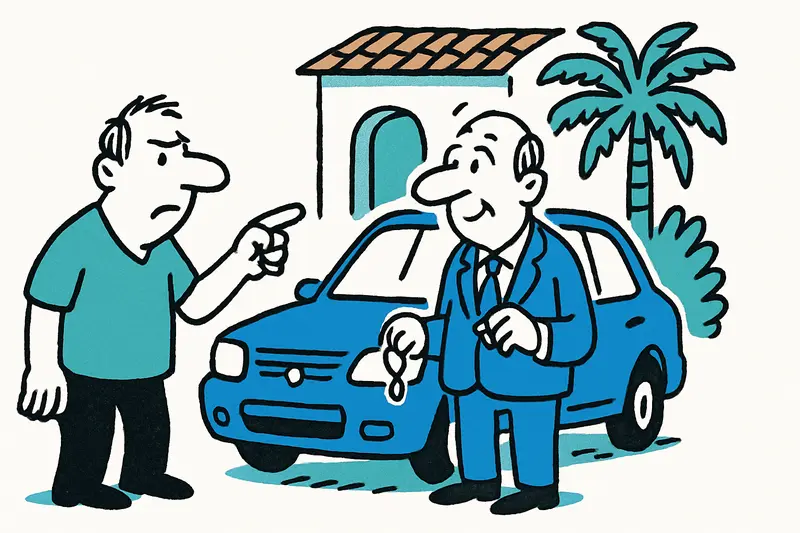
Official cars on Mallorca: When official vehicles resemble private cars
Official cars on Mallorca: When official vehicles resemble private cars
Two vehicles belonging to the island administration are said to have been regularly parked in front of the vice-president's residence. The allegations raise fundamental questions about transparency and oversight.
Official cars on Mallorca: When official vehicles resemble private cars
Key question: Does a high-ranking island politician use public cars permanently like a private car — and if so, who checks this at all?
In recent months it was noticeable in several neighborhoods of Palma and along routes around the island council building that two vehicles of the island administration were frequently parked at night in front of the vice-president's residence. They are a Subaru and a Dacia that observers identified as official vehicles of the authority; they also stood out because the required markings were not visible.
A clear single case strengthens the suspicion: the politician is said to have left his private car in an official parking space and instead used a service car for a party appointment. Such hints fit the picture many residents know here: the street noise of Avenida Jaime III early in the morning, the delivery vans rolling at around half past six, and the quiet in the evening when official movement profiles are no longer so easy to trace.
Critical analysis
Legally, official cars are primarily intended for official duties — from formal appointments to missions required by the authority. Taking them home overnight is possible in exceptional situations, but permanent use as a private car contradicts the purpose of assignment. Five points are decisive: who authorizes the allocation, how trips are documented, what rules exist for identification, who monitors the use, and what sanctions apply in case of violations?
Our on-site observation shows: in practice these questions are often unresolved. When a car stands for a long time at the residence of an officeholder, a pattern of use emerges that makes oversight difficult. At the same time, administrative staff report that vehicle fleets are limited and individual official cars are therefore particularly coveted. This dynamic is discussed in Too Many Old Cars in Mallorca: Why the Problem Runs Deeper Than the Exhaust.
What is missing in the public debate
There is a lot of discussion about individual photos and sightings, but little about the organizational causes. Hardly ever does the debate address the fleet booking logic, waiting lists, responsible administrative units or transparent logbooks. An independent review of internal rules is almost never demanded either. Without this debate, the impression of cronyism remains — regardless of whether there are grounds for criminal charges. Broader economic pressures such as rising rental costs also shape the context, as explained in Why Rental Cars in Mallorca Have Become Noticeably More Expensive — and What You Should Know.
Everyday scene from Mallorca
A neighbor on Passeig Mallorca says: "You often see the car in the street; in the morning it's still there. People talk, you exchange looks at the bakery." Such observations are not proof, they are indicators. They do show, however, that politics becomes tangible in the neighborhood — and that transparency is not just an administrative term but a matter of everyday common sense.
Concrete solutions
Those who want to close the trust gap should start by making procedures visible. Suggestions:
- Transparent logbooks: Digital, with publicly accessible metadata (date, start/finish, official purpose), exceptions justified and documented.
- Visible identification: Official vehicles must be clearly marked; that reduces inconsistencies in external perception.
- Central vehicle reservation: An electronic system that regulates priorities and availability, instead of tacit ownership claims.
- External oversight: An independent audit or ombuds office can conduct continuous reviews and recommend sanctions.
Such measures cost money and persistence, but they create reliability and protect staff from pressure to use official resources privately.
Conclusion
Photos in front of the home and reports from the surroundings are not enough for a conviction. They are, however, enough to demand a thorough review. On an island where distances are short and neighborhoods small, transparency is not a luxury but everyday protection. If administration and politics now introduce clear rules, visibility and independent oversight, the mistrust that such allegations feed could shrink — and that is good for everyone who has to drive to work in the morning without the car becoming a political issue. Further perspectives on driving and car use on the island can be found in Discover Mallorca by Rental Car: Why a Car Makes the Day.
Frequently asked questions
Can official cars in Mallorca be used like private cars?
What should an official car in Mallorca be used for?
Is it normal for official vehicles in Mallorca to be parked overnight at a politician’s home?
How are official cars in Mallorca supposed to be monitored?
Why do unmarked official cars in Mallorca cause concern?
What rules would improve transparency for official cars in Mallorca?
Why do people in Palma notice official cars more easily?
What can Mallorca residents do if they suspect misuse of an official car?
Similar News
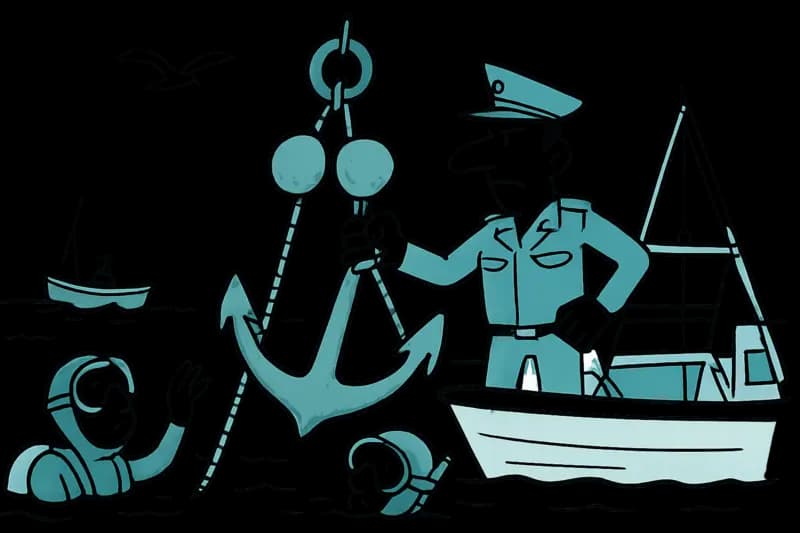
Ancient Piece Brought to Light: Guardia Civil Recovers Roman Anchor Fragment off North Coast of Mallorca
Divers from the Guardia Civil recovered a massive iron piece from Roman times off Mallorca's north coast. The roughly 35...

Who Benefits from the Half‑Hourly Flight on the Edge? Aena, Investments and the Island's Interests
Almost one billion euros is flowing into Son Sant Joan. The figures show the scale of investment and expected beneficiar...

Are the Balearic Islands the Southern Border of Europe? A Reality Check on Immigration
The Balearic Islands are again calling for EU aid after a sharp rise in arrivals by sea. Conflicting priorities between ...

"Expensive chaos" and many open questions: What clients can do when a lawyer suddenly stops responding
Several clients complain that a well-known German lawyer in Mallorca has been unreachable for months. Key question: What...
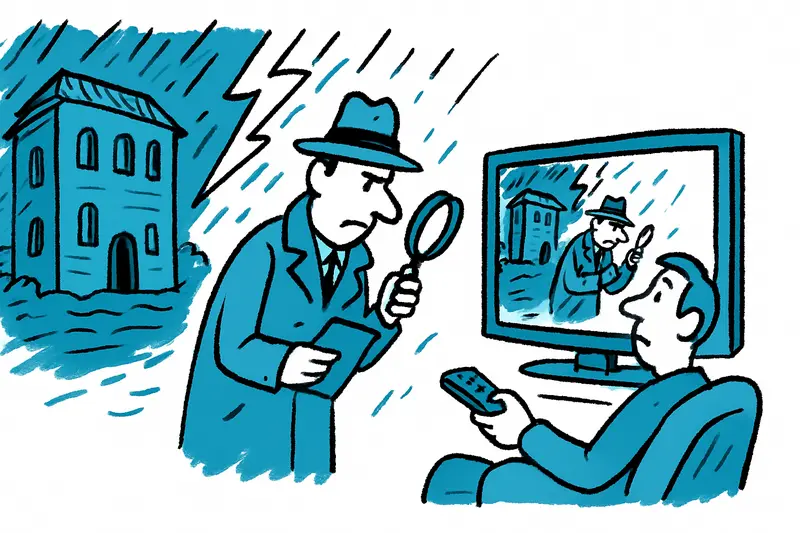
TV tip: 'The Last Problem' — Mallorca as the setting of a classic crime
A classic whodunit on Mallorca: A new miniseries set in spring 1959 brings storm, an isolated hotel and a dense web of s...
More to explore
Discover more interesting content

Can Cap de Bou

Townhouse Lleo 72
