
When the Old Is Sold as New: How a Glossy Magazine Declares Mallorca Shoes a Trend
When the Old Is Sold as New: How a Glossy Magazine Declares Mallorca Shoes a Trend
A German glossy magazine celebrates the classic espadrille as the new fashion hit. Why is that surprising? A critical investigation between Passeig del Born and Olivar Market.
When the Old Is Sold as New: How a Glossy Magazine Declares Mallorca Shoes a Trend
Why is something everyday suddenly staged as a novelty?
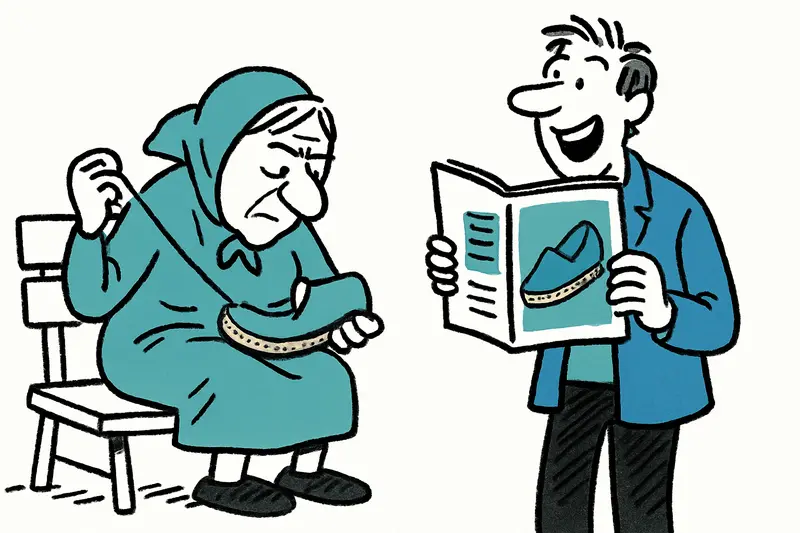
On the Plaça Major an older woman sits on a bench, skillfully mending a jute sole. A few metres away a boy pushes a ball of mud off the cobblestones of Carrer de Sant Miquel, laughing loudly. Scenes like these are part of everyday life here. And it is precisely this ordinariness that has recently been celebrated in Germany as a "new" shoe trend: the espadrille, the simple canvas shoe with a braided plant-fibre sole.
The guiding question is simple: why do editorial teams present the familiar as avant-garde, and what lies behind this? The recent popularisation in external fashion spreads shows how media consolidate images of "island feeling" and lightness — often without regard for origin, craftsmanship or the price that local producers should be getting.
Critical analysis: what is happening here is a mix of superficial imagery and commercial logic. A traditional product is torn out of its context, coated in lifestyle vocabulary and positioned as a guarantee of luxury or coolness. For Mallorca there are three relevant consequences: the blurring of cultural origins, potential price inflation by fashion chains, as boutiques in Mallorca are ordering significantly less, and a narrowed perception of the island as merely a style attribute.
What is missing from the public discourse is the perspective of local artisans. At the Olivar Market a man sells a few hand-stitched shoes alongside oranges; you can see how durable the sole is, how simple the workmanship. Such producers rarely get a voice in photo spreads. Nor are questions of sustainability systematically addressed: where does the raw material come from? Are the workers fairly paid? These facts seldom make the headlines, even though they would be decisive for consumers.
An everyday scene from Palma shows how the myth is created: on a warm morning you hear the clack of tools in a small workshop near Passeig del Born, along with a market seller calling out to tourists with a friendly pitch. Visitors photograph the shoes, post them, labels pick up the images — and just like that a practical piece of footwear becomes a "must-have." The island's echo is thus reduced to a visual buzzword.
Concrete approaches to make the discourse fairer: first, media should be required to state origin and production conditions when staging traditional handicraft products. Second, local seals or cooperatives could be strengthened — a simple "Made in Mallorca" label, linked with transparency about production and pricing, would help. Third: more space for local voices in articles and social-media campaigns; instead of using only images, small portraits of makers should be published.
For retailers and tourists the rule is: ask deliberately; a recent survey shows that small shops in Mallorca feel the pressure. When buying, simply ask where the shoes were made, how the sole is made, whether the price reflects the work. If you do that at the Santa Catalina market or the Mercat de Pere Garau, you usually get honest answers. And if you really want to support local craftsmanship, visit small workshops instead of relying on conspicuously packaged mass-produced goods.
So what remains? Fashion is not inherently bad, but the way things are presented determines whether culture is acknowledged or appropriated. A little more curiosity when reading, and a little more respect when buying — that would be a start. For Palma this would not be a sacrifice but an opportunity: to make the island visible not only as a backdrop but as a place of production.
Conclusion: Staging the everyday as "new" primarily reveals a lack of context. When media use images of Mallorca, craftsmanship, origin and fair prices should become more visible. Otherwise espadrilles remain just pretty props of a simple island cliché — and those who actually make them will still be sitting on the bench, mending.
Frequently asked questions
When is the best time to visit Mallorca for good weather?
Is it warm enough to swim in Mallorca outside summer?
What should I pack for a trip to Mallorca?
Is Mallorca good for outdoor activities in spring?
What is the weather usually like in Palma de Mallorca?
Is Alcúdia a good place to stay in Mallorca for a beach holiday?
Why do people visit Sóller when they travel to Mallorca?
What is special about Valldemossa in Mallorca?
Similar News

Rental Car Theft in El Arenal: What This Incident Reveals About Our Gaps
A teenager steals a running rental car in El Arenal, flees on foot, climbs over walls and is caught by the Guardia Civil...

Red Rope in Palma's Library: What Helps Against Selfie Tourism — and What's Missing
Palma's city library cordoned off an area with a red rope to keep selfie tourism away from reading and working activitie...

Fort San Carlos: Museum, Harbor Dispute — and a Conflict That Demands Answers
The military museum at Fort San Carlos sits right on Palma's harbor, with unexpectedly quiet rooms filled with cannons a...
Old Town Under Pressure: When a Doorway Becomes a Sleeping and Shower Place
For months a woman has been living with a parasol, a clothes rack and personal belongings next to the social welfare off...

When Shopping Weighs Heavier: Mallorca Demands a Tax Pause on Food and Fuel
Rising prices are putting pressure on households and agriculture. The Balearic Islands are calling for temporary tax rel...
More to explore
Discover more interesting content

Can Cap de Bou

Townhouse Lleo 72
