
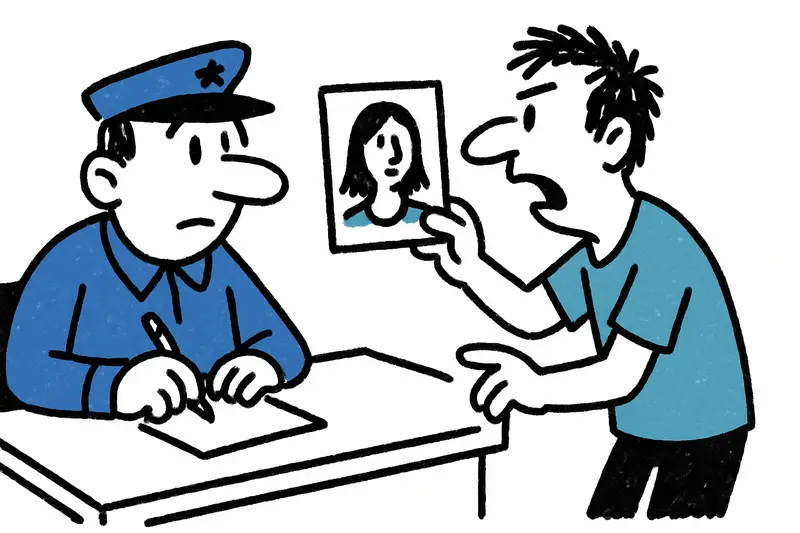
Missing Anna W. in Mallorca: What the New Clues Really Reveal
Missing Anna W. in Mallorca: What the New Clues Really Reveal
A sighting report from Palma's market hall, a missed hostel check-in and a theft on the beach: why the investigation into the missing 33-year-old is stalling and what should happen now.
Missing Anna W. in Mallorca: What the New Clues Really Reveal
Guiding question: Are individual sighting reports enough to solve the mystery of Anna W.?
Police and relatives have been searching for 33-year-old Anna W. for weeks; she is believed to have last been in Mallorca in April. New leads in the Malén Ortiz case: Why answers in Mallorca are taking so long — including a possible sighting in the Mercat de l'Olivar and reports of a missed hostel check-in — have drawn attention. Despite these leads, a decisive breakthrough is still missing.
Critical analysis: many puzzle pieces, no picture
Investigators are currently examining several threads: an observation by a man who claims to have seen Anna leaving the Mercat de l'Olivar, the identification of a hostel where she was said to have planned to stay, and a report that she was robbed in mid-April at Playa Can Pere Antoni and lost documents. These individual pieces are important — but they are also typical of cases that stall: leads that cannot be immediately linked remain isolated and are of limited use.
Why? Because crucial questions remain unanswered: Who is the contact who refuses to reveal their identity? Who has been questioned at the hostel? Have camera images been systematically analyzed along possible routes, from the beach via taxis to the hostels and on to the market hall? Without solid links, every lead remains a possible but unverified clue.
What is missing from the public discourse
Reporting tends to focus on isolated highlights — a sighting, a theft, unofficial investigators — while it rarely names which operational steps are missing: timely requests for mobile data, structured analysis of video footage along likely routes, cross-checks of accommodation lists and taxi or ride-share services. The question of whether language or digital barriers for the family impede the flow of information is seldom addressed either.
Everyday scene from Palma
Imagine the Mercat de l'Olivar on a late morning: market criers calling, vegetable stalls gleaming, sea air mixing with the smell of freshly fried fish. People rummage through bags, street sweepers push their brooms. In this bustle, a single person can easily disappear, as shown by Baby disappears from bar – happy ending, but many questions for Mallorca. This image shows how difficult it is to quickly verify a sighting — especially when the memory of date and time is vague.
Concrete approaches
1) Tighten the timeline: Investigators, family and volunteers should jointly create a minute-by-minute timeline — from the last known activity to the sighting report — and cross-check it with all available logins, bookings and transactions. 2) Consolidate video forensics: Coordinate requests to camera operators (market hall, seafront promenade, bus stops, taxi ranks) centrally instead of examining isolated clips. 3) Mobile phone and payment data: Legally secured requests to providers and card companies can reveal movement patterns. 4) Language and cultural bridges: A dedicated contact point for the family that communicates in Polish and understands Mallorcan procedures prevents information loss. 5) Hostels and short-term rentals: Mandatory checks and systematic cross-referencing with guest lists — especially for people without a fixed address — must be prioritized. 6) Manage public communications strategically: Distribute photos and descriptions so volunteers search in the right places and at the right times, and report sightings with time details.
Legal framework and transparency
Every measure must be legally sound: data requests only through official channels, cooperation with the authorities leading the investigation. Transparency toward the family about steps taken is not a luxury — it reduces speculation and builds trust, as discussed in Death on Lombok: Mourning in Mallorca — and Many Unanswered Questions.
Conclusion
The new clues are not irrelevant; they are puzzle pieces. For the pieces to form a picture requires coordinated, well-documented steps: a reliable timeline, consolidated video analysis, lawful data requests and a central language interface for the family. Without this structure, the clues risk getting lost in Palma's noisy everyday backdrop — among market stalls, tourists and recurring rumors. The family's hope is understandable and demands urgency: every hour counts.
Frequently asked questions
What is the weather like in Mallorca in winter?
Can you swim in Mallorca outside summer?
What should I pack for Mallorca in the off-season?
Is Mallorca a good place to visit in spring?
What is Palma de Mallorca like in winter?
Is Alcúdia worth visiting in the cooler months?
What is Sóller like when the weather is cooler?
When is the best time to visit Mallorca for mild weather?
Similar News

Smoke over the UIB: Who is responsible for the fire on the roof?
On Saturday afternoon a fire broke out on the roof of the Arxiduc Lluís Salvador building at the University of the Balea...

Short Getaway with Sea View: Inmood Aucanada among Spain's Top Hotels for Dinner Breaks
A small hotel on the coast of Alcúdia was highlighted by a Spanish experience platform as particularly suitable for shor...
Cala Pi crowned Mallorca's most beautiful beach: A morning at the rocky cove
The travel portal Holidaycheck praises Cala Pi as Mallorca's most beautiful beach: a narrow, romantic cove, clear water,...
Injured captain, big plans: Germania Mallorca before the away match in Consell
The newly founded FC Germania Mallorca travels to Consell on Saturday. Captain Bastian Müller is out injured, but coach ...
Palma, Palma de Mallorca, Palma‑Mallorca: What is it really about?
The debate over the city's name is more than grammar: it concerns identity, law and branding policy. A sober reality che...
More to explore
Discover more interesting content

Can Cap de Bou

Townhouse Lleo 72
