
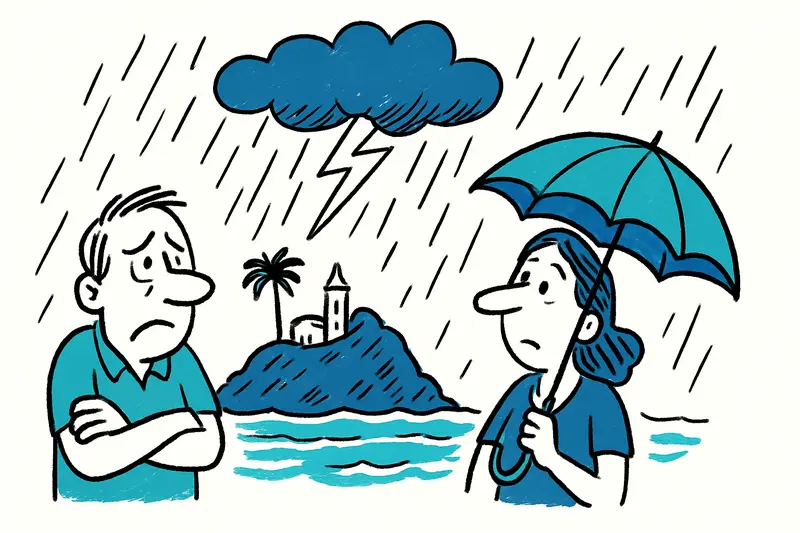
Storms cool the island — but this is only the beginning
Storms cool the island — but this is only the beginning
After days at 40 degrees, the thunderstorms on Sunday were a welcome cooldown. But what the storms refreshed also revealed gaps in Mallorca's preparedness.
Storms cool the island — but this is only the beginning
After 40 degrees: The showers are not enough to hide the island's vulnerability
On Sunday a band of showers and thunderstorms moved across Mallorca from the southwest and pushed peak temperatures down to significantly lower figures — many places reported temperatures around 31 degrees after days of roughly 40 degrees had left people parched. The atmosphere was electrically charged; on the Passeig Marítim thunder occasionally rolled over the harbour, and the squares smelled of hot, wet earth.
Key question: Is this cooling enough — or has the storm only eased the pain temporarily while exposing long-term problems?
Critical analysis: A thunderstorm can bring relief within hours, but it does not make the underlying problems disappear. In recent weeks, not only high air temperatures but also unusually warm sea temperatures have been a cause for concern — values around 30 degrees were measured along some stretches of coast. Such warm seas reduce the thermal contrast, shift thunderstorm dynamics and prolong the stress on people, tourism and infrastructure. At the municipal level it becomes clear that short-term warnings are issued, but visible shelter areas, shaded rest zones and clear behavioral guidance for beachgoers are often lacking.
What is missing from the public debate: The discussion stays too focused on headlines about record highs and too little on concrete risks. Little is said about: 1) the strain on night shifts in hospitals during persistent tropical nights; 2) the danger to elderly people in old-town areas without air conditioning; 3) the effects of warm seas on water quality at popular bathing beaches; 4) the resilience of water supplies during droughts, combined with tourist consumption. Also rarely addressed is the capacity of rescue services when thunderstorms and heat casualties occur at the same time.
Everyday observations from the island: In Cala Major parasols fled inland from the rain, at Playa de Palma lifeguards pushed boats ashore instead of patrolling the water. In Manacor, where over 37 degrees had been recorded the day before, residents sat in the evening on the steps with windows open for the first time in days — the air was noticeably cooler, but relief mixed with concern about whether such extremes will soon become the norm.
Concrete solutions: In the short term we need clearer signage systems on beaches (updated bathing rules for thunderstorms, visible closures, loudspeaker announcements), additional cooling stations in municipalities (public halls, libraries, municipal cooling rooms) and coordinated alarm chains between tourism businesses and rescue services. In the medium term, municipalities should invest in shade-providing greenery, redesign urban squares for nocturnal cooling and expand water storage (rainwater harvesting, replenishment of reservoirs). For tourism, information campaigns are needed: explain to guests how to assess heat and changing sea conditions and when to avoid beaches.
Practical measures for beachgoers: Check local warning levels in the morning; keep away from the shoreline and jetties when thunderstorms are visible; respect closures — a sea at 30 degrees is no invitation to ignore risks. For residents this means ventilating at night, avoiding urban heat islands during the day and actively checking on elderly neighbors.
Conclusion: The storms have brought a much-needed breather — pure thermometer statistics say little about the vulnerability of an island that depends on summer visitors, aging infrastructure and ever-warming seas. Mallorca now has the chance to cool not only the thermometer but the systems: better preparedness, clearer communication and urban adaptation are needed, otherwise the next extremes will arrive sooner than expected.
Frequently asked questions
How much did the recent Mallorca storms cool the island, and is the relief likely to last?
What are the risks of warm sea temperatures for Mallorca’s beaches and swimming conditions?
What concrete measures could help Mallorca cope with heat and storms in the near future?
How should people behave on Mallorca beaches during thunderstorms?
Which Mallorca towns were noted for weather changes during the heat and storms, and what did residents observe?
What long-term changes are suggested to help Mallorca cope with heat and drought?
How should information be shared with visitors to Mallorca about heat and changing sea conditions?
What is the overall takeaway about Mallorca’s vulnerability to climate extremes?
Similar News

Rental Car Theft in El Arenal: What This Incident Reveals About Our Gaps
A teenager steals a running rental car in El Arenal, flees on foot, climbs over walls and is caught by the Guardia Civil...

Red Rope in Palma's Library: What Helps Against Selfie Tourism — and What's Missing
Palma's city library cordoned off an area with a red rope to keep selfie tourism away from reading and working activitie...

Fort San Carlos: Museum, Harbor Dispute — and a Conflict That Demands Answers
The military museum at Fort San Carlos sits right on Palma's harbor, with unexpectedly quiet rooms filled with cannons a...
Old Town Under Pressure: When a Doorway Becomes a Sleeping and Shower Place
For months a woman has been living with a parasol, a clothes rack and personal belongings next to the social welfare off...

When Shopping Weighs Heavier: Mallorca Demands a Tax Pause on Food and Fuel
Rising prices are putting pressure on households and agriculture. The Balearic Islands are calling for temporary tax rel...
More to explore
Discover more interesting content

Can Cap de Bou

Townhouse Lleo 72
