
On-board emergency in Ibiza: When is a flight still reasonable?
On-board emergency in Ibiza: When is a flight still reasonable?
A baby lost consciousness after landing; the crew performed resuscitation and emergency services took the child to hospital. The airline cancelled the return flight — a decision that raises questions.
On-board emergency in Ibiza: When is a flight still reasonable?
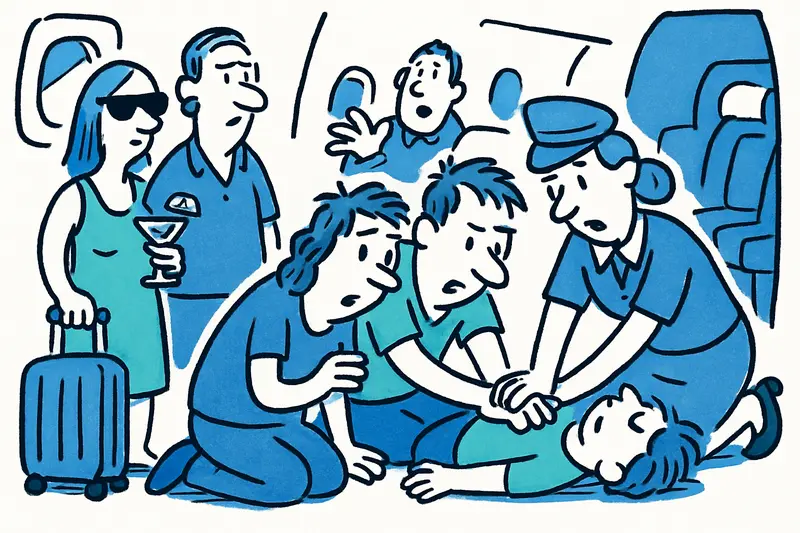
A medical emergency on board a Swiss aircraft at Ibiza airport put passengers and crew on alert on June 13. Shortly after landing, a toddler lost consciousness. Cabin crew and helpful passengers began resuscitation measures, and emergency services later took over; the child was stabilised and taken to hospital. The airline delayed the return flight to Zurich until the next day.
Key question
How well are airports and airlines prepared for acute emergencies involving young children, and when is it reasonable to cancel an entire flight?
Scenes like this are brief and intense: luggage on conveyors stops, voices grow quieter, the smell of sunscreen and espresso hangs in the air. On the ground everything draws closer — crew, parents, accidental helpers. In this case people reacted immediately. It is not documented that the helpers on board were paramedics; the resuscitation was apparently carried out by flight attendants and dedicated passengers. Later the ambulance took over care.
The airline's decision to cancel the return flight and operate it only the next day was justified by the crew's psychological state. That is understandable: situations in which a child is resuscitated leave traces. For passengers stranded that evening, however, the cancellation meant additional stress: rebookings, hotel accommodation, lost time. The airline apparently provided accommodation and flew to Zurich the following day.
Critical analysis: The priority of safety is undisputed. At the same time, the incident raises questions about transparency and the handling of such events. Important points:
1. Communication: Passengers report an emotional address by the pilot, but technical information and practical instructions were missing in some cases. Clear, calm information about procedures and entitlements (meals, accommodation, rebooking) reduces uncertainty. This lack of clarity has occurred before, for example during the Heart-stopping moment over Son Sant Joan: Why the Eurowings plane climbed again incident.
2. Procedures for crew strain: Airlines cite psychological strain as a reason for flight cancellations. However, a standardized procedure that balances flight safety and passenger rights is often missing. Are there dedicated rest periods for crew after severe incidents or external support? This can be improved.
3. Medical equipment: On-board medical kits and training cover a range of emergencies. But children and infants pose special requirements: suitable ventilation bags, appropriate medications, and first-aid courses specifically trained for infants and toddlers.
What is missing from the public debate
The debate often focuses on compensation and inconveniences. Less attention is paid to aftercare for crew members and the systematic review of such incidents so procedures can improve, as highlighted in Emergency Landing at Son Sant Joan: Questions Over Arrests and Procedures. The question of how airports can be better equipped medically — for example with quickly available paediatric emergency kits — is also rarely discussed.
Everyday scene from here: As an editorial team we sit on a warm afternoon on Passeig Mallorca, hear the rolling of suitcases in the background, and watch taxis head for the motorway towards Sa Ràpita airport. Guests in the nearby café swap anecdotes about delayed flights, including incidents such as Aborted Takeoff in Basel: Panic on Board – and What It Means for Mallorca Travelers. Moments like these show that travel stress is everyday here, and yet a medical emergency hits travellers and island residents particularly hard.
Concrete solutions
- Standardised communication package: Airlines should have a clear script ready for pilots and crew that includes facts, expected steps for passengers and contact information.
- Special first-aid training: Regular refreshers focusing on infants and toddlers, including use of child-appropriate ventilation bags.
- Psychological first aid for crew: Rapidly available support after stressful incidents to ensure operational and decision-making capacity.
- Airport checklists: Short routes to emergency medical equipment and dedicated paediatric emergency kits at terminal-adjacent points.
Punchy conclusion
The rapid help on board deserves recognition. Balancing crew safety and passengers rights requires better structured answers. An incident like this is a sad reason to demand concrete improvements: better preparation for child emergencies, transparent communication and psychological support for helpers. That will make similar decisions more comprehensible in the future — for parents, for travellers and for the people who make flights possible every day.
Frequently asked questions
What happens if there is a medical emergency on a flight to Mallorca?
Can a flight from Mallorca be cancelled because the crew is shaken after an emergency?
What should passengers do if a child becomes unwell on a flight to Mallorca?
Do Mallorca airports have enough medical support for emergencies involving children?
How common are flight delays from Mallorca after onboard emergencies?
What rights do passengers have if their return flight from Mallorca is cancelled?
Is it reasonable to fly from Mallorca if someone in your family recently had a medical problem?
What should families pack for a flight to Mallorca with a toddler?
Similar News
Rats in Llucmajor: Who clears the streets, who stops the infestation?
In Llucmajor rat sightings and uncollected waste have increased after rain. A local check reveals gaps in cleaning, sewe...

Who will clean up? Illegal rubbish heaps on the highway near Son Gual drive residents onto the streets
For months, construction debris and household waste have piled up along the highway between Palma and Manacor near Son G...

Amundi takes over Bikini Island & Mountain Port in Sóller – many questions remain open
The French asset manager Amundi has acquired the four-star Bikini Island & Mountain Port hotel in Sóller from an Austria...
Silvia was allowed to see the sea once more – a small farewell in Port de Soller
A team from the Balearic health service IB-Salut fulfilled a terminally ill woman's wish: one last trip to the water in ...
Magaluf: Imprisonment for Beach Club Employee after Theft of a Bag — What the Ruling Overlooks
A former dishwasher received a one-year prison sentence for stealing a Louis‑Vuitton bag. The appellate court upheld the...
More to explore
Discover more interesting content

Can Cap de Bou

Townhouse Lleo 72
