
Operation "Medusa": When Sedation Becomes a Weapon — What Is Missing in Protection on Mallorca?
Operation "Medusa": When Sedation Becomes a Weapon — What Is Missing in Protection on Mallorca?
An international investigation produced hundreds of tips about cases in which people were sedated with medication and abused. Why the island is particularly vulnerable and which gaps authorities and society must close.
Operation "Medusa": When Sedation Becomes a Weapon — What Is Missing in Protection on Mallorca?
Guiding question: How can residents, authorities and the tourist scene on Mallorca better prevent people being sedated with medication and sexually abused?
The official investigative work behind the international project "Medusa" paints a worrying picture: networks enabling sexual violence against sedated people extend across several countries. Investigators identified numerous victims and perpetrators during the operation, as covered in Drugs, Millions and Suspected Abuse of Office: What the Major Operation in Mallorca Reveals, dozens of arrests were recorded and many affected people were taken to safety. On Mallorca it is not yet clear whether there were concrete investigative focal points; nevertheless, the island is in many respects exactly the kind of place where such cases can arise — in streets with many holiday apartments, in beach bars and in villas where language, alcohol and medication meet.
Critical analysis: The known facts point to three levels of the problem. First: perpetrators gain access through the close social environment — partners, acquaintances, house guests. Second: the substances used are often legally available painkillers and sedatives, combined with alcohol; this complicates forensic traces and makes incidents medically dangerous. Third: digital dissemination of the crimes — videos in messengers or on platforms — multiplies the victims' suffering and creates evidence that is difficult to control.
What is missing from public debate: the role of medication supply and control, the mechanisms of data exchange in closed groups and the question of how well local agencies on islands like Mallorca recognize suspicious situations and act in a victim-oriented way. There is much discussion about perpetrator profiles, but little about service gaps: Are social services and emergency shelters linguistically and staff-wise prepared for victims from abroad? Are there sufficiently low-threshold contact points at tourist beaches and in holiday areas that can organize help even when people have memory gaps? These gaps have been highlighted by Arrest in Cala Bona: How Could This Go On for So Long?.
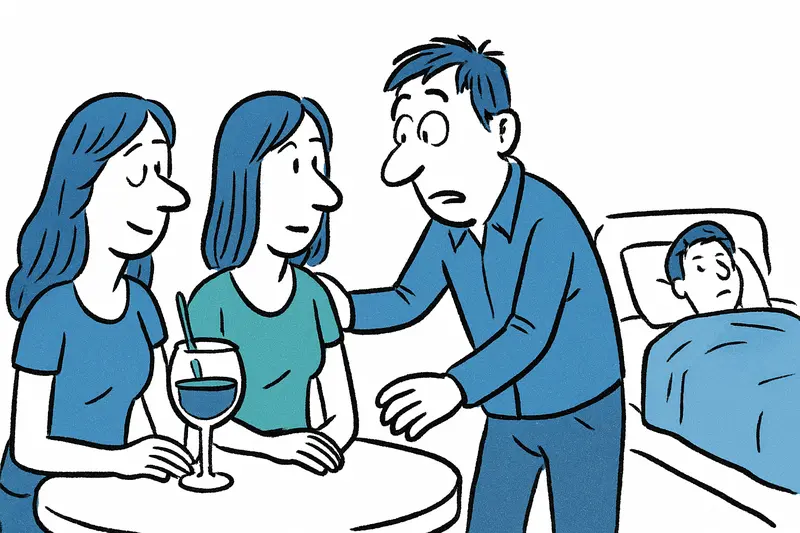
An everyday scene: It's Saturday night, Passeig Mallorca fills up, the heat hangs in the air, cicadas buzz, and glasses clink in front of a bistro. Two young women share a sangría, a man joins them. Later they lie on a mattress in a rented finca near Cala Major; one of the men seems caring, and after a few hours one of the women only remembers gaps. Scenes like this are not imaginary — they happen because trust, alcohol, medication and tourism create a dangerous mix.
Concrete solutions for Mallorca (directly implementable):
1) Multilingual on-site prevention: Clear information leaflets at airports, ferry terminals, car rental stations, beach kiosks and in holiday accommodations. Advice on how to protect your drinks, how to recognize signs of drugging and where to get immediate help.
2) Awareness in the hospitality and nightlife sectors: Mandatory training for staff in bars, clubs and holiday facilities, including risks shown in Hidden Offers in Mallorca's Massage Salons: Between Legality and Coercion: recognizing risk situations, safe handling, emergency numbers. Visible "safe points" in town centers and beach areas.
3) Forensic and medical standardization: Uniform protocols for doctors, emergency services and police for securing samples when medication use is suspected; rapid laboratory analyses in cooperation with health authorities so that traces are not lost, as recent reporting on When the bargain leads to the hospital: Medical fraud in Palma and what now needs to change illustrates.
4) Better cross-service networking: Police, Guardia Civil, Guardia Urbana, health authorities, social services and consumer protection must speed up reporting channels and case handovers. An island-wide coordination office for sexualized violence with multilingual staff would be useful.
5) Digital evidence preservation against distribution networks: Prosecution needs fast cooperation with platforms and messenger services that can cut off distribution at the source. At the same time, data protection- and victim-sensitive methods must be found to secure videos as evidence without retraumatizing victims.
What can be done locally without waiting for lengthy laws: municipalities can start information campaigns, hotels and rental platforms should include preventive notices in booking confirmations, and local pharmacies could monitor and report suspicious dispensing volumes. Civil society initiatives — women's shelters, counseling centers and neighborhood organizations — are also needed.
Conclusion: The island is particularly vulnerable to the use of sedation as a means of violence because of its density of tourists, strangers and parties. Pure criminal prosecution is not enough; preventive and victim-oriented structures are needed that work in Mallorca's everyday life: in markets, beach bars and fincas. Authorities must cooperate better, health services must respond faster and society must look more openly. Turning a blind eye does the victims the worst disservice — and opens the biggest door for perpetrators.
Frequently asked questions
What safety measures are being discussed to prevent drink spiking and sexual violence on Mallorca?
How can tourists recognize signs that a drink has been drugged in Mallorca and what actions should they take?
What role should hotels and nightlife venues play in Mallorca to prevent sexual violence?
How can medical and law enforcement procedures on Mallorca improve when suspected medication use is involved?
What can Mallorca do to improve cross-service cooperation for victims of sexual violence?
How can digital evidence be managed to curb the distribution of videos of sexual violence in Mallorca cases?
What can local communities and businesses in Mallorca do right now to help prevent these crimes?
Why is Mallorca particularly vulnerable to sedation-based violence, and what everyday actions can residents take?
Similar News
Body in the Basin of Port Adriano: Who Protects People During Crossings?
In the morning, just before noon: employees of a luxury marina discovered a floating body in the basin of Port Adriano. ...
Raised from the Sand: A Late Antique Merchant Ship Tells of the Sea off Can Pastilla
A 1,700-year-old Roman merchant ship was raised off Can Pastilla. Finds such as sail fragments and amphorae provide rare...
After the Storm: Why Many Fish Died at Riuet de s'Illot — and What's Still Missing
After the severe storm, numerous dead fish were found in the Riuet de s'Illot wetland. Who is affected, why it may have ...
Fire in Can Picafort: Family Rescued at the Last Minute – a Safety Check for the Promenade
A fire in a sports shop on the Can Picafort seafront forced the evacuation of a mother with four children. How safe are ...
Nine-year-old rescued after cliff fall at Cala Murada — How safe are Mallorca's coastal paths?
A boy fell roughly five meters down the rocks near Cala Murada. The dusk rescue was elaborate; a helper also had to be r...
More to explore
Discover more interesting content

Boat Tour with BBQ along Es Trenc Beach

Private transfer from Mallorca Airport (PMI) to Pollensa
