
When the Asphalt Shimmers: Why Mallorca Needs to Be Better Prepared for the New Heatwave
When the Asphalt Shimmers: Why Mallorca Needs to Be Better Prepared for the New Heatwave
The announced heatwave will again bring temperatures up to 40 °C and raises questions about protection, infrastructure and everyday strategies. A local reality check and concrete proposals.
When the Asphalt Shimmers: Why Mallorca Needs to Be Better Prepared for the New Heatwave
A critical assessment before temperatures rise again
Key question: Are the measures on site sufficient to protect people, elderly neighbors and workers at temperatures of up to 40 °C?
On a hot morning in Palma, when the cicadas chirp above the Passeig Marítim and the scooters slow down, you notice it immediately: the city holds its breath. Aemet forecasts predict peak values of 38–40 °C again for the coming days, a concern explored in 40 Degrees This Weekend: Mallorca Faces a Heat Test – What Matters Now, and at sea there are wave warnings for the northeast coast (Thursday, 8–18 h, up to two meters). Many had hoped for isolated showers — they mostly did not come. What feels like uncomfortable heat to tourists is a real danger for manual workers, parcel carriers and elderly residents.
Critical analysis: The warnings exist, but local implementation is patchy, a point also raised in When Mallorca Cooks: How Prepared Is the Island for the Next Heatwave? Public drinking fountains are rare outside the promenades, shade trees disappear in new development areas, and air-conditioned waiting zones for buses are missing at many stops in the surrounding areas. The short storm notices for sea and coast show that the hazards are varied: strong sunlight in the morning, gustier winds late morning on the northeast side, followed by dry heat. Authorities inform via Aemet notices, but information gaps remain — especially in rural municipalities.
What is missing in the public discourse: Three things are hardly discussed. First: working conditions under extreme heat. Many construction and gardening jobs continue in the blazing sun. Second: the role of urban infrastructure — missing shade, expanded stone surfaces, few water points. Third: simple, local action guidelines for neighbors, restaurants and holiday rental landlords. Warnings alone do not protect.
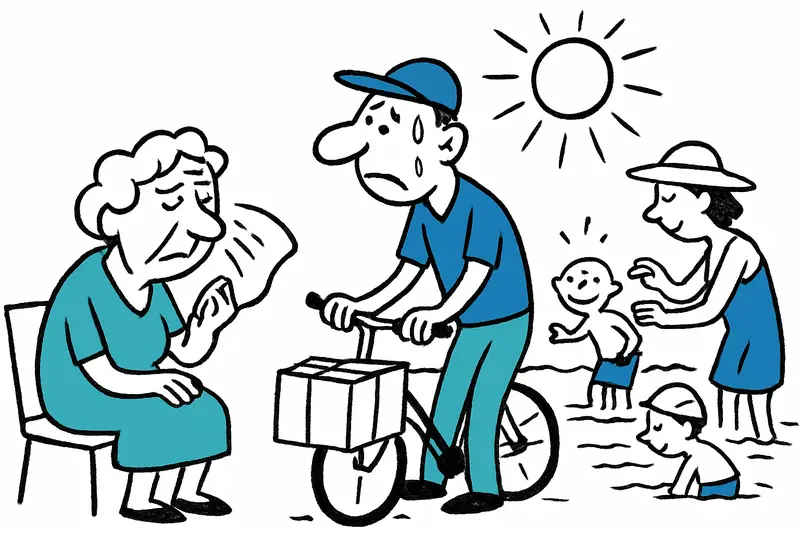
An everyday scene from the neighborhood: On Carrer de Sant Miquel an elderly woman sits in front of her house fanning herself with a faded towel. A delivery driver pushes a fully loaded crate from his bicycle trailer, his forehead glistening. At the Portixol harbor children briefly play in the shallow water while parents reapply sunscreen. Such small observations reveal the ambivalent everyday reality: the island loves outdoor life — at the same time it demands protection, as noted in When Palma Is Sweating by Mid-Morning: Heat Alert, Risks and What's Missing Now.
Concrete approaches — pragmatic and locally implementable:
1) Protection for workers: Construction and gardening companies must allow flexible working hours: start early shifts, observe midday breaks, and schedule heavy tasks for late hours. Municipalities should coordinate heat-friendly work guidelines with local firms.
2) Drinking points and shade: Mobile water stations at busy spots (markets, bus stops) as well as temporary sun sails in places without tree cover reduce stress-related risks.
3) Combat urban heat islands: Instead of creating new stone plazas, municipalities should promote smaller facade greening, light-colored surfaces and additional trees. Grant programs for homeowners who plant trees would show quick visible effects.
4) Reach the elderly and vulnerable: Telephone chains, local neighborhood networks and targeted home visits on hot days. Pharmacies and family doctors can leave prevention notices for at-risk patients.
5) Adjust tourist practices: Holiday rental hosts and the hotel industry should provide mandatory information sheets with behavior recommendations, bottled water in fridges and lists of cool times (e.g. pools open from 6 pm) for guests.
6) Improve public communication: Aemet warnings are good, but they need to be translated locally — not only via apps, but via loudspeaker announcements on beaches, notices in municipal offices and clear action guidelines in multiple languages.
Some of these measures can be implemented immediately; others require planning and money. But it is important not to focus only on peak values. High air temperatures combined with missing infrastructure multiply the risk.
Pointed conclusion: Heat is not a natural event that can be dealt with by forecasts alone. On an island that lives outdoors, more shade, more water and more consideration are needed. If we do not tackle this, the coming summers will be not only more uncomfortable but more dangerous — for those who sweep the streets in the morning, for the neighbor with heart problems and for the children who romp in the harbor, as shown by recent extremes in Heatwave reaches 42 °C: How Mallorca should cope with the new temperature peak. Small, targeted measures would achieve a lot; the time to act is now.
Frequently asked questions
What can residents in Mallorca do to stay safe during heatwaves?
How could Palma's urban design help beat the heat?
What should employers in Mallorca do to protect workers during extreme heat?
How can holiday rentals in Mallorca help guests stay cool?
What practical steps could Palma take to reduce urban heat in places like Passeig Marítim?
How should heat warnings be communicated to beachgoers in Mallorca?
How can neighborhoods around Carrer de Sant Miquel support elderly residents on hot days?
Why is it essential for Mallorca to improve shade and water access during heatwaves?
Similar News

Nine-year-old rescued after cliff fall at Cala Murada — How safe are Mallorca's coastal paths?
A boy fell roughly five meters down the rocks near Cala Murada. The dusk rescue was elaborate; a helper also had to be r...

How safe are tourists in the luxury marinas? After arrests: a reality check
The Guardia Civil arrested two men in Calvià who are suspected of stealing luxury watches in Port d'Andratx and Puerto P...
Palma Chases Wealthy US Tourists — The Key Question: Who Should the City Actually Serve?
The city is investing more than €200,000 to attract high-paying visitors in several US cities. A good idea — but what is...
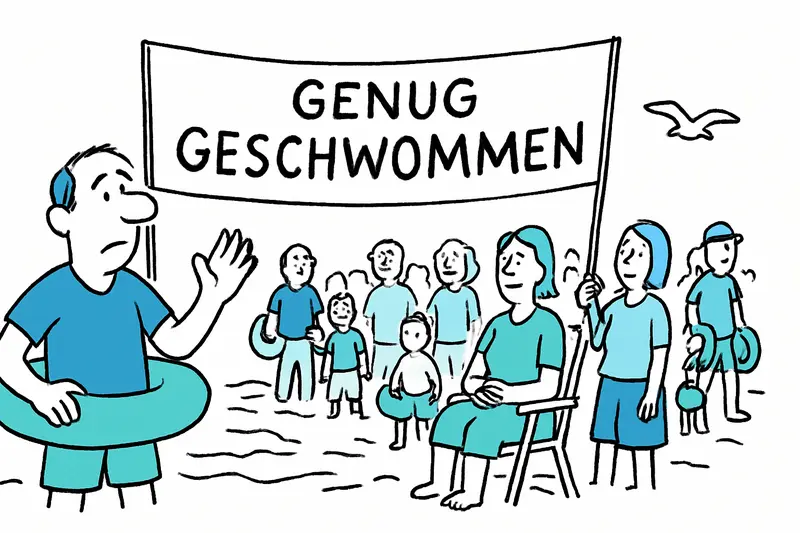
Enough swimming: Why Port de Pollenca is louder than the sea
More than 200 people formed a human chain in Port de Pollenca — not only as a protest but as a wake-up call. Guiding que...
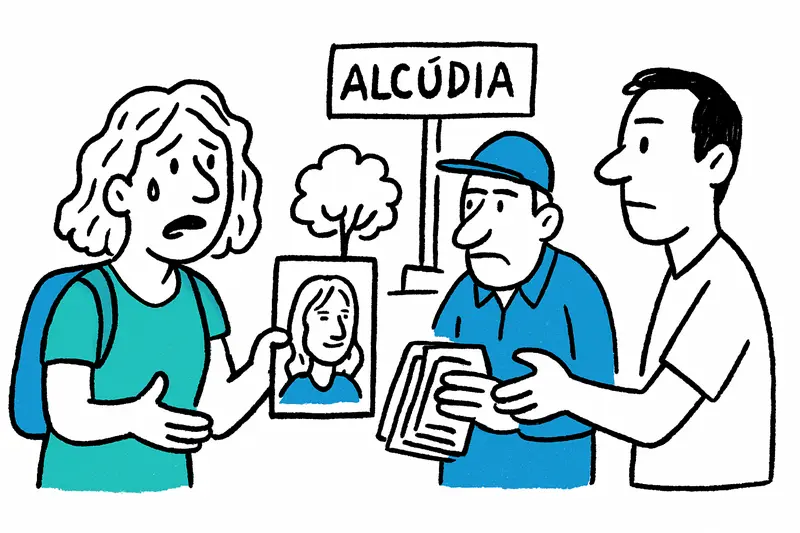
Mysterious disappearance in Alcúdia: Where is 24-year-old Lisa B.?
Since August 3 there has been no trace of 24-year-old German Lisa B. The family has traveled to Mallorca and urgently re...
More to explore
Discover more interesting content

Boat Tour with BBQ along Es Trenc Beach

Private transfer from Mallorca Airport (PMI) to Pollensa
