
How two owners retrieved their towed car from the police impound — and what it reveals about procedures in Palma
How two owners retrieved their towed car from the police impound — and what it reveals about procedures in Palma
An unusual incident: Two young people retrieved their car that had been towed for illegal parking from the municipal impound — without paying, breaking through the barrier. A reality check: What security gaps and procedural questions does the case reveal?
How two owners retrieved their towed car from the police impound — and what it reveals about procedures in Palma
A guide to the open question
Key question: How could it happen that the owners of a towed car retrieved it from the municipal police impound in Palma without completing the usual formalities — and what consequences should the city draw from this?
The sequence, briefly and factually
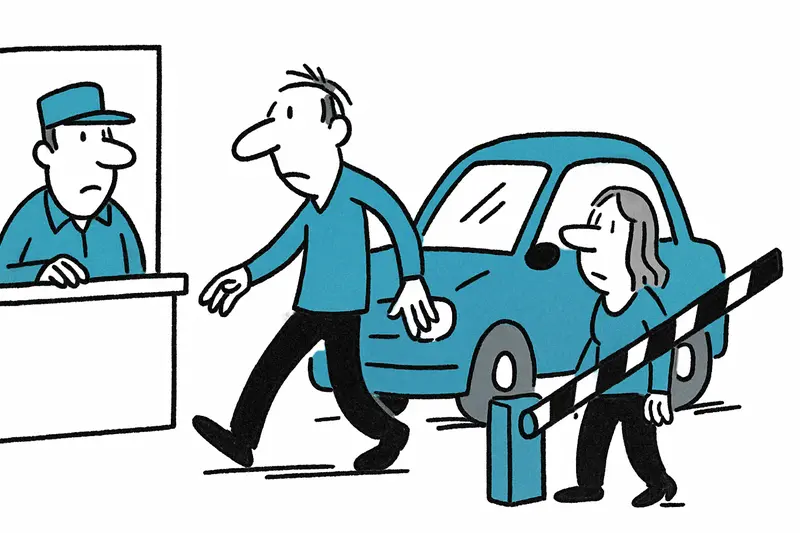
Fact: A vehicle had been towed in Palma for a parking violation and taken to a municipal impound. The next morning the two owners, a 22-year-old woman and a 21-year-old man, appeared to request information at the counter. During the conversation the man apparently walked unobtrusively to the parked car, got in, and together they drove off the premises — damaging the exit barrier in the process. Surveillance cameras recorded the incident. The police launched a search; the car reappeared shortly afterwards in the Calvià area, was stopped and seized again. The two could not plausibly explain how they had removed the vehicle and later failed to appear for police summonses. They are now under investigation. This echoes an earlier report, He 'stole' his own car - and now police are investigating in Palma.
Critical analysis: What went wrong
At first glance the scene reads like a collection of everyday shortcomings: poor communication, tired staff, a trigger word like “own property” — and legal gray areas become visible. More importantly: the security chain between the counter, the yard and the barrier appears to have had gaps at several points. Why could a car leave the premises without a formal handover and without documentation? Why was there no alarm when the barrier was breached? And how quickly did the on-duty personnel react after the cameras triggered the alert? Similar dramatic removals have occurred before, for example When a Tow Bill Escalated: Porsche Escape from Palma to Llucmajor.
What is usually missing from public debate
Beyond the sensational anecdote, we rarely discuss the simple procedures that govern daily life in municipal impounds: identity checks, documented payment processes, technical immobilizers on vehicles, clear responsibilities at the counter. These details are often missing from the debate, yet they are precisely what is needed when an incident like this occurs. Nor do we often ask about root causes: Are procedures so lax on some days because of staff shortages? Is there pressure from many tows in the city center, as documented in Police clear parking chaos in Palma industrial areas — checks, towing, open questions? Or is the technical equipment outdated?
A mundane scene from Mallorca
Imagine the entrance to the impound on a clear morning: the smell of diesel, car doors, a faint honk on the nearby street, the plastic clatter of the barrier snapping up. At the counter people stand with papers, and a monitor on the wall shows camera images. That ordinary atmosphere can become illusory when procedures are only half-followed: a brief conversation at the desk, an unnoticed step into the yard — and the situation changes in an instant.
Concrete solutions
Practical measures can be derived from such incidents that don’t require a lot of drama but have clear effect: 1) Stricter identity and proof-of-ownership checks at the counter; digital receipts for towing and storage fees that also contain a release barcode; 2) physical immobilizers on vehicles (steering wheel locks or electronic immobilizers) until official release; 3) alarm systems that immediately notify staff and the control center in case of barrier tampering; 4) clearly regulated lines of sight between counter staff and the yard, for example via a monitor with a live feed; 5) transparent information sheets for owners detailing procedures, fees and legal consequences — in multiple languages; 6) regular training for employees, including de-escalation techniques for tense situations; 7) a review of staffing levels on heavily burdened days and hours.
Legal and social perspectives
Legally there remains a strange tension: someone can be the formal owner of a vehicle — and still be criminally liable if they remove it without authorization from a secured impound. The investigation in this particular case is ongoing; the police have seized the vehicle again. Public authorities should communicate more clearly which steps an owner must take to retrieve their car — that reduces temptation and legal uncertainty.
Conclusion with bite
The incident is more than a curious item in the police report; it reflects small cracks in administrative procedures. An impound is not a self-service shop, and staff need clear tools: technology, rules and time to apply them. If Palma adopts some concrete improvements — digital proof, secure release processes, better sightlines between counter and yard — a strange story can become the reason to make everyday procedures a bit safer. And that will please everyone who wants to pick up their car legally from the impound in the morning without making national headlines at the barrier.
Frequently asked questions
How do you normally get a car back from a police impound in Palma?
Can you drive a towed car out of a Palma impound without completing the formalities?
What happens if someone takes their car from a Mallorca impound without permission?
What safety checks should a police impound in Palma have?
Why was the impound case in Palma considered a failure of procedure?
What should car owners know before collecting a towed vehicle in Mallorca?
Why do police tow cars in Palma in the first place?
Could better staffing help prevent impound problems in Palma?
Similar News
Ancient Piece Brought to Light: Guardia Civil Recovers Roman Anchor Fragment off North Coast of Mallorca
Divers from the Guardia Civil recovered a massive iron piece from Roman times off Mallorca's north coast. The roughly 35...

Who Benefits from the Half‑Hourly Flight on the Edge? Aena, Investments and the Island's Interests
Almost one billion euros is flowing into Son Sant Joan. The figures show the scale of investment and expected beneficiar...

Are the Balearic Islands the Southern Border of Europe? A Reality Check on Immigration
The Balearic Islands are again calling for EU aid after a sharp rise in arrivals by sea. Conflicting priorities between ...

"Expensive chaos" and many open questions: What clients can do when a lawyer suddenly stops responding
Several clients complain that a well-known German lawyer in Mallorca has been unreachable for months. Key question: What...
TV tip: 'The Last Problem' — Mallorca as the setting of a classic crime
A classic whodunit on Mallorca: A new miniseries set in spring 1959 brings storm, an isolated hotel and a dense web of s...
More to explore
Discover more interesting content

Can Cap de Bou

Townhouse Lleo 72
