
When Palma felled 18 Ombú trees this morning: What was missing in the dispute over the plaza?
When Palma felled 18 Ombú trees this morning: What was missing in the dispute over the plaza?
Early this morning the city of Palma began removing 18 Ombú trees from Plaça Llorenç Villalonga. A court lifted an injunction; residents protested. An examination of procedures and concrete proposals is missing.
When Palma felled 18 Ombú trees this morning: What was missing in the dispute over the plaza?
Key question: Did it have to be so quick and so final?
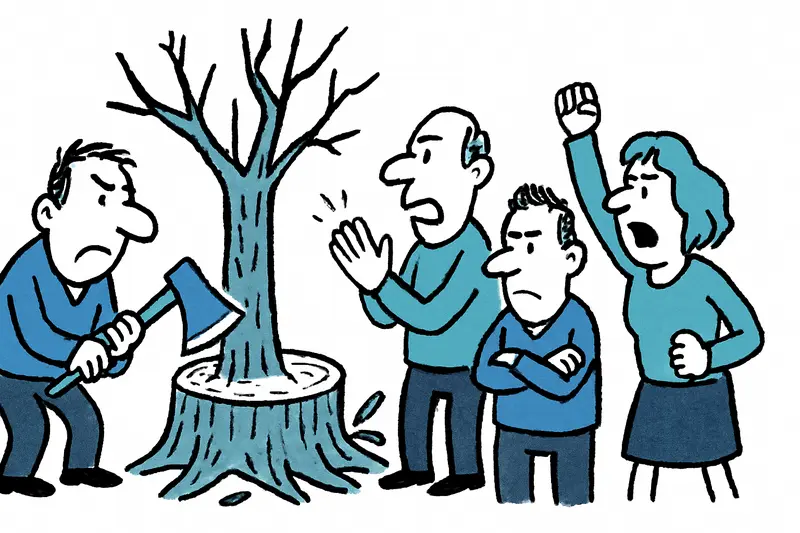
This morning, shortly after seven, the silence on Plaça Llorenç Villalonga was broken as machines started to clear the area: 18 large Ombú trees were felled. A court had previously lifted an injunction; the city justifies the action with municipal reports stating the trees were "sick" and could topple in a storm. While workers used saws and lifts, residents gathered with signs and raised voices against the clearance — a scene many in Palma have seen more often in recent years: the clash between safety arguments and the desire for preservation, as documented in Alarm in Palma: Neighborhood Resists Tree Felling on Plaza Llorenç Villalonga.
In short: there is a safety problem; there is protest; the city plans to plant 20 new trees around the square. Those are the hard facts. But the question that remains and that sets the tone here is: could the public authorities have made this decision differently, more transparently and with greater participation?
Critical analysis: the procedure raises several questions. First: how comprehensively were alternatives examined? Municipal reports contain wording like "sick" and "beyond saving", but without accessible, independent second opinions the assessment remains unclear to many. Second: was recovery through care measures, crown support or temporary tree reinforcements considered? Third: how concrete is the promise to plant 20 new trees? Without information on species selection, planting locations, care modalities and guarantees, it remains just a number.
What is missing from the public discourse: more transparency around the reports, public access to tree files, clear communication about alternatives and a plan for the long-term preservation of urban tree giants. Not only short-term safety checks count, but also tree sponsorships, care plans and an honest accounting of how much green space a felled crown actually replaces. Ombú trees are not native species; they are distinctive, provide a lot of shade and have a place in the cityscape — a debate captured in local reporting such as Controversia por 17 ombúes en la Plaza Llorenç Villalonga: ¿Quién decide sobre el verde urbano?. That must be taken into account when replacing them.
A daily scene from Palma: the square this morning smelled of motor oil and wet wood; carpets of coffee cups next to folded chairs, older neighbors opening curtains to look, and children who first looked puzzled and then sad at the bare spots. A taxi driver who stops there daily said quietly he understood the safety reasons but did not want the city to give the impression decisions were being made "behind closed doors."
Concrete solutions — practical and controllable: first, immediate publication of the reports and, if possible, commissioning an independent external arboricultural report financed by the city but available for public inspection, a demand echoed in coverage such as Alarma en Palma: el vecindario se opone a las talas de árboles en la Plaza Llorenç Villalonga. Second, binding steps for future cases: distinguish emergency assessments from permanent felling decisions; in case of doubt, apply temporary securing measures (rope systems, supports) instead of immediate removal. Third, when replacing trees adopt a higher replacement ratio: not 1:1 but a required replacement with at least three new trees, preferably native species, complemented by care-focused young plants and irrigation connections. Fourth, a public planting and care protocol with sponsorships that requires a two-year minimum maintenance guarantee by the city. Fifth, a municipal tree register open to public queries so anyone can see when a tree was last examined and what measures are planned.
Additionally, Palma could set up a small independent expert commission of arborists, urban planners and resident representatives that must provide recommendations within 48 hours in disputed cases — not binding but public and therefore subject to oversight. Technical tools such as root sonography or resistance measurements should be standard in assessments; simple photo and measurement protocols must be published before any final felling.
Conclusion: the felling of 18 Ombú trees was a painful cut. The danger cited by the city must be taken seriously. Still, a bitter aftertaste remains because the steps before and after did not appear to be communicated well enough. Those who live in Palma know the small squares, the playgrounds, the cafes in the shade: the city needs a procedure that guarantees safety while protecting the memory of trees and places. Otherwise a necessary measure quickly becomes a loss many feel could have been avoided.
Whether the 20 new trees will close this gap will be judged by species selection, commitment to care and willingness to be transparent. Until then Plaça Llorenç Villalonga remains a sober example of how important transparency and participation are in urban green management — and how quickly the cityscape can be lost when both are absent.
Frequently asked questions
Why were the Ombú trees removed from Plaça Llorenç Villalonga in Palma?
What should Mallorca residents know when a city tree is cut down?
Can old trees in Palma be saved instead of felled?
What is Palma planning to do after the Ombú trees were removed?
Why are residents in Palma upset about the tree felling?
What makes Ombú trees important in Palma’s cityscape?
How could Palma improve decisions about public trees in the future?
Is there a better way for Mallorca towns to deal with risky trees?
Similar News
The Painter Who Lived Mallorca: Franz Taussig and His Century-Old Secret
A hundred years ago a young Viennese arrived in El Terreno, sketched the island and called himself Francis Caron. Today ...
Airport dispute: Bridge, forecasts and the question of responsibility
A video by the Spanish transport minister has ignited the dispute over DORA figures, capacities and local governance pow...

The Painter Who Invented Himself: How a Young Viennese Drew Mallorca
A hundred years ago a 19-year-old draftsman arrived in El Terreno. His diary and sheets, long known under the pseudonym ...
Released with Conditions: The Plus Ultra Suspicion and a Mallorcan Finca as Residence
A Dutch entrepreneur, sought in connection with the Plus Ultra case, was extradited to Spain after his arrest in Germany...

Haute Nuit in Puerto Portals: Fashion, Art and Indulgence by the Water
On October 2 the Lobster Club in Puerto Portals will be transformed into a stage for curated fashion, art and culinary e...
More to explore
Discover more interesting content

Can Cap de Bou

Townhouse Lleo 72
