
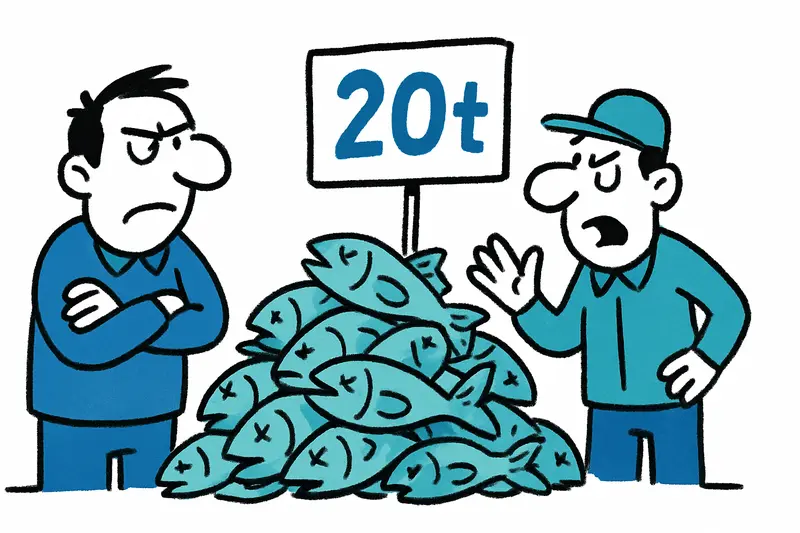
20 Tonnes of Spoiled Fish in Palma — A Wake-up Call for the Cold Chain
In the Polígono de Son Castelló authorities removed around 20 tonnes of spoiled fish from circulation. The case reveals weaknesses in supply chains, disposal and oversight — and hits the island's small vendors particularly hard.
20 tonnes of fish removed from circulation: Why Palma's cold chain needs more than inspections
It was a wet, cold morning in the Polígono de Son Castelló: rain drummed on the tarpaulins of the delivery vans, the smell of thawed fish rose from the warehouses — and the Guardia Civil arrived, accompanied by officials from the Directorate General for Public Health. Not because of an accident, but because something was rotten. Very rotten. In total, about 20 tonnes of fresh and frozen fish and seafood were recovered from storage, as reported in 20 Tonnes of Spoiled Fish in Palma — A Wake-up Call for the Cold Chain: products with best-before dates from 2018/2019, much of it apparently thawed and refrozen. Authorities ordered the destruction of the goods, imposed a fine of around €90,000 and announced further investigations, details of which appear in Spoiled Fish in Palma — Who Is Responsible for 20 Tons of Spoiled Goods?.
Was this an isolated incident — or a symptom?
On the surface the operation reads like a classic success story of enforcement. Look deeper, and the key question remains: how often do such violations go undetected? In Mallorca, where the sound of delivery vans at dawn is as much part of the town as the noise of the sea, the case is a blow to trust — the fragile bond between wholesalers, market traders and restaurant kitchens. A market woman on the Rambla summed it up succinctly: “We live on trust. When that crumbles, you notice it immediately.”
What gets little public attention
The discussion usually revolves around fines and destruction. Three other aspects receive less attention: first, disposal — where do you put 20 tonnes of spoiled goods without creating new health or environmental hazards? Second, the economic situation: margins in wholesale are tight, prices and delivery pressure are high; that creates incentives to cut corners in storage. Third, the seasonal demand peak from tourism: in high season deliveries and time pressure increase, making the cold chain more vulnerable.
Another, less-discussed point is the shadow effect on small, reputable traders. When a major supplier fails, market sellers and small restaurants suddenly face a choice: buy at higher cost or accept risky cheap offers. In both cases the consumer loses in the end — and the sector's reputation suffers.
Concrete opportunities: What to do now
The authorities' immediate measures were correct — destruction of the goods, charges, fines. But that's not enough. System changes are needed: transparent supply chains instead of opaque middlemen; mandatory digital temperature logs along the entire route; standardized audits for wholesalers; and targeted training for warehouse staff on proper storage and hygiene. Technically, low-cost temperature sensors and cloud-based logs are no longer rocket science. They report breaks in real time, provide traceability and make illegal "refreezing" more difficult.
In addition, tougher sanctions for repeat offenders and better information policies should be on the agenda: transparent lists of affected companies, simple reporting channels for traders who notice irregularities, and clear warnings for consumers if products have circulated. Support programs for small traders — such as subsidies for hygiene training or shared cold-storage facilities — could prevent them from resorting to risky offers out of necessity.
Disposal, environment and logistical questions
Twenty tonnes of food waste are not only economically painful, they also pose an ecological challenge. Proper disposal must be organized so that no further health hazards arise — collective collection points, anaerobic digestion or controlled composting are options that need to be considered. At the same time, it would be sensible to analyze the causes of the waste: were delivery quantities poorly planned? Were there returns from hotels? Such data helps reduce waste.
Communication and local prevention
In Palma reactions are sober: distrust, but also calls for clearer rules. Authorities have announced increased inspections — markets, warehouses and wholesalers should be checked more often, as highlighted in Pescado podrido en Palma: ¿Quién asume la responsabilidad por 20 toneladas de mercancía estropeada?. That is right, but without preventive measures it remains a cat-and-mouse game. Good communication can prevent panic: clear warnings, concrete tips on how consumers can check products (intact packaging, clear labeling, smell test), and an easily accessible reporting channel for traders build trust.
Conclusion: Fines alone are not enough
The discovery of 20 tonnes of spoiled fish is more than an isolated incident — it is a wake-up call. Safety measures, digital monitoring of the cold chain, support for small market participants and consistent inspections are necessary so we don't read the same story in a few months' time. Until then, on Palma's markets and in its supermarkets: pay attention, trust your nose — and if the fish seems suspicious, leave it on the shelf.
Frequently asked questions
Why is cold chain control so important for fish in Mallorca?
What should I check before buying fish in Palma?
Can fish be refrozen after thawing?
What happens to spoiled fish that is removed in Palma?
Why do fish safety problems happen more often during Mallorca's high season?
What can Mallorca market traders do to improve food safety?
Is Palma doing more inspections on fish wholesalers now?
What can consumers in Mallorca do if fish seems suspicious?
Similar News
Overflowing garbage piles at Consell–Alaró station: Who is actually cleaning up here?
Sacks, bottles and packaging have been piling up around Consell–Alaró station for months. Missing cameras, full parking ...
Agromart opens large market in Inca: 500 m², terrace and café as a meeting place
On 17 September a new Agromart branch opens in Inca with around 500 m² of sales area, a butcher's, a fresh-food kitchen ...
The End of the Cheap Ride? Why Mallorca Is Hit Harder by the Fuel-Price Shock
Gasoline and diesel average close to two euros per liter. What this means for commuters, supply chains and renters in Ma...
Relaxed liquid rules in Munich: What Mallorca travelers will notice
At Munich Airport the 100-milliliter rule will be lifted at all checkpoint lanes — thanks to new CT scanners passengers ...

For 45 Years on Mallorca — and Then This: How a Market Visit in Santa Ponsa Became a Lesson
A woman who has lived on the island for decades lost money and important documents at the Mercat Setmanal in Santa Ponsa...
More to explore
Discover more interesting content

Can Cap de Bou

Townhouse Lleo 72
