
Invasive snakes in Bunyola: Who protects the playground?
Invasive snakes in Bunyola: Who protects the playground?
After sightings in Sa Coma and Es Puig Verd, increasing numbers of large, non-venomous snakes have been observed. Residents are worried — near a park with a playground. We examine what's missing and how the municipality should respond.
Invasive snakes in Bunyola: Who protects the playground?
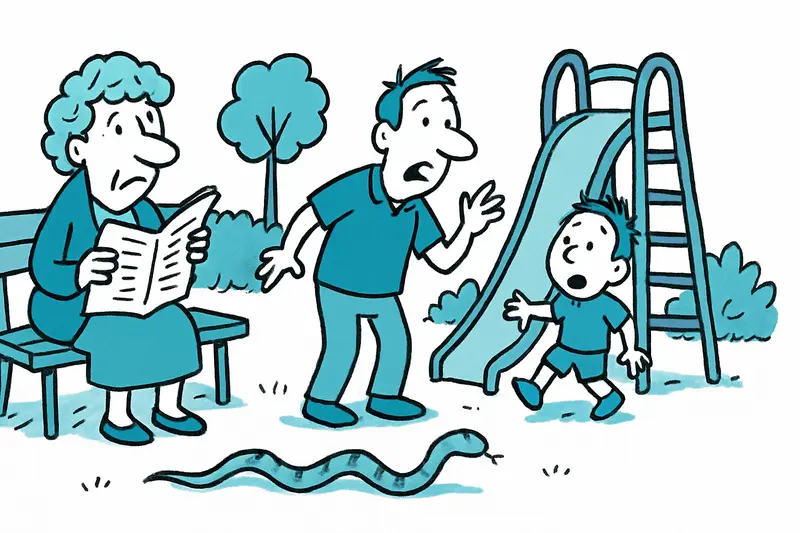
There is more rustling than usual in front of the houses in Sa Coma. Residents report snakes, some over a meter long, that have appeared in recent days around Es Puig Verd and at the foot of the Serra de Tramuntana (Why Snakes Are Appearing More Often in Mallorca Now — Danger, Causes and What We Should Do). Some specimens were found dead, others slid undisturbed through the bushes or across quiet side streets — right next to a small park with a children's playground. That causes unease, especially on hot afternoons when children play after swimming lessons and the cicadas are deafening.
Key question
How dangerous is the presence of these reptiles really — and what is the municipality doing to protect people, children and local wildlife?
Critical assessment
The reports were sent to the Consortium for Fauna Reintroduction (COFIB); they reassured the public: the visible specimens are not venomous. Still, the problem remains: invasive species can weaken native populations, disrupt food webs and, in the long term, change biodiversity in the Tramuntana. Similar impacts have been documented, for example 'A snake eats another' - what cannibalism among invasive snakes reveals about Mallorca's ecosystem. Sightings in the middle of the forest, but also on roads and in close proximity to residential areas, show that the phenomenon is not limited to remote zones. Dead animals could indicate disease, traffic accidents or poisoning — causes that should be clarified.
What's missing in the public debate
The discussions so far have revolved around fear or reassurance. What rarely happens is a clear, locally coordinated strategy. Regular sighting data is missing, visible warning signs at playgrounds and park paths, an easily reachable reporting address for found animals and transparent information on the removal and housing of captured animals. Habitat management — for example cutting back thorny undergrowth along paths, controlled disposal of waste and compost piles that attract prey species — is also little mentioned, even though it works.
Everyday scene
In the late afternoon an elderly woman sits on the bench opposite the playground on Carrer Major, fanning herself with a newspaper and watching the children. A father calls his child down from the climbing frame because a neighbor had reported seeing a snake in the bushes. The municipal worker sweeps the square, pauses briefly and looks into the hedges. The picture is small but typical: concerns, small measures — and the search for answers; similar incidents of playground danger have happened elsewhere (Playground attack in Palma: Who protects our children from unleashed dogs?).
Concrete solutions
- Sighting network: A simple online form or hotline to record observations, with categories (alive/dead, length, location, photo optional). These data should be published and analyzed so patterns become visible.
- Signage and information: Temporary signs at park entrances and school routes with behavioral tips: keep distance, do not touch, inform COFIB/municipality.
- Preventive measures on site: Hedge maintenance around the playground perimeter, waste removal, covering composters; these reduce hiding places and food sources.
- Coordination with specialists: Agreed protocols between the municipality, COFIB and the fire department for capturing, transporting and examining found animals; clear responsibilities prevent gaps.
- Awareness: Short information pieces in municipal newsletters, schools and sports clubs about how to recognize snakes and react correctly — without causing panic.
- Long term: Investigations into the origin of the animals (import, escape from private keeping, natural spread) and, if necessary, stricter controls on animal keeping (as with other recent local import measures Emergency in Mallorca: Why Olive Trees Are Suddenly Banned — and Whether That's Enough).
Why this matters
It's not only about the immediate safety of people but also about protecting local species. Invasive reptiles can put pressure on small bird populations, native lizards or ground-nesting birds. At the same time, poorly managed removal or killing of the animals harms scientific investigation and could have legal consequences — every intervention must be properly documented by specialists.
Conclusion
Bunyola is not alone: the observations show that small municipalities are particularly vulnerable when invasive species move to the edges of villages. Instead of oscillating between reassurance and panic, a pragmatic, visible response is needed: collect rather than speculate, signs instead of silence, coordination instead of passing the buck. Then children can laugh on the slide again without parents staring nervously into the hedges.
Frequently asked questions
When is the best time to visit Mallorca for pleasant weather and fewer crowds?
Is it safe to swim at Mallorca's beaches and what should I check before entering the water?
What should I pack for a trip to Mallorca?
What are the must-do experiences for a first-time visitor to Mallorca?
What’s the best way to get around Mallorca?
Are there family-friendly beaches on Mallorca?
Is Mallorca suitable for active travelers like hikers and cyclists?
How should I approach Mallorca's weather and sea conditions when planning activities?
Similar News
Released with Conditions: The Plus Ultra Suspicion and a Mallorcan Finca as Residence
A Dutch entrepreneur, sought in connection with the Plus Ultra case, was extradited to Spain after his arrest in Germany...

Haute Nuit in Puerto Portals: Fashion, Art and Indulgence by the Water
On October 2 the Lobster Club in Puerto Portals will be transformed into a stage for curated fashion, art and culinary e...
Magaluf: Watchtower Alarm – Lifeguards Pull Unconscious Beachgoer from the Water
After a drama in the late afternoon, two lifeguards at Magaluf beach rescued an unconscious 44-year-old man. He was stab...

Turquoise in the City: How dangerous is the color play of the Sa Riera?
The Sa Riera in Palma suddenly turned turquoise — a pretty motif, but behind the effect lies a discharge of saline waste...

Jeckliner at Sunnesching: Cologne spirit sets sail from Palma
In September 2027 the Mein Schiff 2 briefly becomes a floating carnival stage: four days with Cologne bands, comedy and ...
More to explore
Discover more interesting content

Can Cap de Bou

Townhouse Lleo 72
