
Check at Palma Airport: Large Amount of Cash, Nine Phones and the Question Who's at the Back of the Line
Early on Friday morning officers stopped a 67-year-old at Palma Airport. In his luggage they found €26,590, nine mobile phones, a Rolex and foreign currencies. What does the case reveal about security gaps at the airport?
Check at Palma Airport: Large Amount of Cash, Nine Phones and the Question Who's at the Back of the Line
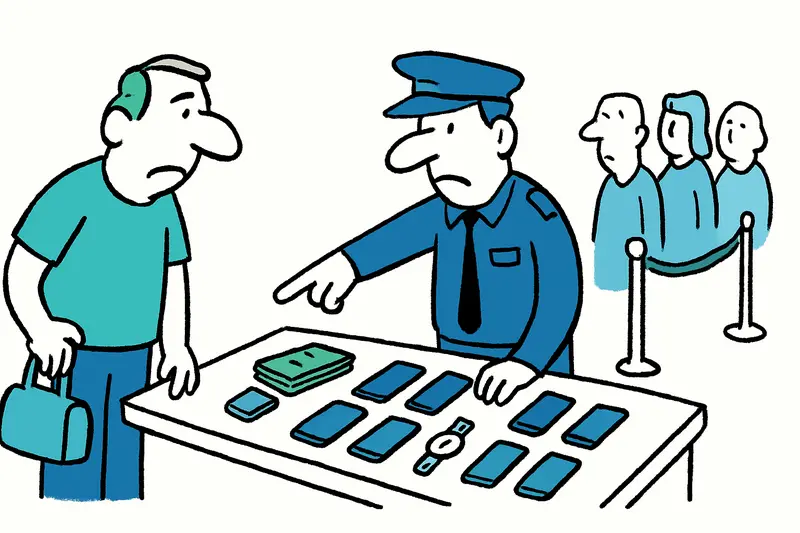
It was one of those hot mornings in Palma: the departure boards flicker, the air conditioning hums, and the bakeries smell of freshly baked ensaimada. At around 8:15 a.m. the Guardia Civil intervened in the departure area: a 67-year-old traveler, who intended to continue via Madrid to Dakar, became the focus of a check. X-ray images of his checked suitcase showed an unusually large number of electronic devices. When the bag was opened, nine mobile phones were revealed, along with an expensive wristwatch and large amounts of cash.
Officers seized a total of €26,590 — counted as €13,690 in a handbag and €12,900 hidden in several layers of clothing. They also found £250 and 1,610 Swiss francs. A check of the devices' identification numbers (IMEI) showed that one of the phones had been reported stolen the day before. The man was taken to the airport police station, questioned and later released after appearing before the examining magistrate; he was represented by counsel.
Key question
What does this incident say about gaps in border and airport systems if a passenger carrying such large amounts of cash and multiple devices, some of them registered as stolen, can reach the departure area?
Critical analysis
At first glance the case looks like a classic find: a check uncovers suspicious items and the police step in. But a few details remain troubling: the sum far exceeds the threshold at which cash is normally required to be declared. Nine mobile phones in one suitcase are not an everyday occurrence. And finding an iPhone recently reported stolen suggests that at least part of this cargo was not lawfully obtained by the traveler.
Problematic is that the discovery only occurred because a checked bag was X-rayed, and local coverage such as Arrests at Palma Airport: Two employees detained after alleged thefts has highlighted security concerns. Hand luggage and personal checks do take place, but the system allows larger quantities to be hidden in checked baggage.
Airlines and ground staff see hundreds of bags daily — suspicious patterns can be overlooked if processes are not tightly integrated with police databases, a problem compounded by long queues and lane closures reported in Palma: Why the security checks become a test of patience.
What is missing from public debate
Reports often focus on lone actors and rarely on the logistics behind them. Who hands over cash and devices to so-called "couriers"? Which networks benefit from a fallback system in which travelers carry items across borders without deeper questioning? And why aren't notices about the obligation to declare large sums of cash more visible to passengers at check-in or when booking online?
Reports of internal thefts at the terminal also feed into this debate, for example Thefts at the Airport: Two Employees Detained – How Secure Is Son Sant Joan?.
An everyday scene from Palma
Picture the departure hall: families with children, seniors with rolling suitcases, the Leyendas announcement in the background. Nobody expects that the man two rows behind them in line is hiding valuables in pieces of luggage. In a café in the terminal a staff member says: "We see people who seem very nervous every day, but this is Mallorca — many rush, nobody looks too closely." That indifference makes hiding things easier.
Concrete solutions
- Better interfaces: Airports, airlines and police should match data on suspicious baggage images and missing devices in real time. An automated IMEI check in X-ray results could trigger an alert.
- Clear notices: Check-in counters and gates should display short, clear information about the cash declaration requirement and penalties. Many travelers do not know the rules.
- Training for ground staff: Check-in and baggage staff must be trained to recognize suspicious patterns and to report them to security forces without bureaucratic obstacles.
- Trackability on release: When suspects are released by judicial decision, reporting obligations or electronic monitoring measures should be considered to prevent repetition.
- Prevention over symbolism: Multilingual awareness campaigns about the risks of transporting other people's sums of money could discourage well-meaning couriers.
Conclusion
The find at the airport was not a fluke but a reminder of how vulnerable the daily flow through a terminal can be. The technology to detect such items exists – the drive for prevention is still lacking. Travelers arriving or departing Palma should not only think of sun and beach, but also that borders today are less guarded by walls than by information flows. A few targeted changes could have rapid impact.
Note: The case involves a 67-year-old traveler from whom authorities seized €26,590, several mobile phones (including one device reported as stolen), a Rolex and foreign currencies. The man stated that he personally owned only part of the money and claimed others had entrusted him with items for onward transport. He was questioned and then brought before the examining magistrate.
Frequently asked questions
What happened at Palma Airport with cash, phones and a watch?
Do I need to declare large sums of cash when traveling from Mallorca?
How are luggage and devices checked at Palma Airport?
What lessons does the Palma incident suggest for border controls?
What practical improvements could help prevent similar incidents at Mallorca airports?
What should travelers know about currencies and security when flying from Mallorca?
What’s the departure hall atmosphere like in Palma, and how can I stay alert?
When is the best time to visit Mallorca for beach days and sunshine?
Similar News

More water than last year: Mallorca's reservoirs breathe easier
September rain refilled the Tramuntana's reserves: overall fill around 35 percent, Cúber at 40.42 percent, Gorg Blau at ...
Three Luxury Hotels in Banyalbufar: Lots of Money, Many Questions
A Danish investor plans three exclusive accommodations in Banyalbufar — including the historic Son Valentí. The announce...
2.1 tonnes of cocaine on sailing yacht off Spain's coast – a reality check for the coastguard
A 14-metre yacht was seized with 2.1 tonnes of cocaine. Who monitors the ports, how does the international hunt succeed ...

Heat Bonus in Mallorca: 100 Euros Extra for Outdoor Staff at MarSenses
MarSenses pays employees who worked outdoors in August an extra €100 as recognition. Lighter uniforms, reduced hours for...
Renovating in Mallorca: What You Really Can Do Without Neighbour Consent
Many think they can do whatever they want in their apartment. That's partly true — but only as long as structural elemen...
More to explore
Discover more interesting content

Can Cap de Bou

Townhouse Lleo 72
