
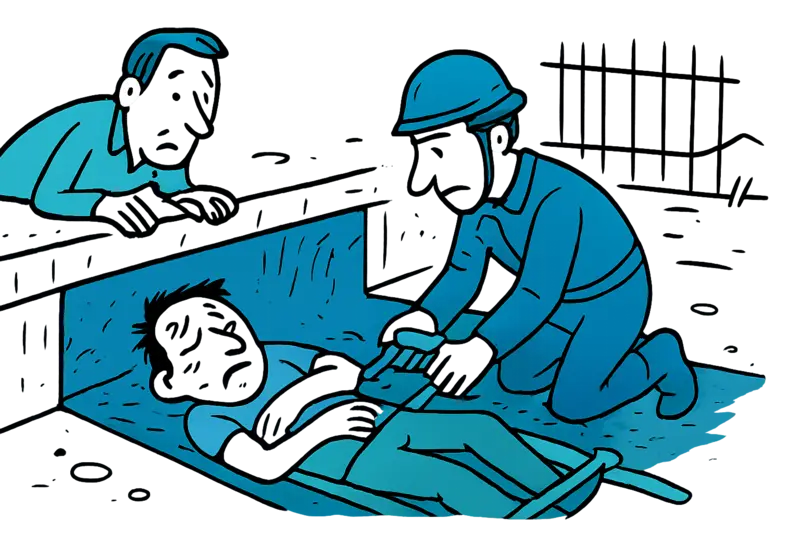
After assault in Palma: Why a man lay in the Torrente de na Barbara for more than an hour
After assault in Palma: Why a man lay in the Torrente de na Barbara for more than an hour
A 38-year-old man was pressed down at the mouth of the Torrente de na Bàrbara and lay in the stream bed for more than an hour. The circumstances raise questions — and reveal gaps in prevention, rescue and communication on Mallorca.
After assault in Palma: Why a man lay in the Torrente for more than an hour
Key question: How could an injured person in the middle of the city wait so long for help — and what needs to change?
Early in the morning at the mouth of the Torrente de na Bàrbara where it meets Calle Aragón: delivery vans hum by, a bakery opens, a few pigeons peck crumbs from the pavement. Around 9:20 a.m., helpers later report, a 38-year-old man of Chinese origin became involved in a confrontation. According to his account, someone demanded money, there was physical contact, he fell into the stream bed about two and a half meters below and remained there.
Several facts are now clear: the man had a forehead wound, his knee was severely swollen — the kneecap may be broken — and he was visibly in shock. A resident discovered him and alerted emergency services. According to operation reports, it took more than an hour before the injured man could be rescued from the torrente. Firefighters went down into the channel, stabilized him and carried him on a stretcher for roughly 300 meters to a damaged protective fence that made the extraction possible. He was then taken to Son Espases hospital. The police are investigating, and there are indications that several people may have been involved. Because the man speaks little Spanish, responders used translation apps to record his statements.
This is not an isolated case: on Mallorca, torrentes are not merely natural features on the city outskirts but part of the urban infrastructure. They are often accessible, sometimes hard to see into, with uneven ground, concrete walls and, in places, unsecured fences. When someone is injured there — whether by accident or assault — rescue and evidence collection are more complicated than on a sidewalk.
Critical analysis: three problem areas stand out. First: prevention and safety in public spaces. The mouth at Calle Aragón is not a remote spot, but the layout of the torrente complicates rapid assistance. More lighting, regular inspections and repair of damaged protective fences could mitigate risks. Second: visibility and evidence collection. Cameras at strategic points, visible presence of public order services and targeted questioning of passersby shortly after an incident increase the chance of identifying perpetrators. Third: emergency communication with non-native speakers. That police and medics had to rely on translation apps is pragmatic — but not sufficient. A structured, multilingual offering during first response would both improve information gathering and reassure those affected.
What is often missing in public debate is the concrete link between urban design and safety. People do not fall only because of aggression; poor access and rotten fences turn minor incidents into prolonged rescue operations. The role of neighbors is also rarely discussed: the resident who found the injured man acted decisively. More neighborhood initiatives and information campaigns promoting everyday courage — such as how to call for help correctly, stabilize an injured person or keep routes clear for rescuers — would be useful.
Everyday scene at the location: anyone walking past Calle Aragón now sees traces of the operation — a few tire marks on the curb, a piece of damaged fence, and on the balconies older women watching the street with cups in their hands. Some speak quietly about what happened; a delivery woman pulls out her phone and shows photos of the rescue. The typical sounds of Palma mix with distant sirens. Such small observations are often the first building blocks of a reconstruction.
Concrete solutions: 1) Check infrastructure: a municipal plan for torrente accessibility — repair damaged protective fences, install non-slip paths at critical points. 2) Prevention patrols: increased foot patrols in problematic neighborhoods at peak times. 3) Technology and evidence collection: rapidly deployable mobile cameras and better integration of existing CCTV systems with the police. 4) Multilingual emergency care: deploy a translation service for rescue teams, and regular training in the use of digital tools. 5) Citizen involvement: neighborhood information evenings on how to safely and effectively help when discovering injured people.
Concise conclusion: the incident at the Torrente de na Bàrbara is more than an individual fate. It is a small mirror of gaps that result from urban planning, lack of maintenance and insufficient emergency communication. Those who want faster help must turn several screws — not only the question of perpetrators, but also paths, fences, lamps and how we as a neighborhood respond. Taking these issues seriously will help ensure that no one in Palma's channel has to wait more than an hour for assistance.
Frequently asked questions
What factors usually cause delays for emergency responders in urban Mallorca areas?
How does urban design influence safety and rescue times in Palma's public spaces?
What can neighbors in Mallorca do to assist during an emergency without getting in the way?
Why is the mouth of Torrente de na Bàrbara near Calle Aragón particularly challenging for responders?
How could Mallorca improve emergency communication with non-native speakers during responses?
What role could cameras and CCTV play in Mallorca's public safety efforts?
What practical steps can Palma’s neighborhoods take to reduce risk at public torrents?
What concrete solutions are suggested to make Torrente de na Bàrbara safer and easier to assist in Palma?
Similar News
Dog caught on MA-19 near Llucmajor — Police take animal into custody
A large, unmarked dog was roaming the MA-19 near Llucmajor on Sunday morning. Motorcycle units of the Policía Local clos...
Holiday in Mallorca: Where you can still shop on Monday, October 12
The Spanish National Day on Monday, October 12: many shops remain closed, but some supermarket branches and outlet store...
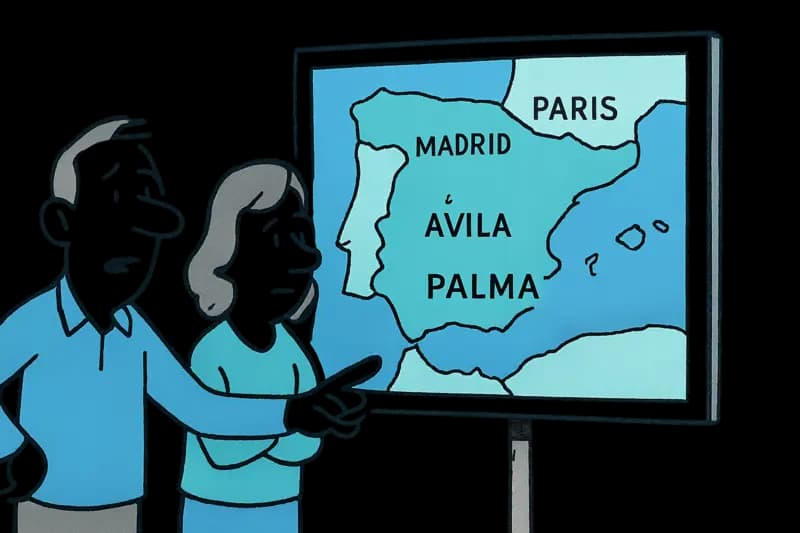
Advertising poster relocates Palma to the mainland - what the mistake says about us
An advertising poster for flights from Andorra shows Palma on the Spanish mainland. Why such an error occurs, what is mi...
Who Protects Valldemossa's Charterhouse? A Construction Site That Leaves More Questions Than It Opens
Two new entrances in the Claustre de les Murteres have pitted the administration against the opposition. Who authorized ...
Between Runway and Keel: How Boatbuilding Lives in Son Bonet, Mallorca
In the small Son Bonet airport, craftsmen preserve the island's boatbuilding tradition: restoration work, woodworking gu...
More to explore
Discover more interesting content

Can Cap de Bou

Townhouse Lleo 72
