
Baluard del Príncep: Final Sprint at the City Gate – Is the Financial Boost Enough?
The Housing Ministry releases €1.6 million to finish work at the Baluard del Príncep. A blessing — but the question remains: will the funds solve the structural problems that have been delaying the project for years?
Final sprint at the Baluard del Príncep – but is the money alone enough?
When you walk past the construction site at the Baluard del Príncep in the morning, the soft clatter of the machines mixes with the workers' espresso chatter: at nine, when the equipment warms up, the air briefly smells of coffee and fresh concrete. 1.6 million euros from the Ministry of Transport, Mobility and Urban Agenda (MITMA) sounds like a rescue. But the real guiding question remains: Is this financial injection enough to finish a project that has repeatedly stalled since 2008?
The last seven percent – more than just finishing touches
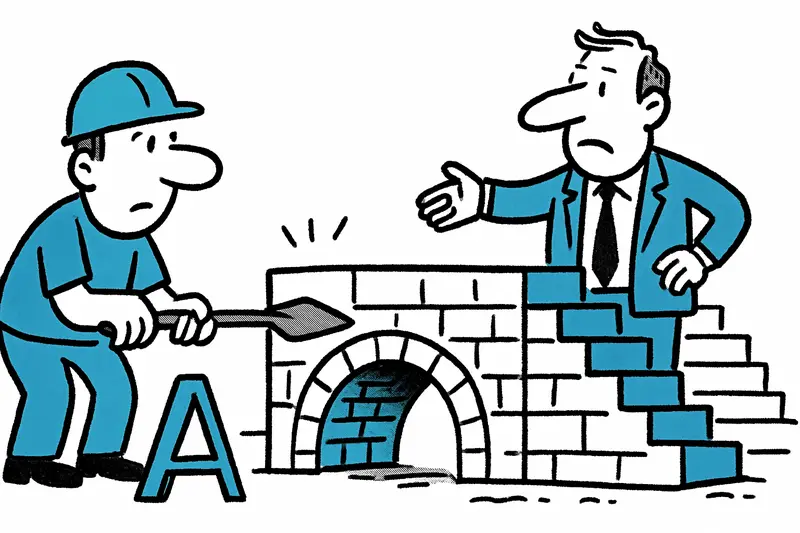
Officially around 93 percent of the work is done. The remaining seven percent, however, concerns sensitive interfaces: urbanization of the moat, connection to the sewer system, the bridge with steps from the Plaza de la Porta del Camp to the moat, the enclosure made of Marés stone on Avenida Gabriel Alomar and final public space designs. On paper this sounds like small stuff. In practice it means: craftsmanship precision alongside historic fabric, coordination with utility lines and often unexpected delays when drilling or excavating reveals remnants of old walls or service routes.
Why it keeps getting stuck
The backlog is not new: the insolvency of a construction firm involved in 2020 left deep marks, compounded by repeated plan changes. Each new tendering cycle tears apart logistics chains, leads to staff turnover and additional reviews. These gaps are not only time-consuming – they eat money. What looks like bureaucratic detail quickly adds up to a significant surcharge on total costs.
More than a construction site: identity, memories, everyday life
Palma's city wall is not just any strip of concrete. Its layers tell of Moorish fortifications, later additions and modifications, the steady pulse of a port city. For residents the Baluard del Príncep is a piece of identity, for tourists an unexpected discovery. The planned bridge will not only connect two banks: it is intended to make historical paths accessible again. Whether people linger there, enjoy the view of the Plaza de la Porta del Camp or simply use it as a shortcut depends on the design: seating, planting, lighting – small design details with great impact on comfort and usability.
Criticism of management – what is often overlooked
The current financial injection is important, yet it primarily fixes a short-term liquidity gap, a point also highlighted in €624 million for Palma: Big Money, Many Open Questions. The deeper causes remain: lack of financial buffers in contracts, unclear liability rules for planning partners and rigid tendering processes that, when a firm fails, lead to months-long re-awarding. Such structural risks not only increase uncertainty, they also drive costs up over the project lifecycle. What is rarely discussed in the public debate: the insufficient local networking of craftsmen and the underestimated importance of traditional materials such as Marés stone, an issue explored in Advancing Renovations Instead of Waiting: Government Funds Refurbs — Is That Enough for More Affordable Rents in Mallorca?.
Pragmatic proposals for the final sprint
So that the remaining work does not once again become a deadlock, more is needed than money. Some pragmatic measures that could take effect quickly now:
1. More modular tenders: Bundle smaller lots so replacement firms can step in more easily and individual failures do not block the entire project.
2. Contracts with buffers and clear handover rules: Make insolvency scenarios, handover protocols and replacement arrangements binding so losses are measured in weeks rather than months.
3. Actively use local crafts networks: Work on Marés stone and historical wall maintenance requires specialist knowledge – Mallorca has these specialists and they should be systematically involved, saving time and protecting fabric.
4. Transparency and on-site communication: Ongoing information for residents, temporary pedestrian diversions, noise and dust mitigation plans. This reduces tension in the neighborhoods – patience is limited in Palma’s old town, but espresso is not.
These practical ideas respond to concerns raised in €624 Million for Palma: Visions, Construction Sites — and the Outstanding Bill.
What comes next
In the coming days, Secretary of State David Lucas and Palma's mayor Jaime Martínez are due to sign an action protocol. The aim: tenders before the end of the year, awards and a swift completion. That sounds good on paper; practice will show whether administration and contractors have learned the lessons. There will still be skeptics – historic construction sites are rarely smooth and often capricious.
In the end it is about more than millimeters of mortar: it is about linking past and present, about paths that are passable again and about urban care that provides not only tourist shine but also quality of life for residents. When the bridge stands, we want to see more than a photo motif – we want a piece of the city that makes everyday life easier, with fewer paper tigers and more pragmatism. And yes: when workers sip their espresso again early in the morning, alongside the smell of concrete there should also be a faint breath of pride through the alleys.
Frequently asked questions
What is happening at the Baluard del Príncep in Palma?
Why has the Baluard del Príncep project in Palma taken so long?
Is 1.6 million euros enough to finish the Baluard del Príncep works in Palma?
What will the new bridge at the Baluard del Príncep connect in Palma?
What role does Marés stone play in Palma’s city wall projects?
How does unfinished construction affect daily life in Palma’s old town?
What is the Baluard del Príncep in Palma, historically?
When could the Baluard del Príncep project in Palma be finished?
Similar News
Palma's New Indoor Pool: Sea View, Sunbeds and Space for Everyone
At Aigua Dolça, near the Paseo Marítimo, Palma has a new municipal indoor pool. For a small fee people can now train, re...
How Four Burglars Emptied Ten Houses with a Simple Trick — and What It Means for Mallorca
Four men used the impressioning technique, posed as delivery workers and accepted two years in prison. A reality check f...
Bundles of Drugs, Containers and Open Questions: A Reality Check for Mallorca
3.3 tonnes of marijuana, 80 kilos hidden in golf-ball vending machines and a 44-year-old German released on conditions i...
Rats in Llucmajor: Who clears the streets, who stops the infestation?
In Llucmajor rat sightings and uncollected waste have increased after rain. A local check reveals gaps in cleaning, sewe...
Who will clean up? Illegal rubbish heaps on the highway near Son Gual drive residents onto the streets
For months, construction debris and household waste have piled up along the highway between Palma and Manacor near Son G...
More to explore
Discover more interesting content

Can Cap de Bou

Townhouse Lleo 72
