
Palma's Beaches: Who Owns Access When Sunbeds Become a Luxury?
Palma's Beaches: Who Owns Access When Sunbeds Become a Luxury?
The environmental group GOB denounces steep price increases for sunbeds and beach umbrellas in Palma and has filed a complaint with the authorities: public beaches must not become luxury goods. A reality check, a scene from the Paseo Marítimo and concrete proposals for fairer rules.
Palma's Beaches: Who Owns Access When Sunbeds Become a Luxury?
Guiding question: Do new rates turn the waterfront into a privilege for those who can pay — and who protects local residents?
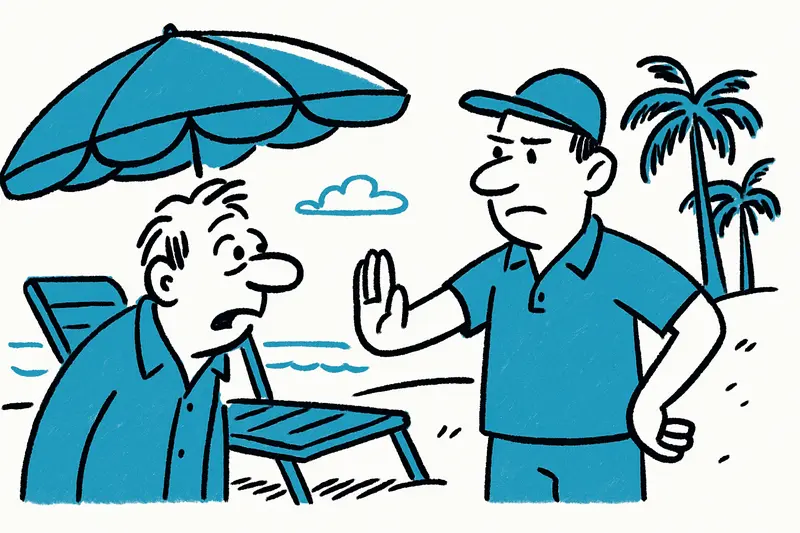
On the Paseo Marítimo it smells of saltwater and wet wood; in the early afternoon the cries of seagulls compete with the buzzing of delivery bikes. Between cafés and boat docks there are now signs displaying prices for sunbeds and beach umbrellas that leave many residents startled. The island environmental association GOB has sharply criticized this development and GOB files a complaint against overpriced "premium" sunbeds and distance violations in Cala Major. The core of the criticism: services on public beaches must not be arbitrarily raised to the point where regular beach visits become a financial hurdle for inhabitants.
In short: Where the city manages public beach areas, prices must be set by municipal ordinance and published in the official gazette. GOB accuses operators and possibly lax oversight of offering rates visibly more expensive without the required formalities — with effects on accessibility for residents.
What does this mean? First of all, that two interests collide here: operators of beach services seek profit margins, while the municipality must guarantee public access and legal compliance; this tension is outlined in Who Owns Palma's Coast? Six Million Euros, New Sports Areas and Who Pays the Price. If the balance tilts too far in favor of profit, the beach as an everyday communal space is damaged. In Palma, a free place risks being turned into a consumable product.
The background at Cala Major provides a concrete example: there allegedly were different price lists on display — a normal price sign slightly above the approved rate, and a variant labeled "Premium" with significantly higher amounts; according to GOB, the range reached up to 288 percent above the approved prices. Such inequalities fuel suspicion that visual tricks are being used to extract more money from different customer groups; similar cases have been reported elsewhere, for example 160 Euros for Two Sunbeds? Dispute Over Beach Access at Formentor.
Critical analysis: the current debate often narrows to outrage over high figures. More important is to ask how implementation could legally and practically derail. Is there a lack of clear controls when concessions are awarded? Are tariffs not subsequently monitored? Or do contract formulas give operators too much room for interpretation? The association has filed a complaint with the economic auditing authority — a step that can bring administrative mistakes or rule breaches to light. But this is only the beginning.
What is missing in the public discourse are the voices of regular users. Pensioners, shift workers, parents with small children, students and local business people who use the shore daily are too rarely heard. Also scarcely discussed are the social hardships that fee increases trigger: for many, sunbed fees are already part of the summer budget; a doubling means real restrictions on leisure and recreation. There is also a lack of a sober cost–benefit assessment showing whether higher fees actually serve to maintain beach quality or merely increase margins, a concern similar to When the Beach Stays Empty: How Mallorca's Sunbed Renters and Chiringuitos Are Fighting to Survive.
Everyday scene: on a gray morning I stand next to an older woman from Son Armadams who goes to the sea every other day. She points to the new golden sign at a beach station: "It used to be there for us, now I have to think twice." Not far away teenagers play basketball on a makeshift court on the sand; they say they are not the target group for such services — but the changed handling of the space affects how they experience it.
Concrete solutions: 1) Strict publication requirement: every tariff change must be published in Palma's official gazette before coming into force and be publicly accessible six weeks prior to enactment. 2) Examine social tariffs: municipalities should introduce resident-related discounts or models with daily quotas for locals. 3) Independent price supervision: a local control office that checks prices by spot checks for conformity with concessions and imposes fines. 4) Transparency clauses in lease contracts: operators must disclose return assumptions; unreasonable margins should be limited. 5) Citizen participation: an annual audit with resident representatives, beach workers and environmental experts before the start of the high season.
Practically feasible is also a "resident account" for beach services: digital chip cards with a discounted allocation of sunbed days per season, funded by a small municipal subsidy. Such concrete instruments preserve everyday freedom at the seaside without completely shutting off the market.
Conclusion (pointed): Beaches must not be tiered according to maximum willingness to pay. When public spaces are turned into exclusive zones by opaque price tags, Palma loses more than a few euros in the household budget — it loses the claim to make recreation and nature accessible to every citizen. The ongoing complaints and the careful observation by civil-society groups like GOB are important. But without binding rules, transparent contracts and visible supervision, the island risks sacrificing its public heritage on the altar of short-term revenues. The question remains: do we want to preserve beaches as a common good — or accept them as a new luxury product?
Frequently asked questions
Are sunbeds on Palma beaches public, and can the city set the prices?
Why are some people in Mallorca worried about higher beach chair prices in Palma?
What should I check before paying for sunbeds at Cala Major in Palma?
Can beach operators in Palma charge different prices for the same sunbed service?
What can residents do if they think beach prices in Palma are unfair?
Do beach price increases in Mallorca usually improve beach quality?
What kind of controls are needed for sunbed concessions on Palma beaches?
How can Palma protect locals while keeping beach services private?
Similar News

Who Benefits from the Half‑Hourly Flight on the Edge? Aena, Investments and the Island's Interests
Almost one billion euros is flowing into Son Sant Joan. The figures show the scale of investment and expected beneficiar...

Are the Balearic Islands the Southern Border of Europe? A Reality Check on Immigration
The Balearic Islands are again calling for EU aid after a sharp rise in arrivals by sea. Conflicting priorities between ...

"Expensive chaos" and many open questions: What clients can do when a lawyer suddenly stops responding
Several clients complain that a well-known German lawyer in Mallorca has been unreachable for months. Key question: What...

TV tip: 'The Last Problem' — Mallorca as the setting of a classic crime
A classic whodunit on Mallorca: A new miniseries set in spring 1959 brings storm, an isolated hotel and a dense web of s...
Nipping Sea Creatures: Why Bathers in Cala Major and Elsewhere Should Be Cautious
In Cala Major, bathers have reported being nipped by small fish. What is behind it, how can problems be avoided — and wh...
More to explore
Discover more interesting content

Can Cap de Bou

Townhouse Lleo 72
