
Palma: Car Flips Over – Seniors Rescued, Questions About Traffic Safety
Palma: Car Flips Over – Seniors Rescued, Questions About Traffic Safety
On a major arterial road in Palma, a car flipped onto its roof after a heavy collision. An elderly couple was freed and several people were injured. Why do such accidents happen precisely there, and what needs to change?
Palma: Car Flips Over – Seniors Rescued, Questions About Traffic Safety
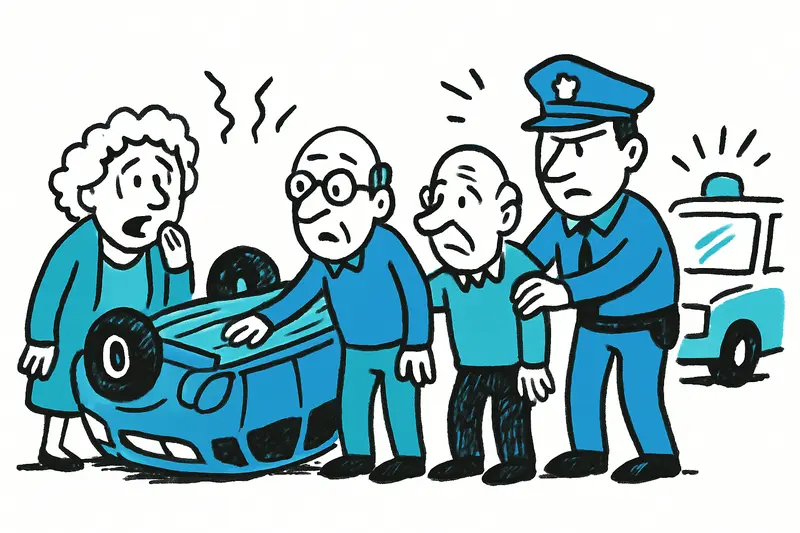
On Saturday afternoon a major exit road in Palma turned into a scene of sirens and curious onlookers for a few hectic minutes. Around 3 p.m., two cars apparently collided so violently that one of the vehicles was lifted and came to rest on its roof, a scenario similar to the rollover at Playa de Palma involving a 68-year-old driver. Dozens of pedestrians and motorists stopped, phone cameras clicked, and the smell of petrol lingered briefly in the air.
Key question: Why do severe collisions keep occurring on this busy road, and how can we prevent accidents that trap people inside vehicles from becoming routine?
The emergency number 112 received numerous calls in a short time. Police, emergency medical service 061 and the fire brigade from Sa Teulera responded. When the emergency teams arrived, the elderly couple who had been in the overturned car had already been freed; firefighters checked batteries and engine oil to remove immediate hazards and then withdrew. According to reports on site, at least four people were injured in total, and a third car only had slight contact with the accident vehicles.
Critical analysis
Sunny Saturday afternoons on Mallorca are not an unusual backdrop for traffic accidents – but this crash shows several features that demand attention. The combination of high speeds on arterial roads, narrow shoulders and dense pedestrian presence creates an explosive mix. When an impact lifts a vehicle enough to flip it over, impact dynamics play a major role: speed, angle of collision and the distance between vehicles determine whether a car remains stable or overturns.
In addition, many witnesses report hectic traffic, risky overtaking maneuvers and individual drivers who pay little attention to known danger spots. At the roadside people often say that speed limits exist but are not enforced comprehensively. Other incidents, like the head-on crash near Es Coll d'en Rabassa in which a 31-year-old died and the other driver fled, underline the lethal consequences of such behaviors. The result are moments when mistakes immediately become a danger to occupants and bystanders.
Other incidents, such as the seriously injured pedestrian on Palma's Paseo Marítimo, highlight the danger to people near busy roadways.
What is missing from the public debate
Beyond accident reports, there is often a lack of discussion about concrete measures: Where exactly on this arterial road are the most dangerous bottlenecks? Do the authorities systematically analyze the causes of accidents? Such data and maps would help to act in a targeted way. Analyses following the severe rear-end collision on the Ma-13 between Inca and Palma demonstrate how pinpointing bottlenecks can guide interventions. The visibility of traffic controls and the presence of prevention campaigns for older road users are also rarely discussed seriously.
Another blind spot is the time after the accident. We talk about sirens and rescues, but rarely about first aid at the scene, about access for ambulances during congestion or about the availability of automated external defibrillators (AEDs) in busy locations.
Everyday scene from Palma
On the day of the accident I sat a few streets away in a café; the terrace was slowly filling, children were eating ice cream and buses were passing regularly. The shock ran through the people: waiters turned off the music, a man fetched a blanket, others called for additional help. Scenes like these remind us that streets are not abstract spaces – they are part of daily life, right next to cafés, small shops and sidewalks where neighbors know each other and first responders can help quickly.
Concrete solutions
- Short term: mobile speed checks, clearer warning signs at accident hotspots and a visible presence of police patrols. If drivers face consistent consequences, behavior will change more quickly.
- Medium term: technical changes to road layout. A traffic island, narrowed lanes, better marked pedestrian crossings and – where appropriate – physical separations reduce angles of impact that increase the risk of flipping.
- Prevention: regular safety checks for older road users, awareness campaigns in neighborhoods, partnerships with pharmacies and community centers to spread information about range of motion, reaction times and safe driving practices.
- Strengthen emergency management: training for first responders in neighborhood associations, readiness plans, better signage for emergency access routes and more publicly accessible AED devices along busy streets.
Conclusion – short and clear
The accident with the car on its roof in Palma was not just bad luck; it is a reminder that road planning, enforcement and neighborhood preparedness must work together. The skills of the fire brigade and the professionalism of police and paramedics worked – the rescue of the elderly couple showed that. But to reduce the number of spectacular and dangerous crashes we need a more open debate about concrete measures and quick-to-implement solutions. Otherwise the arterial road will remain a place where every trip carries a small risk for the people who live and work there.
Frequently asked questions
What's the best time to visit Mallorca for outdoor activities?
Can I swim in Mallorca outside the summer months?
What should I pack for a Mallorca trip?
What are the must-see places or activities in Mallorca?
Is Palma a good base for exploring Mallorca?
How can I get around Mallorca without a car?
Are there family-friendly activities in Mallorca?
What language and local customs will visitors notice in Mallorca?
Similar News
Calvià opts for style over rowdiness – a plan for year-round, diversified tourism
Calvià wants to shake off Ballermann images by 2030 and boost hiking, sports, culture and gastronomy tourism. Hotels, th...
Autumn Is Coming — When the Rain System Will Cool Mallorca and What We Must Learn
AEMET warns: the chance of rain increases on Thursday and Friday — temperatures will fall. An opportunity to prepare our...
Eurowings in Palma: Expansion, Approval Chaos and the Reality Test for Island Planning
Eurowings is significantly increasing its presence in Palma and is even considering technical maintenance on site. The i...

A.M.Y.: Between Finca, Cornfield and Schoolyard – a 13-Year-Old Who Gets Mallorca Humming
With sunglasses, a rock guitar and the courage to sing over nagging voices: Amy Horber, 13, lives with her family on Mal...

Palma Waterbus Disaster: A Lesson in Procurement Chaos
Planned water routes in Palma's bay failed due to rigid standards, unrealistic prices, and a lack of coordination with p...
More to explore
Discover more interesting content

Boat Tour with BBQ along Es Trenc Beach

Private transfer from Mallorca Airport (PMI) to Pollensa
