
Seriously injured on Palma's Paseo Marítimo: An accident, many questions
Seriously injured on Palma's Paseo Marítimo: An accident, many questions
On the night of December 13, a 27-year-old woman was seriously injured on Palma's Paseo Marítimo when she was hit by a car while crossing the road. An alcohol test for the driver was negative. We take a closer look: What went wrong — and what is missing in the debate about nighttime safety?
Seriously injured on Palma's Paseo Marítimo: An accident, many questions
Leading question: Why are markings and zebra crossings no longer enough at night?
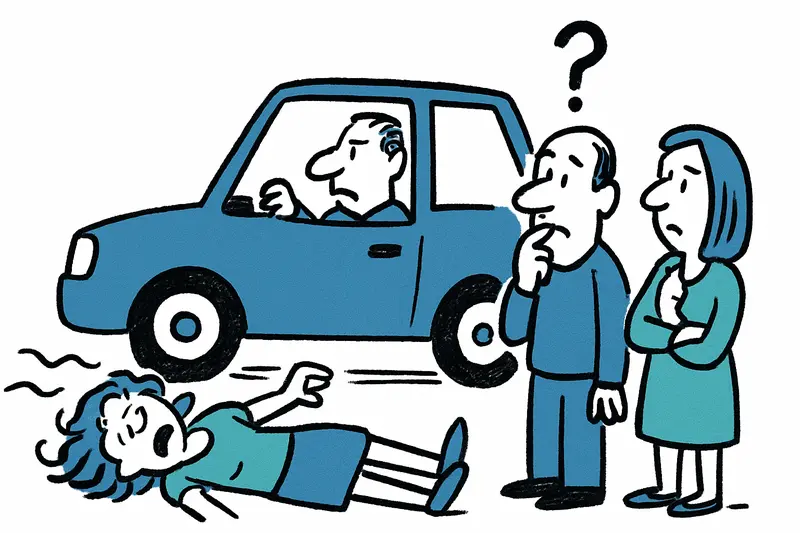
Around 1:30 a.m., when the streetlights cast a pale glow over the asphalt ribbon of the Paseo Marítimo and the last taxis still honk along the harbor, a 27-year-old woman was seriously injured while crossing a road. She stood with a group on the central refuge of a pedestrian crossing and, according to eyewitnesses, stepped forward — apparently a moment too early. An oncoming car struck her; the young woman was thrown through the air and taken to hospital. The driver tested negative for alcohol.
Critical analysis: At first glance this sounds like an unfortunate moment — a misstep, excessive speed, a tragic coincidence. Looking closer, responsibility becomes more complex: intersections on the city edge and especially along the seafront must be assessed differently at night than during the day. Visibility conditions, glare from ship spotlights or club lighting, the mix of pedestrians moving at different speeds, and drivers' expectations when dealing with tourist traffic all change the accident risk drastically. That the driver was sober relieves him legally, but says nothing about whether the vehicle was speeding, whether the headlights were correctly adjusted, or whether the zebra crossing markings are even easily visible at night; related local reporting has highlighted other dramatic incidents on the same promenade such as Car on the Paseo Marítimo in Flames – Bang, Smoke and Many Questions.
What is often missing in public debate is the everyday perspective: on the Paseo Marítimo you alternately see joggers, night owls with flashlights, groups coming out of bars, and delivery riders passing through. The promenade is one of Palma's main axes, with narrow access points, taxi ranks and flows of pedestrians that change strongly by hour and season. In the cool early hours you can hear the sea hitting the quay in the distance and snippets of music from a bar; at the same time pedestrians press at crossings where cars often only brake late.
What is missing from the debate: 1) Data on nighttime accident frequency at individual crossings — many figures are discussed in general terms rather than location-specific. 2) Clear visibility inspections of infrastructure in darkness, not just during the day. 3) An honest balance between traffic flow and pedestrian protection: on the Paseo Marítimo economic interests (tourism, logistics, nightlife) often clash with safety requirements; previous coverage of incidents such as Nighttime accident on the Paseo Marítimo: alcohol, a tripping hazard and many questions underlines the need for location-specific data.
Concrete solutions that could prove effective here are practical and quick to implement: 1) Energy-saving LED lighting directly over zebra crossings and on central refuges to make pedestrians stand out. 2) Raised crossings or lowered carriageways at particularly busy points so cars are forced to slow down automatically (see traffic calming measures guidance). 3) 30 km/h zones during night hours or variable speed limits, supported by random speed checks and in line with international recommendations such as the WHO road traffic injuries fact sheet. 4) Reflective vests or luminous road markings in areas where many people move at night — combined with an information campaign in clubs, bars and among taxi drivers. 5) Better training for night delivery workers and taxi drivers on assessing the dangers posed by groups of pedestrians.
These measures may sound banal. That is precisely their strength: many accidents could not be prevented by a single major reform, but by a combination of small interventions that together increase the chances that a step "too early" will not be fatal. The order is important too: first visible changes, then checks by the police and traffic planners, and finally evaluation and adjustment.
Another deficit is communication after accidents. Affected residents and night actors — taxi drivers, bar owners, delivery services — must be included in local safety concepts. Those who regularly serve the promenade often know the problem spots better than any map. Including these voices costs little and quickly provides practical clues: where are blinding streetlights? Where does a delivery van park on the pavement at night and block sightlines? Earlier incidents and ongoing court processes, such as Fatal Accident on the Paseo Marítimo: Trial Raises Questions About Safety and Control, show the public interest in clearer post-accident communication.
Everyday scene: It is shortly after one, harbor lights flicker, a garbage truck hesitates at the ramp entrance, young people laugh with plastic bags in their hands, and a small group gathers on the central strip to cross the road together. A car approaches, the driver does not expect a sudden gap — someone takes a step, fate decides in seconds. Such moments repeat across Mallorca's nights, far too often.
Conclusion: The incident on the Paseo Marítimo is not an isolated event but a symptom. Concrete, locally adapted measures are needed: better lighting, structural adjustments to zebra crossings, variable speed limits and stronger inclusion of the people who are out at night. Only then can the balance between nightlife and road safety be restored. If politicians, traffic planners and the night scene do not just talk but implement visible changes, we reduce the risk that a misstep will change a life.
Frequently asked questions
Is it safe to cross the road at night on Palma's Paseo Marítimo?
Why are zebra crossings in Mallorca sometimes harder to see at night?
What makes nighttime traffic in Palma more dangerous for pedestrians?
What should you know before walking along Palma's waterfront late at night?
What safety improvements could help reduce accidents on the Paseo Marítimo in Palma?
Do you need to be extra careful near nightlife areas in Mallorca when crossing the street?
What should drivers do differently on Palma's Paseo Marítimo at night?
Are accidents on Palma's Paseo Marítimo usually caused by alcohol?
Similar News
The End of the Cheap Ride? Why Mallorca Is Hit Harder by the Fuel-Price Shock
Gasoline and diesel average close to two euros per liter. What this means for commuters, supply chains and renters in Ma...
Relaxed liquid rules in Munich: What Mallorca travelers will notice
At Munich Airport the 100-milliliter rule will be lifted at all checkpoint lanes — thanks to new CT scanners passengers ...
For 45 Years on Mallorca — and Then This: How a Market Visit in Santa Ponsa Became a Lesson
A woman who has lived on the island for decades lost money and important documents at the Mercat Setmanal in Santa Ponsa...
10 percent surcharge on the beach: How legal and transparent is the extra charge at Playa de Muro?
A German part-time resident noticed days after a restaurant visit in Playa de Muro that the bill included a flat ten per...
Body near the Llevant Market: What this death says about our city
A man was found dead on Sunday afternoon near the Llevant Market. Police say the death appears natural. The scene raises...
More to explore
Discover more interesting content

Can Cap de Bou

Townhouse Lleo 72
