
When the Cathedral Disappears into the Haze: Palma's Brief Fog Magic
When the Cathedral Disappears into the Haze: Palma's Brief Fog Magic
Suddenly La Seu was gone: on a sunny afternoon a thick fog rolled in from the bay in Palma, changed the mood on the rooftops and prompted photo stops along the harbor promenade.
When the Cathedral Disappears into the Haze: Palma's Brief Fog Magic
A sunny afternoon, a moment like from a film – and then the sea swallows the city's silhouette
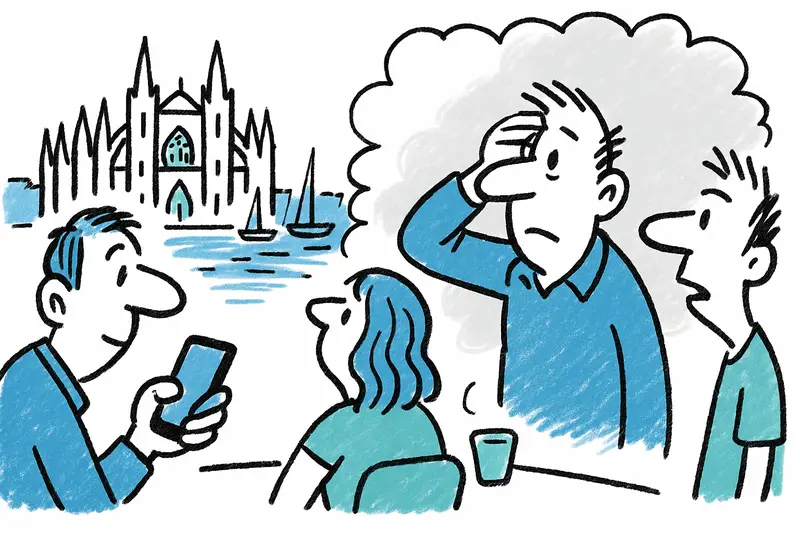
It happened late in the afternoon under a clear, almost springlike sky: guests on a rooftop terrace near the Passeig del Born had just turned their eyes toward the bay when a gray wall crept in from the coast. Within minutes the familiar outline of the cathedral La Seu dissolved into the haze. Boats and masts in the harbor became blurred shadows, only the bustle on the quay – voices, the clatter of ropes, the call of a seagull – remained clearly audible.
Such a spectacle is rare in Mallorca; for many present it felt foreign and a little magical. Tourists took out their phones, locals paused and shook their heads with a smile: a bit of unpredictability is part of the island too. After about ten to fifteen minutes the fog bank lifted again, La Seu slowly reappeared and with it the colors of the city, as if someone had drawn back a curtain.
Meteorologically the phenomenon is not entirely surprising: when moist air over the sea meets cooler layers, advection fog can form and drift toward the coast. Slight shifts in wind and local temperature differences enhance the effect. On the water these transitions often appear abrupt; on land they are experienced as a short but dense reduction in visibility. For mariners and harbor staff the warning remains: not every beautiful sun means clear visibility out at sea, as recent reports such as Mallorca in Fog: Visibility Almost Non-Existent, Airport Operations Disrupted show.
The sudden fog had something unifying about it. In cafés along the Plaça de la Llotja voices grew louder, cameras and phones were passed across tables, and even the usual quiet of a side street felt altered for a moment, a dynamic described in When the Clouds Come: Palma's Old Town Between Gain and Limits. It is these small, hardly predictable moments that remind residents and visitors alike that Mallorca is more than just sun and beach – it is an island with changing weather, surprising moods and places that suddenly look completely different.
Why is that good for Mallorca? Such scenes make people look more closely. Photographers get unusual motifs, walkers experience the city anew, and the social media photos attract both return visitors and the curious. For local tourism they are small stories that show Palma as a living place, not a backdrop that always looks the same.
If you want to experience such a natural spectacle: mornings and evenings are often when the transitions between sea and air are most active, especially when subtle temperature differences exist. A tip for the next rooftop or promenade walk: keep your camera ready, take a deep breath and enjoy the unusual calm when the city is briefly bathed in gray.
And a practical tip to finish: for the longer term it's worth checking AEMET forecasts and the harbor's live webcams so you know whether visibility at sea will remain good, and to remember how Morning fog paralyzes Palma airport – How weatherproof is the island's infrastructure? affected travel.
A sunny day, a short wall of fog – and Palma's La Seu reappears: as quickly as the shadow line came, it soon departed.
Frequently asked questions
Why can fog suddenly roll into Palma on an otherwise sunny day?
Is it normal for La Seu in Palma to disappear into fog?
When is fog most likely in Mallorca?
What should I do if visibility drops suddenly in Palma or at the harbour?
Can fog in Palma affect flights or travel plans?
Where is the best place to watch fog in Palma?
Is sea fog in Mallorca dangerous for boats?
How can I check fog and visibility forecasts in Mallorca?
Similar News

More water than last year: Mallorca's reservoirs breathe easier
September rain refilled the Tramuntana's reserves: overall fill around 35 percent, Cúber at 40.42 percent, Gorg Blau at ...

Three Luxury Hotels in Banyalbufar: Lots of Money, Many Questions
A Danish investor plans three exclusive accommodations in Banyalbufar — including the historic Son Valentí. The announce...
2.1 tonnes of cocaine on sailing yacht off Spain's coast – a reality check for the coastguard
A 14-metre yacht was seized with 2.1 tonnes of cocaine. Who monitors the ports, how does the international hunt succeed ...

Heat Bonus in Mallorca: 100 Euros Extra for Outdoor Staff at MarSenses
MarSenses pays employees who worked outdoors in August an extra €100 as recognition. Lighter uniforms, reduced hours for...

Renovating in Mallorca: What You Really Can Do Without Neighbour Consent
Many think they can do whatever they want in their apartment. That's partly true — but only as long as structural elemen...
More to explore
Discover more interesting content

Can Cap de Bou

Townhouse Lleo 72
