
Seven People, One Trunk: Why Palma's Nights Are More Often Going Wrong
An overloaded car on the Avinguda, alcohol and drug finds, a passenger in the trunk – an isolated incident or a symptom? An analysis of causes, consequences and concrete solutions for Palma's nightlife.
Seven People, One Trunk: Why Palma's Nights Are More Often Going Wrong
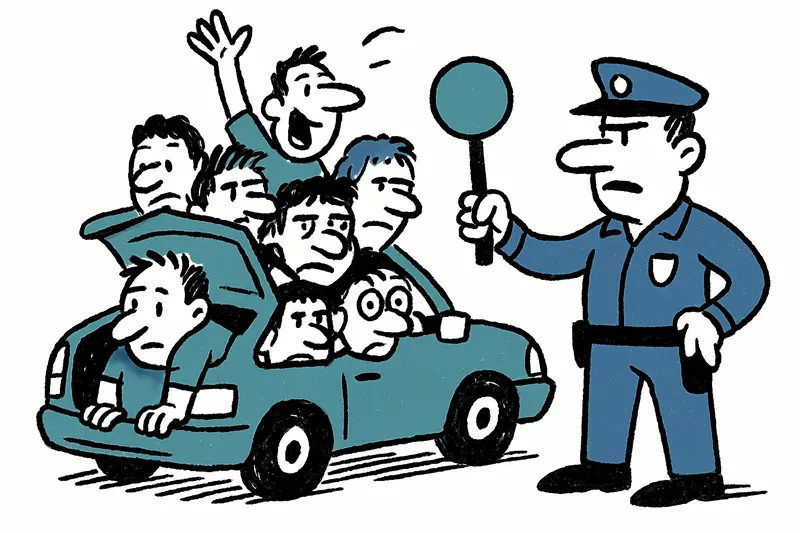
Last night at around 10:15 p.m. a car stopped on the Avinguda in Palma that immediately drew attention: seven people on board, one sitting in the trunk, another halfway through the sunroof. From a distance, bar music, clicking heels and the distant wail of a siren mixed together – a scene more expected in a film than on the pavement outside your favorite bar. Similar late-night incidents have been reported before, such as when two taxi drivers intervened to stop a heavily intoxicated driver on the Paseo Marítimo.
What actually happened
The arriving units of the Policía Local found signs of alcohol and drug use by the driver; small quantities of narcotics were found on several passengers. The vehicle was taken out of service, towed and evidence secured. Fortunately, the trip ended with a scare rather than injuries. But luck is no substitute for a safety plan.
The key question
Why are people willing to put themselves and others at such risk so carelessly? The question goes beyond individual negligence: it touches on peer pressure, driving habits, financial and infrastructure gaps – and a culture that underestimates the danger of combinations like alcohol plus drugs.
Behind the images: causes rarely mentioned
At first glance it looks like a slip-up from a boisterous night. On closer inspection systemic factors emerge: late hours out, limited and sometimes expensive night transport options, and the temptation to combine everyone's journeys into one car with friends. When taxi fares rise or buses stop running at midnight, riskier solutions become attractive – sometimes with severe consequences, as in a light commercial van that overturned several times in Son Oliva.
Added to this is group dynamics: who wants to be the party pooper when everyone else agrees? Who believes that "just a bit" in the trunk is harmless? This mental minimization of risk is dangerous – and is amplified by the disinhibition of alcohol.
Underestimated consequences
Fines and criminal investigations are visible consequences. Less visible but equally real are psychosocial effects: traumatized passengers, lost trust in the neighborhood, rising insurance premiums and the danger that an accident will affect uninvolved bystanders. A tight turn on the Avinguda, one small mistake – and a loud but harmless night can become a tragedy.
What is often overlooked
Many neighbors describe the situation like this: you hear things at night, get used to the noises, but don’t always report them. When reports do come in, they often lack times or precise locations. The police respond, but prevention requires other resources: education, services and an infrastructure that creates alternatives. Legal consequences are also often not realized by young people until toxicology results are available and the seriousness becomes visible, as in a Sóller crash linked to alcohol and driving without a license.
Concrete: What could help now
Penalties are necessary so rules have effect. In the long term, however, a bundle of measures is needed. Some concrete proposals:
- Targeted presence on weekends: Not just sporadic checks, but coordinated enforcement efforts during the evening hours that are visible and explanatory, reducing repeat offenses.
- Expansion of night services: Later bus connections, discounted shuttle services and coordinated cooperation with taxi companies could reduce the temptation to overload a car.
- On-site education: Information campaigns in bars, clubs and universities about the risks of mixing alcohol and drugs and about legal consequences – short, clear and distributed locally.
- Low-threshold support services: Quick access to counseling and help for substance problems prevents risky behavior from becoming habitual.
- Better reporting systems: Apps or hotlines that automatically capture location and time would make reports more precise and ease the work of emergency services – for neighbors who see something but cannot describe details accurately.
Looking ahead
The investigations are ongoing; toxicology results and the detailed analysis of the seized substances will determine possible criminal consequences. For residents the memory remains of a loud night: the dog pulling on its leash, conversations on the pavement, the distant whir of motorcycles.
Police operations like this are unpleasant but necessary – not only for punishment, but above all for prevention. If politicians, police and civil society act together and focus on better night logistics, targeted prevention and transparent controls, Palma can become safer. Then people can sleep with their windows open again without their hearts dropping when a car stops and someone climbs out of the trunk.
Update: We will stay on this and report as soon as the authorities publish new details.
Frequently asked questions
Why do nights out in Palma sometimes lead to dangerous car rides?
What happens if police stop a driver in Mallorca who appears to be under the influence?
Is it safe to ride in a car trunk or with passengers sticking out of a window in Palma?
How can you get home safely after a night out in Mallorca?
Why do some people in Palma ignore the danger of driving after drinking or using drugs?
Are late-night transport options in Mallorca enough to avoid risky car journeys?
What can Palma residents do if they see a dangerous driving situation at night?
What are the wider consequences of reckless night driving in Mallorca?
Similar News
Happy Couple and Water Damage in Mallorca: A Reality Check for Home Buyers
Just moved in, already water under Mallorca's sun: the case of the influencer couple highlights risks often overlooked w...
Bendinat as a meeting place: Padel Cup brings together nearly 120 players
Three days of padel at the Bendinat Urban Country Club: organized by El Económico and Borbalán, with around 120 particip...
Large-scale Anti-Tourism Graffiti at Cala Mendia: Protest or Vandalism?
On the morning walkers discovered an approximately 50-meter-long slogan against tourism on the wall above Cala Mendia. W...
Bomb threat before Jet2 flight in Tenerife: A reality check for security protocols
A passenger reported a bomb in luggage shortly before departure in Tenerife. Evacuation, baggage checks, delays — and ma...
Who is stripping Mallorca's coast bare? Why entire slopes are being removed for villas
On Mallorca steep slopes are again being removed to make way for luxury construction sites. Who bears the responsibility...
More to explore
Discover more interesting content

Can Cap de Bou

Townhouse Lleo 72
