
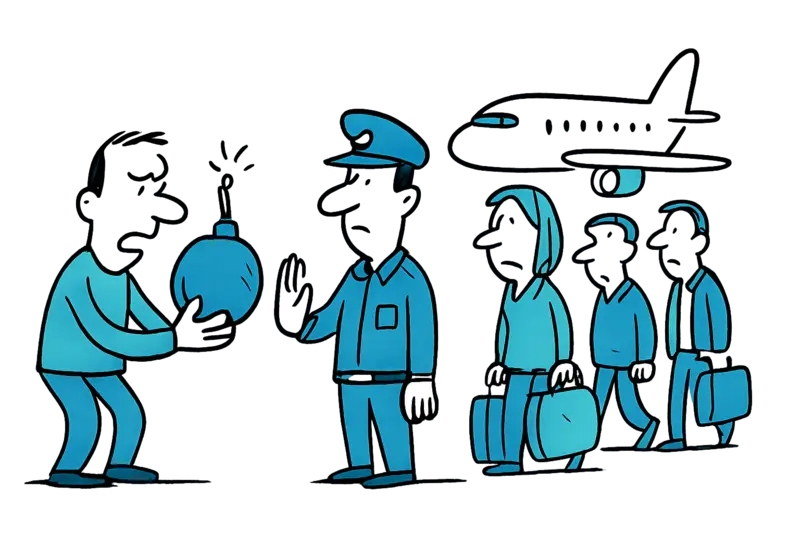
Bomb threat before Jet2 flight in Tenerife: A reality check for security protocols
Bomb threat before Jet2 flight in Tenerife: A reality check for security protocols
A passenger reported a bomb in luggage shortly before departure in Tenerife. Evacuation, baggage checks, delays — and many open questions. What does this say about procedures and prevention at our holiday airports?
Bomb threat before Jet2 flight in Tenerife: A reality check for security protocols
Guiding question: How resilient are procedures at holiday airports when a single passenger triggers major security measures?
Last Friday a scheduled holiday flight from Tenerife South to London came to a standstill: passengers had to leave the aircraft, bags were checked individually, and specialists from the Guardia Civil inspected the plane. According to the information available so far, no explosive device was found. Still, the departure was significantly delayed — holidaymakers waited in the terminal, phone shops hummed, children grew restless.
The sequence of events is simple: suspicious remark before departure, immediate evacuation, search of the cabin and luggage, waiting time, and finally resumption of the flight with hours of delay. To outsiders this sounds like a functioning emergency plan. For me the question is: does the system work efficiently and proportionately — or does it generate unnecessary fear, costs and uncertainty?
Critical analysis: The protocol protects passengers. If someone reports a possible bomb, departure must and should be stopped. At the same time several problems remain visible. First: transparency. Travellers often receive only fragments of information, announcements in the terminal are brief, and rumours fill the gaps. Second: the strain on staff and emergency forces. Airports with high holiday traffic can hardly handle such operations without operational impacts. Third: legal framework and assessment of intent. Authorities hesitate to classify incidents as deliberate threats — that leaves responsibilities unclear.
What is missing from the public debate: it is not just about the spectacular scene on a runway. We are also talking about staffing levels, training and cost allocation. Who pays the bill for hours of rescheduling, bomb disposal teams and extended stays of passengers? Also rarely discussed: mental health. Some incidents arise from despair, mistakes or psychological crises. Blanket expectations of punishment fall short here.
An everyday snapshot from Mallorca: in a café on Passeig Mallorca, where espresso cups still clink and bus 1 towards Playa de Palma rushes by, the news was discussed. A hotel employee frowned: "If something like this happens in peak season, chain reactions occur throughout the whole holiday industry." An older taxi driver said quietly: "It annoys the guests, it costs all of us." Such conversations show how much an incident in the distance can be felt across the island.
Concrete solutions without panic: first, better information chains. Short and clear: airport staff should have standardized, understandable announcements so rumours have less space. Second, targeted training for de-escalation at the gate. Often a calm conversation decides whether a statement was misunderstood or not. Third, clear liability and cost transparency. If threats are intentionally false, sanctions must exist; at the same time emergency costs should not automatically be passed on to passengers or small businesses. Fourth, psychological first aid in the terminal: available to people in acute crisis to prevent unnecessary escalations. Fifth, regular drills that airports, the Guardia Civil and airlines carry out together — not only on paper, but live, under real time-pressure conditions.
Practical measures to speed things up: mobile explosive quick-test kits at the gate, a prioritized "safe lane" for families and elderly passengers when reboarding, digital status updates to affected travellers by SMS or app to reduce uncertainty. Beyond operational benefits, such tools would also have psychological value: those who know what is happening remain calmer.
There is a fine line to watch: security must not be used as a pretext for excessive measures that curb freedom to travel. Proportionality is needed; every intervention must be comprehensible and well documented. Transparency protects not only passengers but also emergency personnel from unjustified criticism.
Another topic that deserves more attention: the interaction between international airlines and local authorities. Holiday carriers bring large groups of tourists to regions that struggle with staffing peaks and troughs. Standardized reporting channels between the airline, airport management and the Guardia Civil must work faster than they do today.
Pithy conclusion: yesterday's incident in Tenerife activated protective mechanisms as they should. It also showed how patchy communication, resource planning and legal awareness can be. Those who work in Mallorca live with the consequences of such incidents — from delayed transfers to annoyed guests and stressed ground staff. It is not enough to just react. We must relieve processes, communicate more clearly and think preventively.
In short: security is not a one-way street. It works best when authorities, airports, airlines and local people are better coordinated. And when the next announcements in the terminal bring not only alarm but also a clear message: what is happening, how long it might take and who is taking care of it.
Frequently asked questions
When is the best time to visit Mallorca for warm weather and manageable crowds?
Can I swim in Mallorca year-round?
What should I pack for a Mallorca trip?
What are the best ways to get around Mallorca without a car?
What are must-do activities for a first-time visitor to Mallorca?
Which Mallorca beaches are particularly family-friendly?
Is Mallorca safe for travelers and what practical tips help?
How should I handle weather changes or heat while visiting Mallorca?
Similar News
Who is stripping Mallorca's coast bare? Why entire slopes are being removed for villas
On Mallorca steep slopes are again being removed to make way for luxury construction sites. Who bears the responsibility...
Robber Falls While Fleeing in Sant Agustí: Who Takes Responsibility?
During a purse-snatching in Sant Agustí, a non-commissioned officer chased the suspect; the man jumped from a bridge and...
Bomb threat on board? Why the Tenerife incident concerns us in Mallorca
A passenger on a Jet2 flight from Tenerife to London triggered an evacuation and intensive security checks. The result: ...

More Electric Cars in the Balearic Islands: Sales Rise Sharply
Between January and August, 14,185 vehicles without petrol or diesel propulsion were sold — an increase of more than 40 ...
Autumn in Mallorca: What Truly Remains of Summer
The days grow shorter, the evenings cool — and yet more of summer lingers than you might think: sounds, recipes, people,...
More to explore
Discover more interesting content

Can Cap de Bou

Townhouse Lleo 72
