
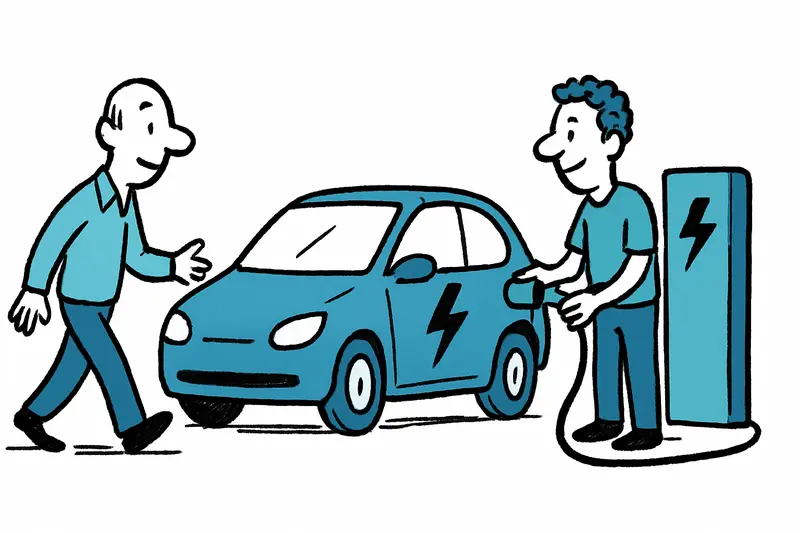
More Electric Cars in the Balearic Islands: Sales Rise Sharply
More Electric Cars in the Balearic Islands: Sales Rise Sharply
Between January and August, 14,185 vehicles without petrol or diesel propulsion were sold — an increase of more than 40 percent compared with 2025. For Mallorca this means quieter streets and lower fuel costs.
More electric cars in the Balearic Islands: sales rise sharply
Between January and August, 14,185 vehicles without petrol or diesel propulsion were registered – growth of over 40 percent
In the early morning, when the garbage trucks are still trundling down Carrer de Joaquín Costa and the first cafés at Plaça Major spread the scent of freshly brewed coffee, one thing stands out: on the streets of Palma and the coastal towns, vehicles without an exhaust note are passing by more and more often. The figures back up this impression. In the first eight months of this year, 14,185 vehicles were sold in the Balearic Islands that are not powered by petrol or diesel – an increase of more than 40 percent compared with the same period in 2025.
The majority of these new registrations are fully electric models or hybrids. Together they now make up about 2.3 percent of the Balearic Islands' vehicle fleet. For many everyday scenes in Mallorca this has noticeable consequences: less engine noise in the lanes of Sóller, quieter traffic on Avinguda Gabriel Roca and more relaxed driving along the Paseo Marítimo.
What is driving this development? Local dealers name several reasons. The president of the Balearic car dealers' association, Lluís Pol, points to the high prices of fossil fuels: when filling the tank costs more, people think twice about choosing a combustion model. In addition, Pol says the purchase-price gap between electric cars and conventional vehicles is narrowing, which further eases the decision. Manufacturers are aligning their model ranges more and more with future European requirements aimed at lower emissions.
Politicians also point to advantages. The Balearic minister for business, self-employed and energy, Alejandro Sáenz de San Pedro, calculates that for an average driver covering around 10,000 kilometres a year the math can work out positively: according to him, the saving with an electric model is about €700 per year. Other plus points: less dependence on global oil prices, a smaller CO2 footprint and quieter streets, which is especially noticeable in busy tourist areas.
On the ground this means concretely: taxi drivers switching to electric models save on operating costs; holiday rental owners hear less traffic noise on terraces; residents in Platja de Palma report a more pleasant morning. Even at the weekly market you more often see neighbours fiddling with plug adapters and charging cables instead of petrol cans.
Where is the journey heading? The momentum is clearly visible, but the change needs infrastructure. More charging points across the Balearic Islands at supermarkets, in Palma parking garages and at tourist hotspots would make the switch easier. Incentives for used electric vehicles would also be sensible so that not only new purchases but also the second-hand market grows.
A small practical tip for Mallorcans: those who have solar power on the roof during the day can time charging so the car 'fills up' almost for free. That relieves household budgets and the grid – and is a small step toward more local energy autonomy.
Conclusion: The Balearic Islands are currently experiencing a noticeable shift in the vehicle market. For Mallorca this means less noise in the old towns, lower dependence on price fluctuations at the pumps and tangible savings for many households. The numbers are a signal – and the little hiss of electric motors you hear in the mornings between the street cafés is no coincidence anymore.
Frequently asked questions
How fast are electric cars growing in Mallorca and the Balearic Islands?
What impact do electric cars have on noise levels in Mallorca towns?
What’s driving Mallorca’s move toward electric cars?
What practical tips exist for charging an electric car in Mallorca?
How could electric cars affect daily life for people in Mallorca?
Where are charging points most needed in Mallorca?
What share of Mallorca’s vehicle fleet is electric or hybrid?
What small steps can households take to support electric mobility in Mallorca?
Similar News

Autumn in Mallorca: What Truly Remains of Summer
The days grow shorter, the evenings cool — and yet more of summer lingers than you might think: sounds, recipes, people,...

Rescue operation at Tolleric: Why nighttime cliff parties become dangerous
A British holidaymaker fell about ten meters at the cliffs of Tolleric during the night, later climbed back up and was r...
Car accident on the MA-1: Mother and daughter on a bicycle struck by a fellow countryman – Who protects cyclists here?
On the MA-1 between Portopí and the Cala Major exit, a mother and her daughter on a bicycle were struck by a car. A para...
Smoke over the UIB: Who is responsible for the fire on the roof?
On Saturday afternoon a fire broke out on the roof of the Arxiduc Lluís Salvador building at the University of the Balea...

Short Getaway with Sea View: Inmood Aucanada among Spain's Top Hotels for Dinner Breaks
A small hotel on the coast of Alcúdia was highlighted by a Spanish experience platform as particularly suitable for shor...
More to explore
Discover more interesting content

Can Cap de Bou

Townhouse Lleo 72
