
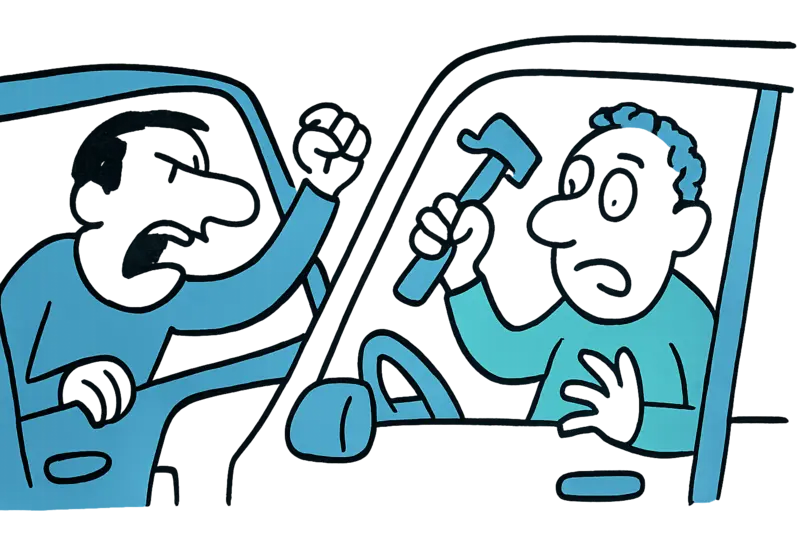
When a Hammer Comes Out of the Glove Compartment: Violence After a Traffic Dispute in Bons Aires
When a Hammer Comes Out of the Glove Compartment: Violence After a Traffic Dispute in Bons Aires
A midday traffic dispute in Bons Aires escalated: a man pulled a hammer from his car and injured another driver in the leg and shoulder. The Spanish National Police detained two people for investigation. Why do such confrontations spiral so quickly — and what can the city do about it?
When a Hammer Comes Out of the Glove Compartment: Violence After a Traffic Dispute in Bons Aires
An incident on October 1 makes clear how quickly an everyday scene in Palma can spiral out of control
On the early afternoon of October 1, at around 2:15 p.m., a typical traffic situation in Bons Aires turned into an act of violence: after an altercation between occupants of two vehicles, a man reportedly pulled a hammer from his car and struck another driver with it. The victim suffered injuries to the leg and shoulder; the leg wound had to be treated and stitched. The Spanish National Police investigated and were able to identify and detain the alleged attacker and another person who was in the car. The criminal investigation department has taken over the inquiries.
Key question: Why do conflicts on the road escalate so quickly — and what can Palma do concretely to prevent an argument from becoming bodily harm?
In Bons Aires, narrow streets, delivery traffic, taxi drivers and waiting buses meet. The soundscape of engines, honking vehicles and people at street cafés creates an irritated basic atmosphere, especially at midday. Such frictions can turn into personal confrontations in seconds: doors slam, voices rise, eye contact hardens. If a tool — in this case a hammer — is then carried in the vehicle, the dynamic changes dramatically: anger can quickly turn into violence.
The facts are limited but reliable: a weapon, so to speak, was taken from the car; there were physical attacks with concrete injuries; the National Police intervened and initiated criminal proceedings, as they have in other rapid escalations such as the brawl at Playa de Palma. That matters because it shows authorities respond. At the same time, much remains unclear that would benefit public debate: How often do traffic disputes escalate in Palma? Are there identifiable hotspots and times of day? Are victims adequately supported, and how quickly do complaints reach the responsible investigators?
What is often missing from reporting and everyday discourse are dispassionate numbers and concrete prevention concepts. We hear about the incident, the arrest, the injury — and then the question remains how city administration, police and the neighbourhood can respond together; similar concerns were raised after the aggressive driver in Bendinat incident. Prosecution alone does not eliminate the causes: aggression in traffic arises at the intersection of stress, anonymity and a lack of social control.
A brief look at everyday life shows ways to defuse tensions: in Bons Aires people sit on terraces, delivery drivers manoeuvre, parents bring children to school — all of these are starting points for local measures. Concrete ideas would include targeted police presence at peak times at known conflict points, faster documentation channels for witness statements (including digital reporting), and low-threshold counselling services for repeat offenders. Urban design adjustments such as clearer lanes, visible no-parking zones and better access for emergency vehicles can also reduce stress; nighttime incidents, for example the nighttime accident on the Paseo Marítimo, underline the need for visibility and clear routing.
Education also helps: short, punchy campaigns — best targeted locally, in Spanish and Catalan — could show how to de-escalate conflict-prone situations: keep doors closed, maintain distance, know emergency numbers, encourage witnesses to hand video recordings directly to the police rather than sharing them publicly. Vehicle owners should be aware of what items they carry in their cars; tools belong to work, not to street confrontations.
For the neighbourhood, a practical instrument is possible: patrols or citizen rounds in cooperation with the police and local shopkeepers. Residents often know the daily rhythms and can help identify recurring conflict situations. Quite simply: those who regularly leave windows open in the evening hear more — and can react faster if an argument gets out of hand outside.
Concise conclusion: The incident in Bons Aires is not an isolated curiosity but a warning sign. Road stress, hurry and personal outrage are a risky cocktail — and a hammer in the glove compartment can turn a verbal attack into a physical one in no time. Prosecution is necessary and appropriate; yet preventive steps that reduce everyday tension are even more important. Palma is a city that lives from short distances and close coexistence — precisely why it's worth turning small screws before anger becomes injury.
The National Police continue their investigations; for the people of Bons Aires the task remains to stay alert and act in solidarity: keep eyes and ears open, call for emergency help, and avoid conflicts when necessary. It is a community task — not just a police one.
Frequently asked questions
Why do road disputes sometimes escalate into violence, and what can Palma do to prevent them?
What happened in Bons Aires during the Palma traffic dispute?
What should I do if I witness a traffic dispute in Mallorca to help prevent violence?
How are road-violence incidents investigated in Mallorca?
What practical steps can residents in Palma take to defuse road tensions?
What driver safety tips can help avoid confrontations on Mallorca’s busy streets?
How does urban design affect safety on Palma’s streets?
What role do education and community campaigns play in preventing road violence in Mallorca?
Similar News
Realtor on Set: Marcel Remus in Front of the ZDF Camera in Mallorca
Well-known real estate agent Marcel Remus appears for the first time as an actor in a ZDF feature film; filming is curre...
When the Ovens Go Cold: Why Palma's Small Pizzeria Closes After 35 Years
An affordable pizzeria in Palma has closed after 35 years. Not because of financial problems, but because the strain on ...
After a Dispute in Palma-Bons Aires: Hammer Attack in Road Traffic — A Reality Check
During an argument in Bons Aires, a driver pulled a hammer on October 1 and injured a man in the leg and shoulder. The S...

Luxury Trade Fair in Santa Ponsa: Who Benefits, Who Pays?
At the end of October Calvià is hosting top buyers from the luxury travel sector in Santa Ponsa. The guiding question: D...
Viking Mira docks in Palma for the first time – a new chapter for luxury travel
An elegant five-star ocean liner, built by Fincantieri, berthed at Moll Vell on Tuesday. The "Viking Mira" brings a quie...
More to explore
Discover more interesting content

Can Cap de Bou

Townhouse Lleo 72
