
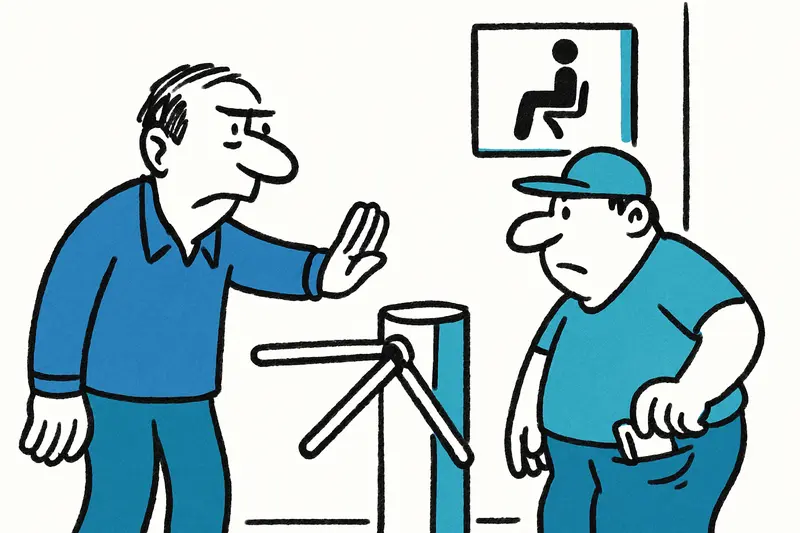
Turnstiles at the Toilets: Palma's Market Halls Introduce Toilet Fees — Who Pays the Price?
From October, access systems for toilets will be installed in Pere Garau, Santa Catalina and the Mercat de l’Olivar. Hygiene and vandalism are cited — but what does this mean for seniors, market vendors and visitors?
Turnstiles at the toilets: Palma's market halls introduce toilet fees
On a cool morning, when the seagulls scream over the Mercat de Pere Garau and vendors open crates of oranges, a turnstile doesn't really fit the picture. Yet the city administration has announced that from October new access systems for the toilets will be installed in Palma’s large market halls, as noted in Torniquetes en los baños: las salas de mercado de Palma introducen tarifas — ¿quién paga el precio?.
Who pays — and who is left out?
At the Mercat de Pere Garau, 50 cents per WC visit are planned; at the Mercat de l’Olivar a one-time free code for shoppers is supposed to grant access. Santa Catalina remains vague: technology yes, price still open. At first glance this sounds like a simple cost brake. But in the morning hustle in front of the stalls the open questions are immediately visible: older regular customers without a card, tourists with only small change, people with urgent needs — will they be left behind?
The planned card payment and the issuance of codes via vendor counters also require that all market stalls participate and that the technology works reliably. If a terminal fails or the seller forgets the code, the cleanest turnstile won't help. And what about people with physical disabilities or those who find themselves in an emergency? A rigid access system must allow for exceptions.
More than cleaning costs: the hidden consequences
Economically the calculation might add up: less vandalism, fewer cleaning hours, a portion of the revenue covering maintenance costs. But the measure can have side effects that have so far been little discussed. If regular visitors are deterred, the time spent at the market could decrease — and with it the turnover of small traders. There is also the risk that people without access will move to public spaces and create hygienic problems there.
Politically the measure is already being watched critically; this follows other fee controversies such as Bellver Castle: Admission Doubled — Who Keeps Access?. Citizens' initiatives demand transparency: How much money actually goes into cleaning, how much remains as surplus? Who controls the technology and ensures that the revenues are not misused? Without clear answers, trust in an offering that is part of the daily life of many Mallorcans is at risk.
Practical solutions — a proposal for Palma
Instead of simply installing turnstiles, a graduated model would seem fairer. Suggestions that could be implemented quickly:
1. Free access for the needy: Seniors, people with disabilities and families should have permanent free access — for example via a verification card or a free emergency command at the entrances.
2. Vendor tokens instead of cash-only: The one-time toilet code for purchases makes sense, but it must be issued mandatorily and standardized so that no one falls through the cracks.
3. Transparency and trial phase: Publication of revenues and expenses after three months, plus a six-month trial phase with citizen participation.
4. Technical emergency solutions: Failure plans, a staff emergency override key and clearly visible signage in Spanish, Catalan, English and German.
5. Alternative financing: Sponsorship by local cooperatives, small donation boxes or a voluntary surcharge on market carts could cover parts of the costs without creating barriers.
What we should watch
From October it will become clear how reliable the technology is and whether the city administration takes the concerns of market visitors seriously. It is important not to see the introduction as an end in itself, but as an opportunity to make the market halls cleaner and safer — without jeopardizing the social function of the markets. I will come back, early in the morning, when the coffee steams and the first breads are unpacked, to see whether the turnstiles have changed more than the soundscape on the Paseo.
The guiding question remains: Does the turnstile protect the market — or make it smaller?
Frequently asked questions
Why are Palma's market hall toilets starting to charge a fee?
How much will it cost to use the toilets at Mercat de Pere Garau in Palma?
Will shoppers get free toilet access at Mercat de l'Olivar in Palma?
Are Palma's market toilets open to people with disabilities or urgent needs?
What happens if the toilet payment system in a Palma market fails?
When will the new toilet access systems start in Palma's market halls?
Will toilet fees change the atmosphere in Palma's market halls?
What cleaner alternatives to turnstiles are being suggested for Palma's market toilets?
Similar News

Rental Car Theft in El Arenal: What This Incident Reveals About Our Gaps
A teenager steals a running rental car in El Arenal, flees on foot, climbs over walls and is caught by the Guardia Civil...

Red Rope in Palma's Library: What Helps Against Selfie Tourism — and What's Missing
Palma's city library cordoned off an area with a red rope to keep selfie tourism away from reading and working activitie...

Fort San Carlos: Museum, Harbor Dispute — and a Conflict That Demands Answers
The military museum at Fort San Carlos sits right on Palma's harbor, with unexpectedly quiet rooms filled with cannons a...
Old Town Under Pressure: When a Doorway Becomes a Sleeping and Shower Place
For months a woman has been living with a parasol, a clothes rack and personal belongings next to the social welfare off...
When Shopping Weighs Heavier: Mallorca Demands a Tax Pause on Food and Fuel
Rising prices are putting pressure on households and agriculture. The Balearic Islands are calling for temporary tax rel...
More to explore
Discover more interesting content

Can Cap de Bou

Townhouse Lleo 72
