
From the Brink of Extinction to a Fragile Comeback: The Mallorcan Cow Between Success and Risk
From the Brink of Extinction to a Fragile Comeback: The Mallorcan Cow Between Success and Risk
From eleven animals to hundreds again: The Mallorcan cow is returning – but the joy must not be blind. Why the population remains endangered and which steps are necessary.
From the Brink of Extinction to a Fragile Comeback: The Mallorcan Cow Between Success and Risk
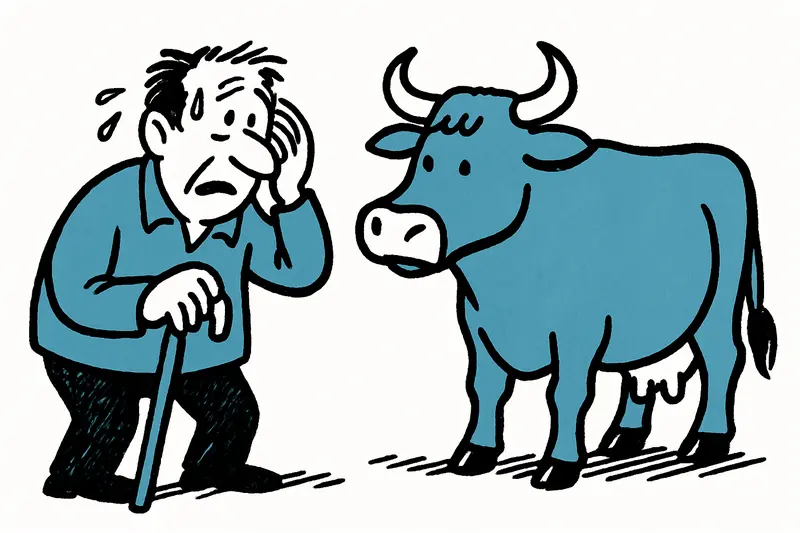
How secure is the return of the Mallorcan cow really? The cold number sounds reassuring: around 570 animals, of which about 435 are cows and 135 bulls and oxen, are said to live on Mallorca today. Behind this number is a story of a few farms, a lot of dedication and some fortunate coincidences. But success is no guarantee – and we should say that loudly and clearly.
The starting point was dramatic: in the 1970s and 1980s the population shrank so much that only eleven individuals remained in isolated estates such as Son Vidal (Bunyola), l’Ofre (Escorca) and Ariant (Pollença). Veterinarians and breeders found remnants of an original type that differed in appearance and adaptation to sparse mountain pastures. Decisive for the revival were targeted purchases, the establishment of the first breeding herds and agreements between farmers and conservationists – combined with the idea of keeping the animals not primarily for milk but as livestock for landscape management.
Viewed critically, the risks remain large. A population built up to a few hundred animals sounds solid, but it is genetically and epidemiologically vulnerable. The inbreeding rate has reportedly been reduced significantly (from just over ten percent to around two to three percent), yet the bottleneck remains present: 43 registered breeders and a concentration of herds in certain places increase vulnerability to disease, extreme weather or economic shocks. An outbreak, a heat wave or simply a poor market for the meat can quickly cause a setback.
What is largely missing from the public debate is discussion about sustainability beyond the numbers: Who will secure genetic diversity in the long term? What financial incentives exist for young farmers to keep a breeding bull instead of using cheaper foreign breeds? How will animal health and biosafety be ensured across the board? And not least: how can the market for the meat be stabilized so that breeders can plan reliably, as debates about tourism and local demand show in When the Germans Stay Away: Opportunity or Risk for Mallorca??
An everyday scene that illustrates this: on a cool spring morning, when the sun rises behind the Serra de Tramuntana, a few of these small, compact cows walk along a limestone path near Ariany. It smells of wild rosemary and damp earth, in the valley distant goat cheese crates clatter on a transporter, and an old herd owner wipes sweat from his brow though the work has not really begun. Such images show how closely breeding, landscape management and local life are intertwined – and how little room there is for experiments if the economic situation changes, as seen in Sóller between Boycott and Daily Life: How a Community Masters the Balancing Act.
Concrete proposals to turn the currently positive but fragile state into a secure future:
1) Genetic safeguarding: Build a cryo‑archive for semen and embryos, perform regular genetic monitoring and implement targeted breeding-plan cooperation among breeders to avoid unwanted bottlenecks.
2) Biosafety and health network: Mobile veterinarians, vaccination programs and clear emergency plans in case of disease outbreaks or heat stress; state support for barn modernization where needed.
3) Economic incentives: Subsidies or premiums for breeders who maintain pure lines; grants for using the animals in forest management because they provide a genuine public benefit – less fuel for wildfires, better underbrush control.
4) Market and transparency: Further development of marketing under the existing label Raza autóctona Cien por cien (100 percent native breed), mandatory traceability and cooperation with restaurants and butchers so that price and sales remain stable, which is crucial given concerns raised in pieces such as Mallorca's Restaurants: Too Much Sameness, Too Little Courage — How the Island Rediscovers Its Flavor.
5) Education and tourism: Educational trails, farm visits and information offers that show how much the breed is connected to Mallorcan agriculture, forest protection and culture – so consumers understand the value and are willing to pay for it.
What has been achieved so far is impressive: established herds went from isolated animals to island-wide distribution, breeder networks cooperate, and there is demand for the meat – even from demanding restaurants. Nevertheless, the status "endangered" remains. Without structured, long-term measures, the return to the endangered scale threatens again.
Conclusion: the Mallorcan cow is not a symbol you paint once and then check off. It is a living heritage that needs care, money and smart, long-term policy. If we continue only to applaud and hope, a single bad year will be enough to lose much of what has been achieved. But if we invest now in genetic security, health systems and reliable markets, the fragile comeback can become a stable reality – to the benefit of the landscape, the breeders and the island as a whole.
Frequently asked questions
Why is the Mallorcan cow still considered endangered if there are hundreds of animals on the island?
What happened to the Mallorcan cow population in the 1970s and 1980s?
Is the Mallorcan cow kept mainly for milk or for meat?
What makes the Mallorcan cow population vulnerable to setbacks?
How can Mallorca protect the future of its native cow breed?
Why is the Mallorcan cow important for the landscape in Mallorca?
What is the Mallorcan cow doing in Bunyola and Escorca?
Can visitors see the Mallorcan cow on the island today?
Similar News

More Electric Cars in the Balearic Islands: Sales Rise Sharply
Between January and August, 14,185 vehicles without petrol or diesel propulsion were sold — an increase of more than 40 ...
Autumn in Mallorca: What Truly Remains of Summer
The days grow shorter, the evenings cool — and yet more of summer lingers than you might think: sounds, recipes, people,...
Rescue operation at Tolleric: Why nighttime cliff parties become dangerous
A British holidaymaker fell about ten meters at the cliffs of Tolleric during the night, later climbed back up and was r...
Car accident on the MA-1: Mother and daughter on a bicycle struck by a fellow countryman – Who protects cyclists here?
On the MA-1 between Portopí and the Cala Major exit, a mother and her daughter on a bicycle were struck by a car. A para...
Smoke over the UIB: Who is responsible for the fire on the roof?
On Saturday afternoon a fire broke out on the roof of the Arxiduc Lluís Salvador building at the University of the Balea...
More to explore
Discover more interesting content

Can Cap de Bou

Townhouse Lleo 72
