

Palma's mayor is not the top earner: Who on the Balearic Islands really earns more
The official figures from the ministry show: Palma's mayor earns a lot, but not the most in the Balearic Islands. Why the pay structure is so unequal and what that means for local politics.
Palma's mayor is not the top earner: Who on the Balearic Islands really earns more
When numbers speak — and street lamps in Palma keep flickering
Key question: What does it say about our local politics if the mayor of a small town is paid more than the head of a city with 430,000 inhabitants?
The data from the Spanish Ministry for Digital Transformation and Public Administration for 2024 reveal the remunerations: the mayor of Palma receives a net €65,726 a year. But he is not at the top of the Balearic ranking — that position belongs to the officeholder in Eivissa with €68,293. Both belong to the same party. On Mallorca, Calvià follows with €62,128 and Felanitx with €58,495 — figures that surprise at first glance if one thinks only in terms of population size. Contextual coverage such as Eleven Percent More for Balearic Public Servants: What the Bill Really Means for Mallorca examines related pay policy debates.
I stood yesterday morning on Calle Sant Miquel, the market women were packing their crates, a scooter purred by, the church bell struck half past nine. No one there was talking about salaries, yet the debate touches everyday life: who decides on extending a bike path in Ponent, who decides on kindergarten places in Palma, who decides on a street lamp in a mountain village? Responsibility is not only a question of population, but also of duties, accessibility and political weight — and that is not always reflected in a simple set of numbers.
Critical analysis: The raw data show disparities, but they do not answer the really important questions. Why does the mayor of an island town with around 50,000 inhabitants earn more than the town hall chief of the capital? Are salaries linked to formal criteria such as budget volume, tourist load or number of employees? Official publications do not list these categories uniformly. The ministry publishes amounts — not the calculations behind them.
Another point missing from the public debate is the distinction between gross and net amounts, special payments, rules on terms of office or secondary activities. In everyday practice you often see that mayors in larger cities have larger administrative staffs and have to coordinate more complex cases — which means time and work that are not automatically reflected in simple annual salaries. At the same time, in rural areas there are examples of mayors doing voluntary work and receiving only minimal compensation.
Transparency looks different. On Mallorca, 40 out of 53 municipalities reported their data; 13 remained silent. That creates a distorted picture. If you sit on Plaza Weyler on a cold afternoon at the Paseo Marítimo, you hear pensioners, business owners and bus drivers talking about services — none of them understands why some amounts are barely comprehensible. Local reporting, for example Two Palmas: Why the wage gap in Palma is growing — and what should happen now, highlights the city's divided living realities.
Concrete solutions: First: uniform disclosure requirements. All municipalities should report according to a uniform pattern: gross, net, allowances, any secondary income, budget volume and number of employees. Second: a transparent, comprehensible remuneration system that takes into account factors such as scope of responsibility, budget volume and tourist pressure. Third: regular external audits by independent auditors that also relate fees and tariff burdens. Fourth: citizen assemblies at the local level, for example in cultural centers or community halls, where these figures are explained and discussed — not dry tables, but everyday examples. At the municipal level some initiatives such as Palma reviews salaries of around 3,000 employees – fairness, costs and risks indicate steps toward greater transparency.
What is often missing from the public discourse is the connection to reality: if the garbage collection in Cala Major arrives late, residents do not ask about average annual salaries, they want a solution. Better communication about how salaries are formed and how they are linked to performance could reduce mistrust.
Ironically: it feels odd when, on paper, a small town financially outruns a metropolitan chief, while on Plaça Major in Palma the street lamps still flicker in the evening. The difference is neither only political nor only numerical — it is communicative.
Final thought: Transparency is not an end in itself. It is a tool to create accountability. If citizens understand how salaries are determined, if mayors disclose their priorities and accountability becomes the norm, then it is easier to debate whether the balance is right. Until then the question remains open: do we want simple rankings or a system that fairly represents performance, complexity and local reality?
Conclusion: The numbers are a wake-up call. Not to disparage individual officeholders, but to question the remuneration structures. Mallorca thrives on small villages and big cities alike — and the pay model should finally take that diversity seriously.
Frequently asked questions
How much does the mayor of Palma earn in 2024?
Who is the highest-paid mayor in the Balearic Islands?
Why can a smaller municipality in Mallorca pay its mayor more than Palma does?
Which Mallorca municipalities reported mayor salaries in 2024?
Are mayor salaries in Mallorca published as net or gross amounts?
What salary does the mayor of Calvià receive?
How much is the mayor of Felanitx paid?
Why does mayor salary transparency matter in Mallorca?
Similar News
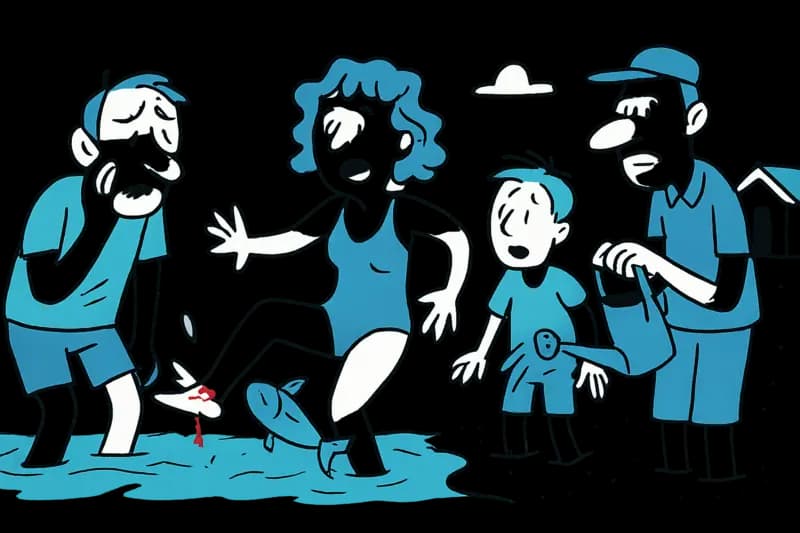
Why the Striped Breams in Cala Pí Should Be a Wake-up Call
Once again bathers in Cala Pí were surrounded while swimming by small, nippy fish — some wounds bled. Time for clear rul...

Daily from New York: How Palma's Air Traffic Is Growing — and What Must Change
United will increase the Newark–Palma service to daily flights in 2027 (Boeing, 231 seats). Strong tourist numbers clash...

When Love Ends in Shards: Destruction in Son Vida and the Questions That Remain
In Son Vida a relationship dispute escalated: a woman destroyed furniture in a luxury villa, later pressed a panic butto...

Who Bears the Burden? Mallorca Between Tenant Protection and Landlord Fears
Madrid's new housing decrees strengthen tenant rights — but on Mallorca concern is growing: will the law drive small lan...
On the Edge: What Mallorca's Airport Loses If a Major Low-Cost Carrier Falters
The company that operates numerous connections from Palma to France and domestically is negotiating with creditors to re...
More to explore
Discover more interesting content

Can Cap de Bou

Townhouse Lleo 72
