

When Motorhomes Become Homes: Palma’s Difficult Parking Question
A public car park must remain accessible to everyone. But people living in campers do not simply disappear when an entrance is closed. Palma needs rules—and a social response.
When Motorhomes Become Homes: Palma’s Difficult Parking Question
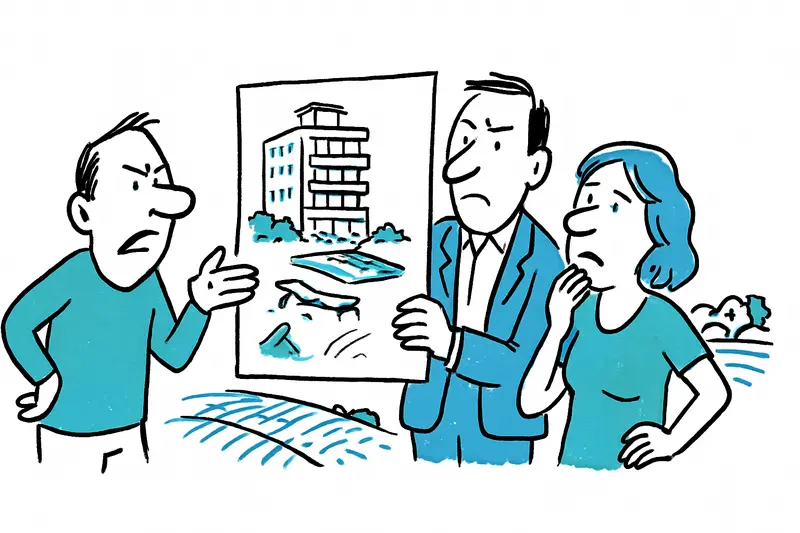
A car park at a public sports or swimming facility is not a campsite. It must remain accessible to people who come to swim, exercise or pick someone up. But when motorhomes are parked there not just briefly, and people live in them long-term, a question of parking rules becomes something much bigger: what should happen to them when the city wants to use the site differently again?
The answer cannot consist only of concrete, bollards or barriers. Restricting access may bring order to a place. But it does not provide housing or say where someone can go instead. This is precisely where two legitimate concerns collide: a public space that should be there for everyone, and people who apparently have nowhere else to live.
Order is a goal, but not a housing plan
Palma can manage public spaces and must ensure that facilities serve their intended purpose. People coming to a swimming pool should not have to wonder whether the car park is accessible or whether vehicles left there long-term are making it harder to use. Neighbours also have the right to expect that a public place will not gradually take on a function for which it was neither designed nor equipped.
That is the public-order perspective. On the other side are people living in campers, whose daily lives do not end with parking a vehicle. Water, electricity, rubbish collection, sanitation and a safe place to stay are not minor details. When these are lacking, problems arise for both residents and the surrounding area. A restriction can change vehicle access; it does not automatically resolve these fundamental issues.
That is why talking only about the car park is too narrow. The real question is: how can Palma make a public space reliably usable again without simply pushing people who live there out of sight? That is more uncomfortable than a debate about a wall. But that is exactly where the discussion should begin.
What often gets overlooked in the debate
Too often, no clear distinction is made between the legitimate desire to use a public facility and the social circumstances of people living in vehicles. Both are readily reduced to a single dispute: either “the city must crack down” or “the city must not displace anyone.” Neither position gets us very far. Rules for public spaces are necessary; so is a plan for people who cannot simply move into an available home.
The practical consequences of restricting access must also be discussed: Will residents still be able to move their vehicles? Will emergency services have regulated access? Who will explain the rules on site? And where can people turn if they need accommodation or support? These are not technical footnotes. For those affected, such details determine whether a measure is implemented in an orderly way or creates even more uncertainty.
It is easy to imagine a scene in Palma: after a long day, dusk is falling, buses rush past on the road, and someone returns to their camper carrying shopping bags. For others, the same spot is simply a convenient place to park briefly before going for a swim. They see the same stretch of asphalt—but not the same place. Urban planning must take this difference seriously instead of pretending that a physical barrier will make the conflict disappear.
What Palma could do in practice
First, it needs clear, understandable rules: which areas are intended for visitors, when access restrictions apply and how the facility will remain accessible. Information should be posted on site, not passed around later as rumour. Second, every change should be accompanied by an accessible point of contact where those affected can find out about social support, emergency accommodation and possible next steps. A barrier without someone to contact is only half-aware administration.
Third, the city should review the situation regularly, not just on the day a physical measure is introduced. This should include safe passageways, rubbish collection and a contact person for problems around the facility. Where people live in vehicles long-term, the city also needs a realistic assessment of what alternatives are available. This does not mean that every car park must become a place to live. It means that eviction and support must not be treated as separate responsibilities.
Fourth, Palma should explain publicly what a measure is intended to achieve and how its success will be assessed: Is the facility easier to use again? Are access routes clear? Is there a concrete advice service for those affected? If the vehicles simply appear somewhere else, the conflict has not been resolved—it has merely been moved.
A barrier is no substitute for a solution
A public car park must remain open for public use. At the same time, people without housing do not suddenly become a parking-enforcement issue simply because their home has wheels. Palma needs rules that visitors and residents can understand, as well as a social response that does not end with telling people to move on.
A barrier can control access. A wall can divide spaces. What neither can do is create housing or build trust. That is what should determine whether the city is truly addressing a conflict—not whether it is less visible from the car park.
Frequently asked questions
Can I leave a motorhome long-term in a public car park in Palma?
Why might Palma restrict motorhome access to a swimming-pool car park?
Does moving motorhomes from a car park solve homelessness in Mallorca?
What should happen to people living in campers when parking rules change in Palma?
What should I check before parking at a public sports facility in Mallorca?
How can Palma keep a public car park accessible without simply displacing people?
What basic services matter for people living in a camper in Mallorca?
How can residents tell whether a new parking restriction in Palma is working?
Similar News

A Shipwreck from the Islamic Period off Mallorca: Protection Comes Before Curiosity About Its Location
A member of the public alerted the Island Council to a shipwreck from the Islamic period. Ceramic fragments and deer ant...
Luxury Hotels near Banyalbufar: What’s Still Missing on Paper
New upscale hotels are being discussed around Banyalbufar. What matters is not the glamour of the plans, but what they m...

Calvià in Step with the World: What a Dance World Championship Brings to the Island
When international Latin dance couples compete in Calvià, there is more at stake than medals. The real question is wheth...

Son Hugo in Palma: A Wall Organises the Car Park—but Does It Solve the Problem?
A physical barrier can regulate access. But it does not answer where people go when a vehicle is also their home.

Albastar grounded: Employees are now bearing the cost of unpaid wages
Albastar has suspended flight operations and filed for insolvency. Around 230 employees are waiting for their wages. The...
More to explore
Discover more interesting content

Can Cap de Bou

Townhouse Lleo 72
