
A Shipwreck from the Islamic Period off Mallorca: Protection Comes Before Curiosity About Its Location
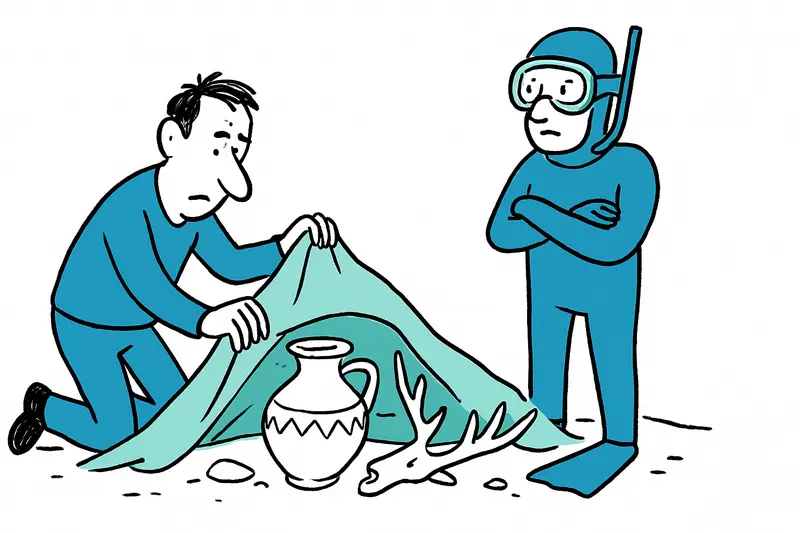
A member of the public alerted the Island Council to a shipwreck from the Islamic period. Ceramic fragments and deer antlers were recovered, and the site was covered again. Why protecting the wreck now matters more than pinpointing it on a map.
A Shipwreck from the Islamic Period off Mallorca: Protection Comes Before Curiosity About Its Location
A tip from a member of the public led the Island Council to a previously unknown underwater discovery: a shipwreck from the Islamic period lies off Mallorca. Its exact location is being kept secret. That is no minor detail; it is probably the most important part of how the discovery is being handled. Publicly identifying a vulnerable site could inadvertently make it a target.
According to the information available, ceramic fragments and deer antlers were recovered. Specialists then covered the remains again, and the Island Council began taking steps to secure and document the site. For now, little more can be said with confidence. The size of the ship, the exact date it sank, and what its cargo might reveal are all still unknown. The finds are a beginning, not a complete story.
What does “Islamic period” mean?
Mallorca was under Muslim rule for centuries, until its conquest by the forces of Jaume I. A shipwreck from this era could offer a rare glimpse into seafaring, trade, and everyday life in the medieval island region. However, the dating must be borne out by the finds and their analysis. Ceramics can offer clues, but a few recovered pieces alone cannot provide a complete picture of the ship or its voyage.
Underwater, the line between discovery and damage is particularly thin. Currents, movement on the seabed, and human interference can all put fragile materials at risk. Even a well-intentioned dive can alter traces if objects are moved or separated from their archaeological context. What may look like an isolated object to a layperson can be important to researchers precisely because of where it was found.
The public information gap: What is being protected—and how?
Keeping the location secret is understandable given the risk of looting. At the same time, this creates an information gap: the public knows little about the criteria for protecting the site, who is responsible for its documentation, or when the next factual update might be available. These are not demands for coordinates. They are questions about clear responsibility and ensuring that confidentiality is not mistaken for silence.
A sensible approach would be to continue withholding the location from all public information while providing regular updates on the investigation. Brief updates on dating, condition, and next steps could be shared once the findings are confirmed. An explanation of why certain details cannot yet be released would also help. That way, public curiosity can be addressed without drawing a treasure map.
The tip from a member of the public also shows that protecting cultural heritage does not begin only in archives and government offices. Anyone who comes across something unusual while diving or along the coast should leave it where it is and avoid sharing its precise location online. Reporting it to the relevant authorities can be more valuable than posting a photo with an exact location. Recovered objects belong in expert hands, and their significance also depends on what is documented during their study.
A well-known wreck, a different challenge
Mallorca already has an example of just how demanding this work can be: the Roman wreck of Ses Fontanelles. The ship is housed in a purpose-built specialist tank at Castillo de San Carlos. An exhibition of its cargo is planned, and the ship itself is also expected to go on display later. This is a different situation from a newly reported find on the seabed, but it makes one thing clear: recovery does not end when an object is brought to the surface. Conservation and suitable conditions require time and planning.
In everyday life, the sea often seems like a smooth expanse between the beach, the harbour, and the boat dock. On a windy day, people are more likely to watch the waves than to think about what lies beneath them. Yet a heritage of great significance rests off Mallorca’s coast—out of sight and not freely accessible. That is precisely why excitement about a rare shipwreck should not turn into a search for its hiding place.
Document first, tell the story later
For the Island Council and the specialists, this means securing the find, documenting its condition in a verifiable way, and only then drawing broader conclusions. For the public, it means living with unanswered questions for now. That is less dramatic than a precise map and a complete story of the wreck’s origins. But archaeology is not improved by telling a story faster than the evidence allows.
The wreck is a remarkable discovery—and a test of whether Mallorca can protect its underwater finds without letting them disappear from public awareness. The best next step is not to find out where it is. It is to make a careful investigation possible and later explain clearly what is actually known.
Frequently asked questions
Why is the location of the newly discovered shipwreck off Mallorca being kept secret?
What has been found at the Islamic-period shipwreck off Mallorca?
What does the Islamic period mean in Mallorca’s history?
Can ceramic fragments tell archaeologists exactly when a ship sank off Mallorca?
What should I do if I find something unusual while diving in Mallorca?
Why should divers avoid moving objects from an underwater wreck?
What happens after a shipwreck is discovered off Mallorca?
How is the Roman shipwreck of Ses Fontanelles in Mallorca being preserved?
Similar News

When Motorhomes Become Homes: Palma’s Difficult Parking Question
A public car park must remain accessible to everyone. But people living in campers do not simply disappear when an entra...
Luxury Hotels near Banyalbufar: What’s Still Missing on Paper
New upscale hotels are being discussed around Banyalbufar. What matters is not the glamour of the plans, but what they m...

Calvià in Step with the World: What a Dance World Championship Brings to the Island
When international Latin dance couples compete in Calvià, there is more at stake than medals. The real question is wheth...

Son Hugo in Palma: A Wall Organises the Car Park—but Does It Solve the Problem?
A physical barrier can regulate access. But it does not answer where people go when a vehicle is also their home.

Albastar grounded: Employees are now bearing the cost of unpaid wages
Albastar has suspended flight operations and filed for insolvency. Around 230 employees are waiting for their wages. The...
More to explore
Discover more interesting content

Can Cap de Bou

Townhouse Lleo 72
