
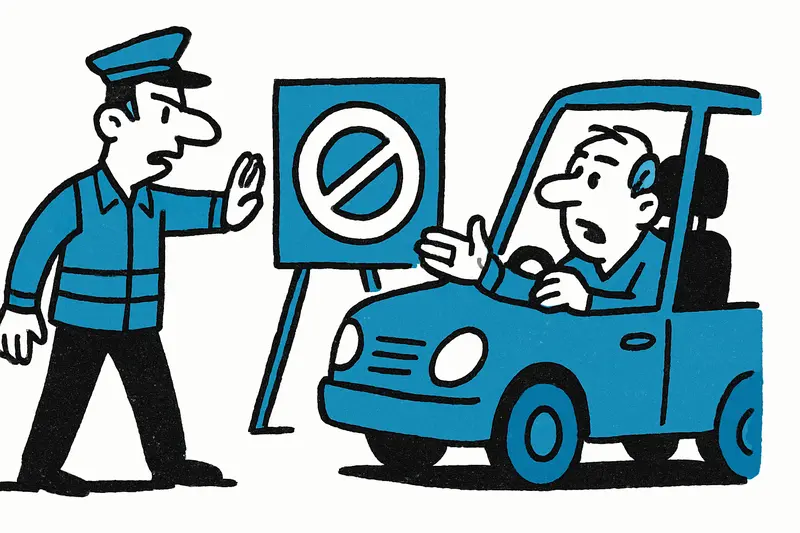
Patronal Festival in Palma: Celebrations — but how can residents and mobility stay in sync?
From 12:00 on Saturday the street in front of the cathedral will be closed for the patronal festival. We look at who is most affected, which planning gaps stand out and which practical short-term solutions could help.
Patronal festival brings the La Seu area to a standstill – a lovely tradition, tricky logistics
Saturday noon in Palma: the cathedral bells ring, seagulls cry over the Parc de la Mar, and the city prepares for the patronal festival in honor of the Mare de Déu de la Salut (see Cathedral of Mallorca official site). From 12:00 the street directly in front of the cathedral will be closed in both directions – a concert in the Parc de la Mar requires space (see Fiesta patronal en Palma: cierres de calles y desvíos el sábado). That sounds idyllic, but it leads to a familiar problem: how can revelers, residents, emergency services and delivery traffic all retain sensible access?
Who feels the closure first?
The closure affects the waterfront promenade in front of the cathedral, access routes around the Parc de la Mar and parts of the Passeig del Born (details at Restricciones de tráfico en Palma: así transcurre la Fiesta Patronal (del 5 al 7 de septiembre de 2025)). Short-term parking spaces at Plaça Reina and Paseo Mallorca are only partially usable. For tourists this means: better leave the car parked. For residents it is annoying hours; for people with mobility impairments the situation can quickly become a real problem – replacement stops and detours are sometimes further away.
Public transport, taxis, emergency services – what changes
The municipal transport company (EMT Palma service updates) has rerouted EMT line 25; the stop at Parc de la Mar is canceled. Electronic displays provide information, but not everyone checks the display outside their door. Taxis will drop off at designated points; ask your driver in advance. Emergency services in principle retain access, but in practice every diversion costs minutes that can be critical in an emergency. The city needs to plan especially carefully here.
Central question and a critical view
The central question is: how does Palma reconcile festival culture and everyday mobility without disadvantaging residents, older people or emergency crews? Municipal planning often focuses on security zones and stage logistics — understandable, but too little attention is paid to accessibility, clear diversion information and short-term parking alternatives for residents.
Aspects rarely discussed
First: communication gaps. Not all residents learn early enough which exceptions apply or where exactly replacement stops are located. Second: acoustics and quiet hours. Soundchecks in the afternoon are part of the preparation, but residents in Sant Nicolau or along the Passeig feel noise for hours. Third: bicycle parking is often overlooked — at the Parc de la Mar bikes pile up against railings, making thefts or damage likely.
Concrete opportunities and proposals
There are practical measures that could help in the short term: the city could run a free shuttle between the marina car parks and Parc de la Mar to reduce parking search traffic. For people with disabilities, closer and clearly marked drop-off points should be set up as an alternative; a digital map showing marked access points, stops and accessibility issues should be placed on the city homepage and the EMT app. A temporary supervised bicycle parking area would ease many concerns.
Tips for residents and visitors
Our advice remains practical: if possible, do not drive into the old town. Car parks at the marina or in the Sant Nicolau neighborhood are the more realistic options — allow 20–30 minutes walking time. If you depend on line 25, check the electronic displays in advance or plan for a stop at the Rambla/La Llotja. People with reduced mobility: apply for an exemption if necessary or check the Ajuntament de Palma official site early. And yes, the parking meter does not care about festivals.
Conclusion: enjoy with perspective
The patronal festival brings color, music and a special atmosphere to the old town – the warm stone walls of the cathedral reflect the sound, buskers tune guitars, and the scent of paella mixes with sea air. But celebration and everyday life must harmonize. A bit more communication, a few pragmatic shuttle offers and clear, accessible drop-off rules would greatly improve the balance. If you still come: plan extra time, bring water and enjoy the sound of the bells — and be considerate of the people who have to live in Palma on Saturday.
Frequently asked questions
Will the area around Palma Cathedral be closed during the patronal festival?
How will public transport in Palma be affected by the patronal festival?
Is it still easy to get to Palma city centre if you have reduced mobility?
Where can taxis drop passengers off in Palma during the festival?
What is the best way to get to Palma’s old town during the patronal festival?
Are parking spaces near Plaça Reina and Passeig Mallorca affected in Palma?
Can emergency vehicles still reach the cathedral area in Palma during the closure?
What should visitors in Mallorca know before going to the Palma patronal festival?
Similar News

Maribel: Five Decades of Service – Housekeeper from Peguera Celebrated with a Special Honor
Over 50 years in the hotel business: María Isabel “Maribel” Molinos was honored in Palma at the Nit del Turisme by Unive...

Orange Alert over Parts of Mallorca: Are We Prepared?
Dark clouds and an announced wet spell have triggered an Orange alert in parts of Mallorca. A reality check: what's miss...

Sundair & Co.: Sale speculation and what it could mean for Mallorca
Rumors about a possible sale of the airlines Sundair and Fly Air 41, which belong to Schauinsland-Reisen — and whether b...
Anne Wünsche in Mallorca: A job offer with a catch — who fits the role of personal assistant?
Influencer Anne Wünsche has left Berlin and is urgently looking for a full-time personal assistant in Mallorca. Why the ...
Daily from New York: Palma Between Boom and Strain
United will increase the Newark–Palma route to daily flights in 2027 using Boeing aircraft (231 seats). What does the in...
More to explore
Discover more interesting content

Can Cap de Bou

Townhouse Lleo 72
