
Palma's Port: 13 Applicants, Five in the Running — who will shape the future of the waterfront?
Palma's Port: 13 Applicants, Five in the Running — who will shape the future of the waterfront?
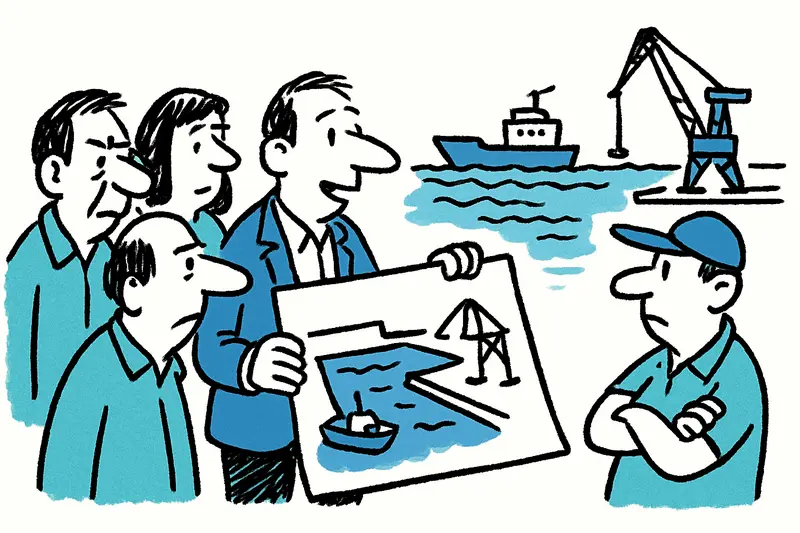
The port authority selected five teams from 13 applicants to develop a master plan for the approximately 400,000 m² port area. An opportunity for public access, but also a risk for port operations and the neighborhood.
Palma's Port: 13 Applicants, Five in the Running — who will shape the future of the waterfront?
Key question: How can a functioning commercial port be turned into an openly accessible urban space without endangering jobs and logistics?
In the morning, when Passeig Mallorca still smells of wet asphalt and the first fishermen's gear clatters along the quayside, Palma's port is a strange mix of everyday life and industry: the smell of coffee in Portixol's cafes next to diesel notes from lorry engines. It is precisely this coexistence that is now under scrutiny. The port authority (APB) has received 13 applications for a new master plan and selected five teams to prepare detailed designs, while debates over services like the Waterbus for Palma: Opportunity for Commuters or a New Tourist Gimmick? continue. The goal: a plan by early 2027.
The area covers roughly 400,000 square metres according to the tender. The official objectives run on two tracks: preserve port functions and at the same time open up spaces for the public. On paper this sounds balanced. In reality the crux lies in the details: where exactly will operational units remain? Which areas will actually be publicly and permanently accessible? Who will bear the costs of design and later maintenance?
A particularly critical point that is often underemphasised in local discussions is this: logistics is not an abstract term but daily infrastructure. Supply ships, chilled transports, shipping companies and local port businesses depend on specific quay and storage areas. If these areas are relocated, detours, costs and potential bottlenecks for the island's supply chains arise, a situation that is already affecting local operators as described in Port of Palma Under Pressure: New Harbor Fees Threaten 500 Jobs and the Harbor's Identity. These are impacts that must be measured not only in planning terms but economically as well.
At the same time, the public debate lacks a precise picture of financing and governance. Who pays for the transformation? Will private investors obtain usage rights for decades? Such financing models can quickly lead to the creeping privatisation of formerly public waterfronts; see A New Bid for Anima Beach: Who Will Get Palma's Harbor Beach?. Transparent financial plans and usage agreements are so far missing from the public discourse.
Another often neglected topic is climate adaptation. The Mediterranean is showing itself to be less predictable: higher water levels, stronger storms, more intense heat spells. A master plan that foresees new public promenades, museums or housing must include resilience against flooding, sustainable stormwater management and robust infrastructure. Otherwise expensive retrofits may be necessary in a few decades.
Questions of heritage protection are also present: cooperation with preservation organisations such as ARCA has already been mentioned. It is important that protection is not understood merely as a brake but as a quality assurance for the cityscape and identity. But which buildings or structures are considered worth preserving, and how are these decisions justified? Such criteria should be made transparent.
What almost never appears in the discourse is the everyday perspective of neighbouring districts. A walk along Calle San Feliu or Plaça Reina shows that residents fear noise, parking pressure and rising rents. A nice square by the water helps little if the people who live there can no longer afford the cafés and apartments. A master plan must therefore weigh social consequences and provide concrete protective mechanisms.
Practical concrete solutions are possible: first, phased planning that allows work in functional blocks so port operations and supply chains can continue during redevelopment. Second, binding contracts that secure operational areas for port companies for a defined period. Third, a publicly accessible financial register for the project: who is investing, what return expectations exist, which areas are publicly accessible in the long term?
Fourth: environmental and climate protection as building regulation. This includes raised quay walls at critical points, natural buffer zones with salt-tolerant plants to mitigate storm surges and green roofs to retain heat and rainwater. Fifth: an urban participation process with real decision-making rights, not just workshops. A citizens' panel with binding powers could help determine priorities.
Another proposal concerns cultural use: a maritime museum should not be thought of only as an exhibition building but as a hybrid space that combines research, education, crafts and port operations. This way professional identities remain visible and the public gains access to maritime know-how.
Transparency and oversight should be accompanied by independent audits — for example on traffic impacts or the economic viability of replacement areas. And time-limited pilot projects can generate rapid, testable insights before large-scale investments are made. Those who test first can avoid costly mistakes later.
Conclusion: the selection of five teams from 13 applicants is a moment full of opportunities and risks. Opportunities for more local recreation, new perspectives for the city's appearance, and perhaps new jobs in culture and tourism. Risks arise if financing and use are poorly regulated: privatisation of waterfronts, pressure on logistics and increased burdens for residents. Standing on Mallorca's quay watching the cranes at work, one realises: what matters are not pretty pictures but the agreements that end up in contracts. Port development can be an asset — if clarity, binding commitments and control follow now.
Frequently asked questions
What is the future plan for Palma's port?
Why is Palma's port redevelopment causing so much debate?
What happens to port jobs and logistics if Palma's waterfront is opened up?
Will the redevelopment of Palma's port be publicly funded or privately financed?
How should Palma's port be prepared for climate change?
What role does heritage protection play in Palma's port plans?
Will residents near Palma's port face more noise and traffic?
When will the new plan for Palma's port be ready?
Similar News

High heel slips, car accelerates: accident on Camí de Son Hugo
A woman lost a high-heeled shoe on the forecourt of the sports facility at Camí de Son Hugo. The car accelerated, mounte...

Phone Scam: How Two Hotel Employees at Playa de Palma Lost Thousands of Euros
One morning in September, two reception employees at Playa de Palma were pressured by alleged alarm-company staff — in t...

When the Wallet Becomes a Danger: Attack in Peguera and Lessons for Mallorca
In Peguera, two women are said to have stolen the wallet from a 75-year-old German couple. When the victim intervened, t...
Plata stays Plata: Young people take over, Llonguets remain
A small bar on Carrer de l'Argenteria will continue: Tolo Serra hands the place over to young Mallorcans at the end of t...

Unnoticed in the Luggage Compartment: How a Boy Traveled More Than 100 Kilometers in a Team Bus
A minor traveled in the undercarriage of a team bus for more than 100 kilometers until his cries for help were heard. A ...
More to explore
Discover more interesting content

Can Cap de Bou

Townhouse Lleo 72
