
Palma's Renovation Plan for Son Gotleu: More Than Just New Asphalt?
Palma's Renovation Plan for Son Gotleu: More Than Just New Asphalt?
City Hall chief Jaime Martínez announces a program for Son Gotleu: sidewalks, green spaces and new lighting. Why the plan needs more than urban cosmetic fixes, and what might be missing now.
Palma's Renovation Plan for Son Gotleu: More Than Just New Asphalt?
Key question: Is the announced package of sidewalks, trees and lights enough to solve real problems in a socially challenged neighborhood?
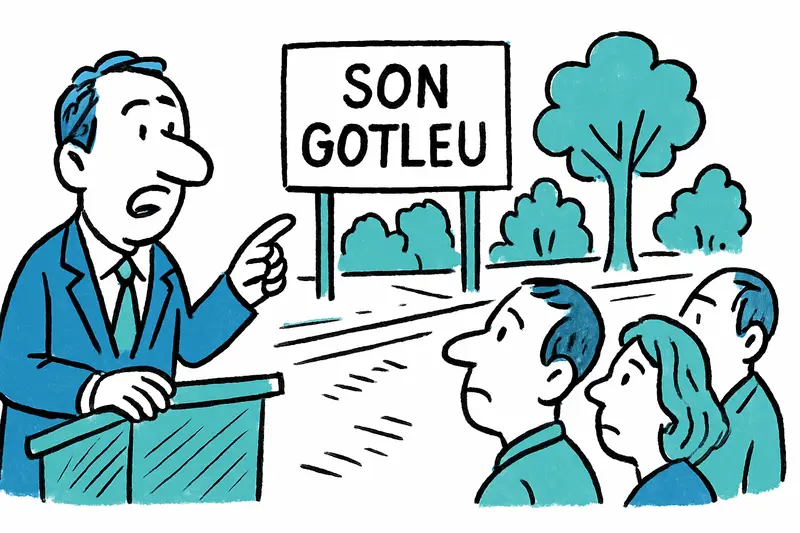
Early morning in Son Gotleu: vans rumble down the street, an elderly woman sweeps outside her window, children climb onto a school bus. The air smells of freshly brewed coffee and fried fish from a nearby bar. Scenes like this show that the neighborhood is not just a problem area, but a place where people live. Palma's City Hall has now announced a renovation plan starting in Son Gotleu: better sidewalks, new roads, more green, lighting and the renewal of public squares, an approach the city used in El Terreno: Palma Invests More in El Terreno: What the Renovation Will Actually Deliver. Later, Camp Redó, La Soledat and Verge de Lluc could follow, as in Palma plans redesign around the Gesa building - redevelopment with question marks. Mayor Jaime Martínez has made the project public – a plan that sounds good but needs closer scrutiny.
Critical analysis: Changes in the urban space have immediately visible effects: a repaired curb, a new streetlight, a small tree – and the neighborhood looks different. But urban planning measures are only half the story. Two risks are obvious: first, the question of financing and ongoing costs. Who will pay not only for the initial works but also for long-term maintenance? Green areas need irrigation, lights need upkeep, and squares regular cleaning. Second, the risk of displacement: attractive squares and improved infrastructure can raise rental pressure and push out long-time residents if no social countermeasures are implemented.
What's missing in the public debate: Public discussions often focus on visible results – new benches, new paving – but too rarely on two issues: user participation and social policy. Who decides how a square should look? Were neighbors, shop owners or social organizations involved? And how is urban development linked to concrete support offers: low-threshold employment projects, neighborhood care, language courses, childcare? Without these connections the measure remains superficial.
A realistic look at Son Gotleu: On site you see people organizing themselves, but also problems like a lack of afternoon activities for young people, insecure employment and partly dilapidated housing. New lighting increases visibility at night but does little against precarious rental contracts or health risks in poorly maintained apartments. Solutions therefore must address several levels at once: physical space, social measures, and the economy.
Concrete approaches Palma should consider immediately: 1) Participatory planning: set up small neighborhood councils on site that can vote on designs and set priorities. 2) Social maintenance fund: a budget for the upkeep of newly created facilities – financed from municipal funds plus incentive-based contributions from local businesses. 3) Rent protection measures: temporary rent caps or support programs for households to prevent short-term displacement. 4) Local employment programs: structure renovation projects so that local craftsmen and young people get internships and jobs. 5) Linkage with social services: provide permanent mobile advice centers for work, health and education in renovated squares. 6) Monitoring and transparency: clear indicators (maintenance intervals, satisfaction, prices) and semiannual reports for citizens.
A small example of how this could work in practice: At the plaza to be renovated, mornings could host seniors' meetups, afternoons an outdoor youth workshop, and evenings motion-sensor lighting to save energy. A neighborhood garden jointly run by a school and a local plant cooperative would create meeting places and training opportunities at once. Such small projects are inexpensive but effective.
Who pays for it all? The City Hall must open several pots: reprioritize municipal budgets, explore EU or regional funds and enter private partnerships with clear conditions, as in other cases where the city committed significant sums to neighborhood upgrades (Palma bets on El Terreno: Three million for a neighborhood meant to come alive again). What matters is a contracting culture that includes not only investment but also long-term management. Otherwise much will end up as a pretty token project that rusts away after two years without maintenance.
What the announcement reveals about the relationship between politics and urban development: Palma's leadership recognizes the problem and names neighborhoods that need attention. That's a start. What will be decisive is how implementation is organized. Will it be a top-down program produced in City Hall offices, or a genuine joint project with people on site? The difference will decide whether renovation becomes an opportunity or merely a cosmetic upgrade.
Concise conclusion: If Palma sticks to paving tiles and a ring of saplings without care, participation and rent protection, Son Gotleu will remain essentially the same – only cleaner. Done right, however, the initiative can open doors: jobs, safe places, neighborhood networks. The city now has a choice: real transformation with all its challenges – or mere cosmetics that look nice and change nothing.
Frequently asked questions
What is Palma planning for the renovation of Son Gotleu?
Will new streets and public spaces in Palma actually improve life in Son Gotleu?
What problems can happen after a neighborhood renovation in Mallorca?
How can residents in Son Gotleu be involved in Palma’s renovation plans?
Does better lighting in Son Gotleu solve safety problems at night?
What kind of support should Palma add to a renovation project in Son Gotleu?
What happens if Palma renovates Son Gotleu but does not maintain it?
Which Palma neighborhoods could follow Son Gotleu in the renewal plan?
Similar News
Magaluf: Watchtower Alarm – Lifeguards Pull Unconscious Beachgoer from the Water
After a drama in the late afternoon, two lifeguards at Magaluf beach rescued an unconscious 44-year-old man. He was stab...
Turquoise in the City: How dangerous is the color play of the Sa Riera?
The Sa Riera in Palma suddenly turned turquoise — a pretty motif, but behind the effect lies a discharge of saline waste...

Jeckliner at Sunnesching: Cologne spirit sets sail from Palma
In September 2027 the Mein Schiff 2 briefly becomes a floating carnival stage: four days with Cologne bands, comedy and ...
Finally Home: Mike and Leyla Heiter Buy Villa with Sea View in Mallorca
The reality TV couple Mike and Leyla Heiter have bought a house in Mallorca with a roof terrace and sea view. An Instagr...
Arrest after series in Palma: Who protects apartments from repeat offenders?
The National Police arrested a man in Palma who investigators say may have broken into several apartments. In one incide...
More to explore
Discover more interesting content

Can Cap de Bou

Townhouse Lleo 72
