
Complaint against private golf courses in Manacor and Llucmajor: Who is draining the land?
Complaint against private golf courses in Manacor and Llucmajor: Who is draining the land?
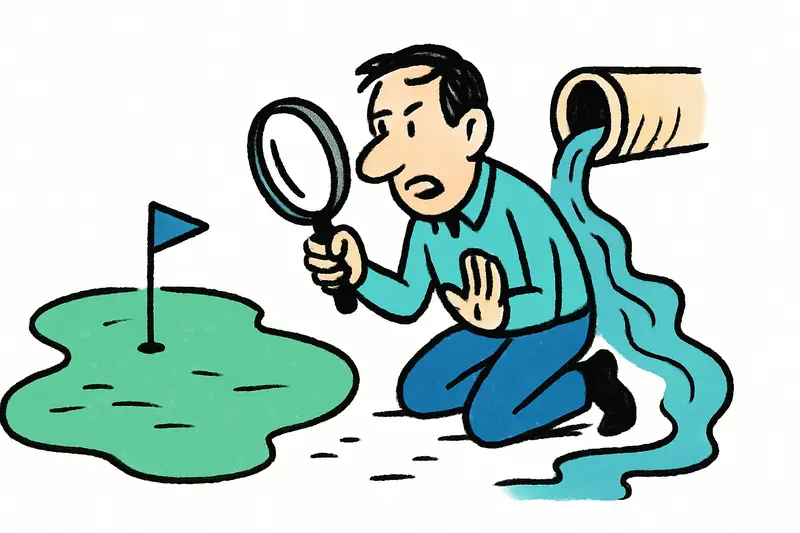
Two roughly one-hectare private green areas on fincas in Manacor and Llucmajor prompted the environmental group Terraferida to file a complaint. The key question: Do private ornaments harm our water reserves?
Complaint against private golf courses in Manacor and Llucmajor: Who is draining the land?
Key question: Can private luxury on fincas endanger shared water reserves?
The facts are sparse but explosive: In aerial images, investigators from the environmental initiative Terraferida noticed two green areas on properties near Manacor and Llucmajor, each about one hectare in size. This led to a complaint against the owners; the Balearic government has taken over the matter and is checking whether the installations burden the local water balance (Alert level for Es Pla: Who saves water — and who pays the price?). Nothing more has been publicly confirmed — and that is exactly the problem.
If you drive along the country roads toward Manacor on a hot May evening, you smell dust, olive leaves and petrol; goats bleat in the background, tractors rumble along the field tracks. Such scenes are part of everyday life, and where irrigation is scarce, every liter counts. A fenced lawn on a private luxury finca feels like a provocation in this environment — not only visually, but because of its water demand (see When the Tap Becomes a Luxury: Seven Municipalities Tighten Water Rules in Mallorca).
The question of responsibility runs in several directions: How were the areas created — with a permit or in the shadows of oversight? Which water source is being tapped: groundwater, a private well, or treated wastewater? And how can we prevent similar installations from growing in secret? The public debate remains incomplete: it's about law, environmental protection and social fairness — and about transparency.
Critical analysis
Terraferida's complaint shows two things: On the one hand, that citizen initiatives act as uncoverers when authorities cannot watch everything. On the other hand, the discovery via aerial images reveals a gap in control. Who can decide over private land and who monitors water consumption? Technical means exist (remote sensing, consumption meters, public registers), but their use seems insufficient. Authorities are checking now — which is correct — but investigations take time, and water does not wait (Water Emergency in Valldemossa: When the Wells Whisper).
The perspective of rural inhabitants is missing from the public discourse: farmers who feel every dry period are seldom heard when it comes to private luxury greening. Nor is the question systematically addressed which rules should apply to non-commercial private plots. The focus is usually on larger tourist projects — private offshoots often remain invisible.
Everyday scene
Imagine the café opposite the market square in Manacor: the owner fills glasses, two farm workers discuss falling well levels, and someone opens the aerial image Terraferida found on a tablet. It is not a journalistic drama, it is the small, daily worry: Will my well still have water next year while a green oasis next door allegedly serves only aesthetics?
Concrete solutions
1. A public register for irrigated large areas on private properties: every area above a defined size should be visible in the cadastre.
2. Mandatory water meters and annual consumption reports for large private irrigations; measurements publicly accessible, anonymized by parcel.
3. Priority for treated wastewater and rainwater use for newly created green areas; subsidies to retrofit old systems.
4. Clear caps on drinking water use in dry periods and sanctions for exceedances.
5. Promotion of native, drought-tolerant planting instead of exotic lawns; advisory services for private owners to convert.
These steps are technically feasible and would provide security not only to regulators but also to neighbors. Transparency here is not a bureaucratic exercise but a protective mechanism for an island where water is the limiting resource (Mallorca Running Dry: Who Pays the Price of Desertification?).
Conclusion: The complaint against the two one-hectare installations near Manacor and Llucmajor is more than an isolated case. It is a signal that controls and rules must catch up if private interests are not to proceed at the expense of the public. Those who live on Mallorca know the sound of a well, the hum of cicadas and the relief when the summer rain comes. It would be naive to believe that these small things are governed by legislation alone. But without clear rules and visible controls, we risk that a few private green areas will bear the burden of many.
Frequently asked questions
What is the weather like in Mallorca in spring?
Can you swim in Mallorca outside the summer season?
What should I pack for a trip to Mallorca in spring or autumn?
Is Mallorca good for walking and outdoor activities in the cooler months?
What is the weather usually like in Palma de Mallorca in spring?
Is the Tramuntana area in Mallorca colder than the coast?
When is a good time to visit Mallorca if you want warm weather without peak summer heat?
Do you need a jacket in Mallorca in the evening?
Similar News

Mueller continues expanding in Mallorca: Artà in 2026, Can Picafort in early summer 2027
The drugstore chain Mueller is opening two new stores in Mallorca: a 1,400 m² shop in Artà on 5 November 2026 and a bran...
The Painter Who Lived Mallorca: Franz Taussig and His Century-Old Secret
A hundred years ago a young Viennese arrived in El Terreno, sketched the island and called himself Francis Caron. Today ...

Airport dispute: Bridge, forecasts and the question of responsibility
A video by the Spanish transport minister has ignited the dispute over DORA figures, capacities and local governance pow...

The Painter Who Invented Himself: How a Young Viennese Drew Mallorca
A hundred years ago a 19-year-old draftsman arrived in El Terreno. His diary and sheets, long known under the pseudonym ...
Released with Conditions: The Plus Ultra Suspicion and a Mallorcan Finca as Residence
A Dutch entrepreneur, sought in connection with the Plus Ultra case, was extradited to Spain after his arrest in Germany...
More to explore
Discover more interesting content

Can Cap de Bou

Townhouse Lleo 72
