
Illegal anchors off Alcúdia: Who protects bathing and the seabed?
Illegal anchors off Alcúdia: Who protects bathing and the seabed?
Improvised concrete anchors and boats parked haphazardly in coves like Es Clot and Es Barcarès endanger swimmers and the seabed. Who is responsible — and what actually helps?
Illegal anchors off Alcúdia: Who protects bathing and the seabed?
Between concrete blocks, a tangle of chains and beach towels: an island in a field of tension
Guiding question: How can we prevent private boat owners with improvised anchors from turning entire coves off Alcúdia into danger zones for people and the sea?
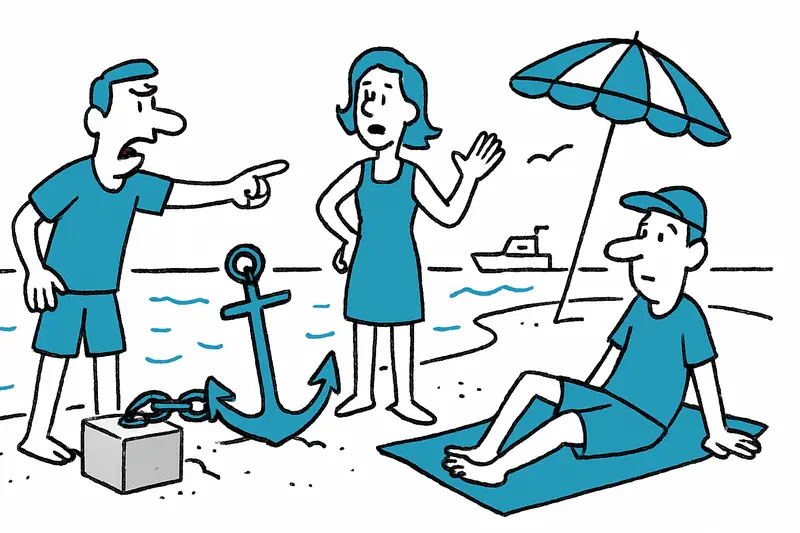
Late morning on a hot July day: chairs clatter along the promenade of Port d'Alcúdia, somewhere a small speedboat honks, seagulls screech above the harbour. On the beach of Es Clot the umbrellas are packed close together, children splash around, and just a few metres out several boats bob — some on proper fenders, others on improvised concrete blocks lying like small monuments on the seabed. This is everyday life: gentle, noisy, and a little dangerous.
The complaints are understandable, as in nearby Es Carbó where residents demand more controls. Swimmers have to make their way between chains and hulls, divers encounter ropes that hang like trip hazards in the water, and the seabed shows signs: upturned Posidonia meadows, sand displacement, spots where algae and small animals have disappeared. For many residents and regular visitors this is not a trivial matter but an attack on shared space.
The situation is complicated because several authorities overlap: municipality, coastal authority, harbour control, police. That is precisely the core problem. Those who should decide often do not intervene immediately — causes include a lack of boats for local police, long administrative procedures and a patchwork of rules that are hard to enforce in practice.
Critical analysis: the failure is visible in three points. First: law versus enforcement — there are bans and regulations, but observation and sanctions are lacking in the high season. Second: technical damage — concrete anchors and tires filled with concrete destroy sensitive seagrass beds; these are not decorative details, they are nurseries and coolers for the sea. Third: cost shifting — when boats capsize or drift, the bill often falls on the neighbouring municipality or the taxpayer, not the perpetrator, as in cases of wrecks in the Bay of Pollenca where the municipality paid salvage costs.
What is rarely addressed in public debate: the user-level cause. Many boaters act out of convenience or because formal berths are missing, as documented in reports of private boat rentals causing noise and damaged seagrass. A boat owner who drops anchor with his family on a Sunday rarely thinks about biodiversity. Equally little is discussed about the economic pressures on small charter operators who need every available spot on the water to stay competitive.
Everyday scene from Mallorca: on the Carretera d'Alcúdia you can hear the cicadas chirp in the evening, before that two fishermen amicably argue about the best anchoring technique on the pier. A tourist in flip‑flops waves to a llaüt that lies heavily on a concrete slab. The scene is charming — and at the same time proof of how quickly tradition and improvisation can turn into an ecological conflict.
Concrete solutions that are immediately practicable:
- Immediate measure: marked bathing zones with visible buoys and clear signage, complemented by clearly designated anchoring areas further out. This creates quick safety for swimmers.
- Enforcement: finance temporary boat patrols during the season — for example through cooperation between the municipalities from Alcúdia to Pollença that share a patrol boat. A small, nimble inflatable for the local police would immediately defuse many complaints.
- Ecology: formally ban concrete anchors and enforce the rule; instead install permanent, certified mooring buoys that protect the seabed.
- Sanctions and incentives: higher fines for illegal anchoring plus a simplified approval process for temporary, environmentally friendly berths. Parallel public awareness campaigns in marinas and among rental companies.
- Cost distribution for salvage operations: a regional emergency fund, financed by harbour fees, should cover salvage costs instead of individual municipalities paying afterward.
- Community involvement: a local reporting app with simple photo upload and geolocation would provide authorities with quick leads and at the same time involve the neighborhood.
What is still missing in the debate: clear lines of responsibility and transparent operational figures. How many patrols took place this year? How often were fines imposed? Without this data the discussion remains symbolic. Also, the perspective of boat owners is too rarely taken seriously; exchange forums could produce practical solutions that complement official regulations.
Conclusion, pointed: you cannot at the same time rave about sun‑brown beaches and precious marine nature and watch concrete blocks turn over the seabed. If authorities, municipalities and users do not act now, a day at the beach will soon turn into a rather expensive nuisance: more accidents, more damage, higher costs — and less sea for all of us to enjoy.
It is time for clear signs on the water: buoys instead of concrete, cooperation instead of administrative finger‑pointing, and a vigilant inflatable on site. Otherwise only the knot in the tangle of anchor chains will win.
Frequently asked questions
When is the best time to visit Mallorca for sunny weather and outdoor activities?
Can you swim in Mallorca at most beaches year round?
What should I pack for a trip to Mallorca?
Are Mallorca beaches suitable for families with kids?
Is Palma a good base for exploring Mallorca?
What’s the easiest way to get around Mallorca without a car?
What are some must-see towns or landscapes in Mallorca?
Where are calm coves or snorkeling spots in Mallorca?
Similar News

Towel on It, Chair Gone? How Hotels Can Regulate Reservations of Sun Loungers
After a deadly dispute in Greece, the question has resurfaced in Mallorca: Are hotels allowed to ban or sanction the pra...
Illetas: Police Officer and Two Lifeguards Rescue Two Female Tourists from the Sea
Late on Friday afternoon emergency responders entered the water off the coast of Illetas: a local police officer and two...

Inca: Severely injured female dog found in garbage bags in a container – who has seen anything?
In Inca, a severely injured female dog was discovered wrapped in two garbage bags inside a container on Avenida Rei Jaum...

Pre-Nit de l’Art in Palma: Champagne, Spray Can and Studio Flash in the Old Town
Red carpets, a photographers' stand and live performance: the Pre‑Nit de l’Art filled Galerie Mensing with around 400 gu...
Failed before the first flight: How Fischer Air's plans for Palma were ground down
Announced routes, repeated postponements and now apparent insolvency: Why the Fischer Air project for Mallorca is not me...
More to explore
Discover more interesting content

Can Cap de Bou

Townhouse Lleo 72
