
Palma replaces over 400 streetlights in Son Oliva – Saving, Seeing, Disturbing?
The city is replacing more than 400 streetlights in Son Oliva with LEDs — a modern measure with savings, residents' concerns and open questions about light color and biodiversity.
Palma replaces over 400 streetlights in Son Oliva – Saving, Seeing, Disturbing?
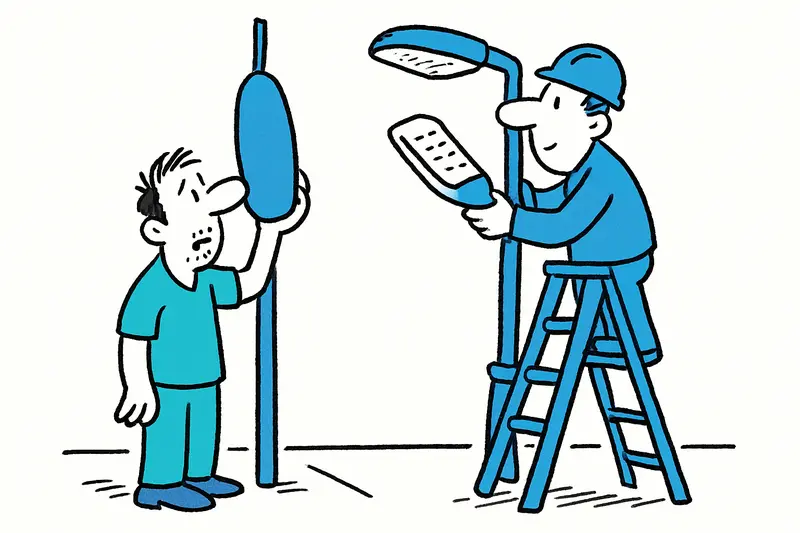
On a warm morning at half past seven, when the bakery on the corner is already sending the smell of bread into the street and the clatter of ladders rings against the blue sky, yellow markings stick to the lampposts at the Jacinto Verdaguer / Eusebi Estada junction. The city administration has announced: more than 400 old luminaires in the Son Oliva neighborhood will be replaced, at a cost of around €338,000. It sounds like progress, but the spotlights raise questions, not just light.
Saving energy – factual, political, emotional
On paper it is clear: LEDs consume less, last longer and mean lower maintenance costs. That's true. The city expects long-term savings, fewer technician visits and a more modern street lighting system. A technician, cable tie in hand, who was working on a lamppost estimated the installation would take weeks; city hall speaks cautiously of completion in at most six months. For the neighborhood this means several evenings of construction, workers with ladders and occasional flicker when circuits are switched over.
Light color, brightness and the unasked audience
A test was already run in July: around 150 LEDs were installed on another street in the neighborhood. Reactions were typically mixed. María, who has lived here for ten years, is happy that the corner in front of the bakery is now brighter and that it opens earlier as a result. An older walker says he feels safer at night. Others complain about a 'cold, bluish' light color that is perceived as unpleasant and changes not only the mood but also insects, birds and sleep rhythms.
What gets left out of the debate
Public discussion often revolves around euros and watts. We rarely talk about: light pollution, biological impacts and urban aesthetics. White-blue light (high Kelvin) increases visibility but it spreads further and disturbs nocturnal insects and birds. It alters the appearance of old facades in Son Oliva, highlights the texture of walls differently and changes the atmosphere of a street that people like to use for evening chats.
Concrete problems – and pragmatic solutions
An open question is control: will the new lights be dimmable? Can the color temperature be adjusted later? In the best case, yes – modern systems allow both. Cost drivers are not only the luminaires themselves but also the control technology, installation work and possible follow-up work if residents complain. Practical suggestions Palma could implement more quickly and cost-effectively now:
1. Dimming profiles and time control – Lowering light intensity from midnight or during periods of low foot traffic saves even more energy and reduces light disturbance.
2. Warmer light temperatures – 2700–3000 K instead of 4000+ K preserves the night scene and is more tolerable for people and wildlife.
3. Shielding and aiming – Glare control and directional luminaires avoid unnecessary brightening of facades and gardens.
4. Citizen participation and test beds – Test a few variants on site and systematically survey residents, instead of dealing with complaints afterwards.
More than technology: setting priorities
Financially, €338,000 is a clear statement: Palma is investing in infrastructure. For Son Oliva this is a visible sign of municipal presence. On the other hand, one wonders whether these funds could be more effective elsewhere: pavements, green maintenance, or programs to support local businesses? The answer is not obvious. The balance of savings, quality of life and ecology must be made transparent.
A practical outlook
In the coming months you'll more often encounter construction lights in the evenings, officials with clipboards and neighbors discussing whether the street now looks better or just different. If the city communicates openly, offers dimming and color options and responds flexibly to complaints, the project could become a showcase: efficient, citizen-friendly and nature-aware. If the administration remains stubborn, the usual conflict between efficiency and quality of life threatens — and Son Oliva has had enough of that.
In brief: More than 400 streetlights will be replaced, cost about €338,000, start now, completion planned within six months. Streets: Jacinto Verdaguer and Eusebi Estada in Son Oliva.
Frequently asked questions
Why is Palma replacing streetlights in Son Oliva?
Will the new LED streetlights in Mallorca be brighter at night?
Can new streetlights in Mallorca affect sleep and wildlife?
How long will the streetlight works in Son Oliva take?
What streets in Son Oliva are affected by the new lighting project?
What do residents in Mallorca think about the new streetlights?
Are warmer LED streetlights better for Mallorca neighborhoods?
How much is Palma spending on new streetlights in Son Oliva?
Similar News

Release after bloody attack in Palma: Why the court's decision raises questions
An 18-year-old who allegedly inflicted a serious neck injury on a man at Plaza Gomila using a wristwatch wrapped around ...
Kidnappings in Inca: Three young men forced into car trunks and abused in the forest – a reality check
In Inca, three 18-year-old men were forced into car trunks by masked assailants at the Plaça des Bestiar, taken to a for...
Spreading Massification: The Brake That Still Has Much Work to Do
Marga Prohens announces limits on volume tourism. The measures sound harsh — but are they enough to save everyday life, ...

Through the Keyhole onto the Party Yacht: How Daniela Katzenberger Is Planning Her 40th on Mallorca
Daniela Katzenberger turns 40 and wants to celebrate it on the island — likely with a boat, cake and her mother. A relax...
By Boat Instead of the Road: Palma's Water Bus — a Reality Check
The 'Bus Nàutic' launches in two stages — but questions remain over interim operations, fares and environmental requirem...
More to explore
Discover more interesting content

Can Cap de Bou

Townhouse Lleo 72
