
When the terrace stays empty: Palma, heat and the ban on misting systems
When the terrace stays empty: Palma, heat and the ban on misting systems
More and more guests avoid terraces because the heat is becoming unbearable. Restaurateurs are calling for a change to the OMOVIP rules to allow water misting systems. A reality check: what's missing in the debate — and what could a practical solution look like?
When the terrace stays empty: Palma, heat and the ban on misting systems
Restaurateurs demand a change in the law — but the situation is more complex than a simple ban
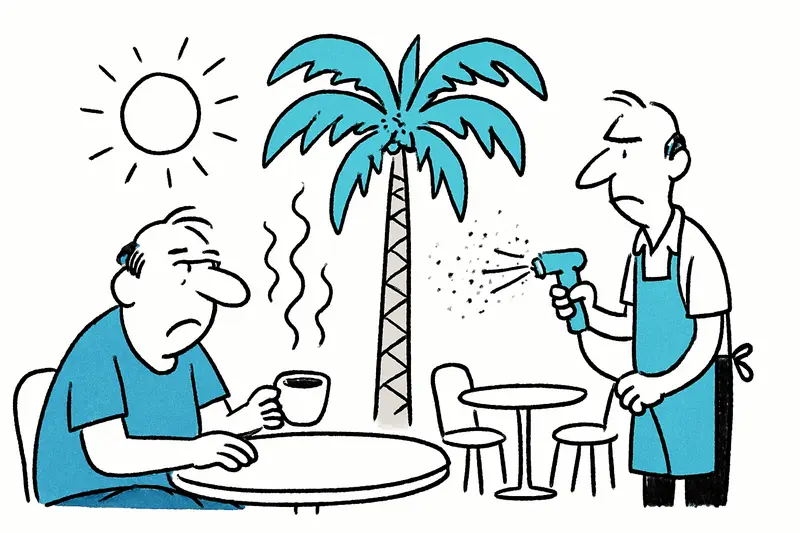
On a hot July evening in Palma: the espresso on the Passeig des Born barely cools, the street cafés look emptier than usual, and the clatter of plates inside the restaurants is louder than the murmur of voices on the terraces. Guests are increasingly retreating to air-conditioned indoor spaces. This is not a gut feeling but a pattern confirmed by many restaurateurs on the island.
The background is a public space regulation from 2018 (OMOVIP) that prohibits the use of water misting systems on outdoor terraces. The industry association CAEB Restauración has therefore sounded the alarm: association head Tomeu Mas is calling for an adjustment of the rules so that businesses can provide more tolerable conditions with spray mist or similar systems during extreme heat.
The serious weather situation gives the argument weight: according to the national weather service AEMET, Palma recorded the hottest night on record this year; the island has already experienced several heat alerts in Palma, and temperatures around 40 degrees Celsius are forecast again for the coming weekend. Such figures directly affect demand and working routines in the hospitality sector.
What is often missing in the public debate is a sober balancing of different objectives: protection of health and working conditions, water consumption and hygiene, urban aesthetics and legal liability issues. The debate is often presented as a simple yes/no question — allowed or forbidden. It is not that simple.
Let us begin with the health aspects: heat stress, dehydration and circulatory problems are real risks for guests and employees. More shade and cool indoor spaces reduce these dangers, but not every guest wants or can move indoors. In this respect, measures for local cooling are not only a comfort issue but can also serve a protective function.
At the same time, misting systems raise concrete problems that are often overlooked in public discussion: What kind of water is used? What about spray systems in terms of hygiene and Legionella? How high is the additional water consumption in a region that regularly experiences water scarcity in Mallorca? And what effects does fine mist have on furniture, clothing and electrical equipment on terraces?
Legally, OMOVIP is not set in stone. Changes require political majorities in Palma's city council. The ruling party there does not have an absolute majority, so a vote on relaxations would need the support of several groups. That means there is a political path, but it is not a foregone conclusion.
Concrete proposals that could be part of a sensible revision can be identified technically and organizationally. Some possible building blocks:
1) Approval with conditions: Permission for misting systems under clear requirements: use of drinking-water quality or closed-loop systems, regular maintenance and documentation, maximum humidity and range values, fixed operating hours.
2) Pilot trials: Municipal permits for individual streets or zones (e.g. in heavily frequented tourist areas) as test phases, accompanied by measurements (temperature, humidity, water consumption) and user surveys.
3) Protection for employees: Mandatory heat protection plans for businesses: break regulations, adequate drinking water supply, shade planning and staff training.
4) Sustainability requirements: Promotion of efficient technology (e.g. ultrasonic enrichers, recovery systems), combination with green roofs, trees and porous pavements that reduce urban heat.
5) Clear responsibilities: Defining who carries out controls and sanctions (city, environmental protection or health authority) and how complaints from residents are handled.
A day-to-day scenario: On Carrer de Sant Miquel a family sits outside, the little ones with their children's portions, the parents with a view of the cathedral. If the city introduces a time-limited permit for misters, the square could offer real relief during the hottest hours. Without rules, however, residents risk moisture problems, restaurateurs incur additional costs and the health authority faces uncertainty about infection-related questions.
Those who now sit on their hands risk economic friction during the summer season: restaurants must manage indoor and outdoor seating in parallel, need flexible staffing and experience last-minute reservation changes. That drives up costs and makes small businesses vulnerable.
My proposal: The city administration should set up a commission of technicians, hospitality representatives, health authorities and resident representatives to develop binding guidelines within a few months. In parallel, limited pilot permits for selected streets would make sense, accompanied by clear monitoring criteria. This would create a regulated, reviewable approach to the new reality of hot summers instead of blanket bans.
Conclusion: The restaurateurs' demand is justified — but it needs a careful framework of technology, hygiene, water management and urban law. Without this balance, a patchwork of individual permits and neighborhood conflicts threatens. If Palma manages to agree on pragmatic rules, the island could both improve the quality of stay and reduce risks for employees. That is the political task for the coming months.
Frequently asked questions
What is the current rule on misting systems on outdoor terraces in Palma?
Why are restaurateurs asking for changes to the misting ban in Mallorca?
What could a regulated approach to misting systems look like in Palma?
What health and hygiene concerns accompany misting systems?
Are pilot trials for misting systems proposed in Mallorca's tourist areas?
How can Palma balance cooling, water use, and urban aesthetics?
What are the practical effects of heat on Palma's nightlife and terraces?
How can residents influence cooling policy in Palma?
Similar News

Rental Car Theft in El Arenal: What This Incident Reveals About Our Gaps
A teenager steals a running rental car in El Arenal, flees on foot, climbs over walls and is caught by the Guardia Civil...

Red Rope in Palma's Library: What Helps Against Selfie Tourism — and What's Missing
Palma's city library cordoned off an area with a red rope to keep selfie tourism away from reading and working activitie...

Fort San Carlos: Museum, Harbor Dispute — and a Conflict That Demands Answers
The military museum at Fort San Carlos sits right on Palma's harbor, with unexpectedly quiet rooms filled with cannons a...
Old Town Under Pressure: When a Doorway Becomes a Sleeping and Shower Place
For months a woman has been living with a parasol, a clothes rack and personal belongings next to the social welfare off...

When Shopping Weighs Heavier: Mallorca Demands a Tax Pause on Food and Fuel
Rising prices are putting pressure on households and agriculture. The Balearic Islands are calling for temporary tax rel...
More to explore
Discover more interesting content

Can Cap de Bou

Townhouse Lleo 72
